Saturday, May 30, 2026

Jeffersonville Golf Club (Norristown, PA)

Jeffersonville’s reputation has been reverberating across Pennsylvania as one of the better municipal courses in the region. Most of the credit belongs to Ron Prichard who did a wonderful job renovating and remodeling it in 2000. It was designed in 1931 by Donald Ross with today’s eleventh and sixteenth holes occupying the ground that used to be an oval horse racing track.
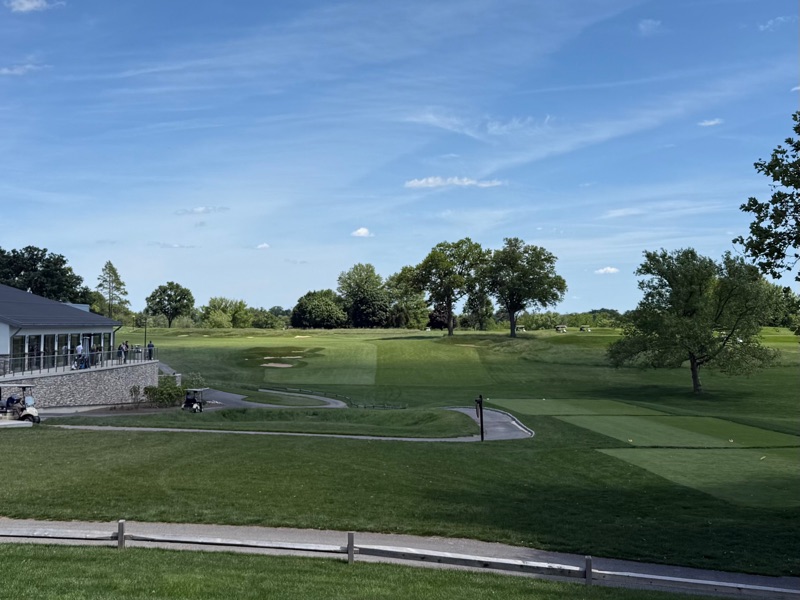
The routing at Jeffersonville is a bit disjointed. The ninth hole actually plays away from the clubhouse with the tenth coming back. A jaunt through the parking lot will take you to the eleventh tee, and after you putt out on the sixteenth, you’ll cross the entrance road to play the final two holes. It seems like a mishmash setup, but Prichard eliminated a couple par threes, including the old eighteenth, and combined a few others to make this routing work.
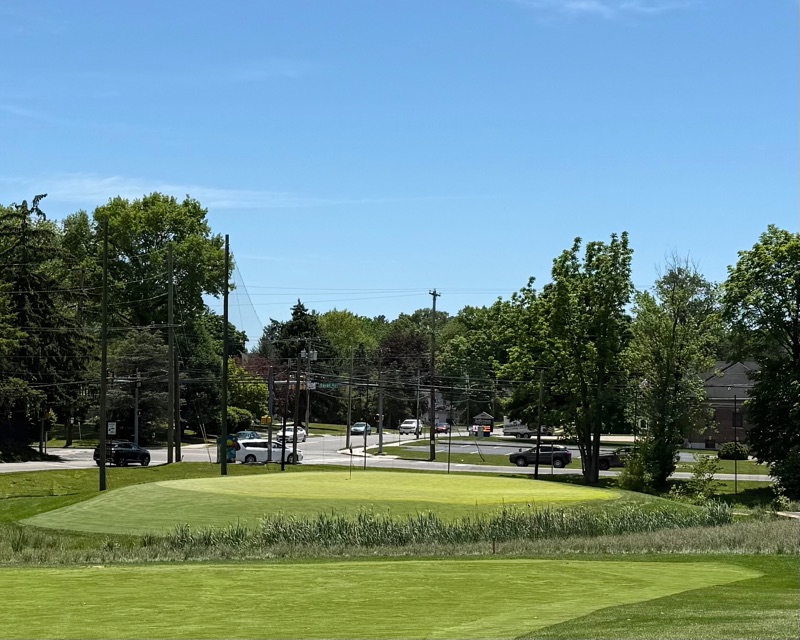
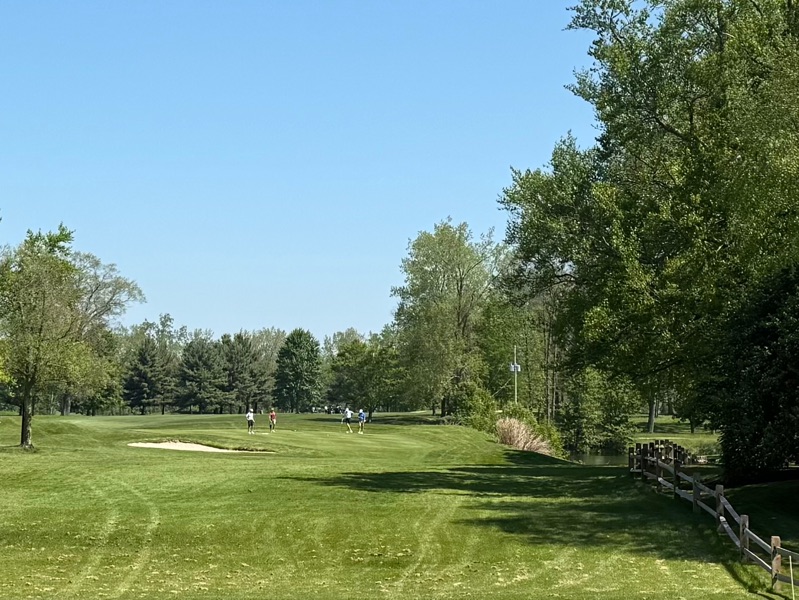
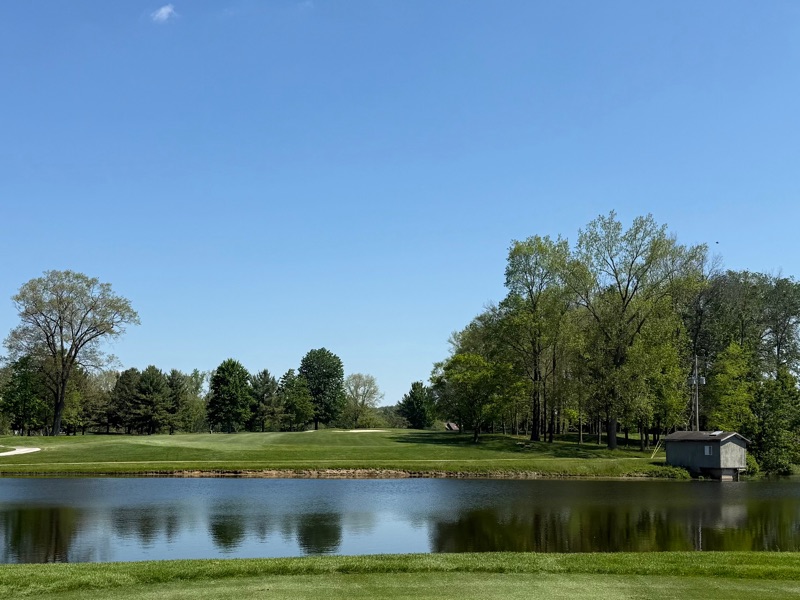
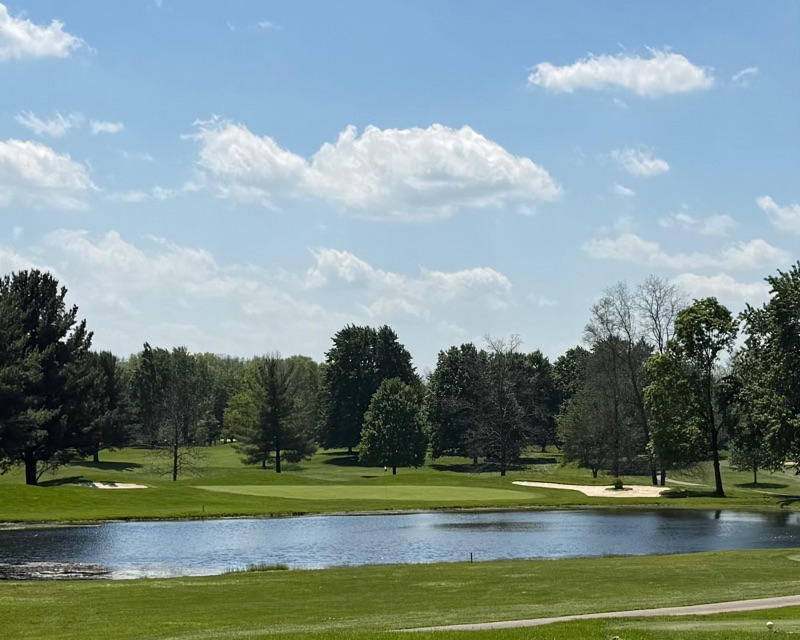
(The 348/337 yard par four second doglegs right around a group of bunkers before playing across wetlands to a built up green. There are huge nets up at this corner to prevent balls from damaging someone’s vehicle…
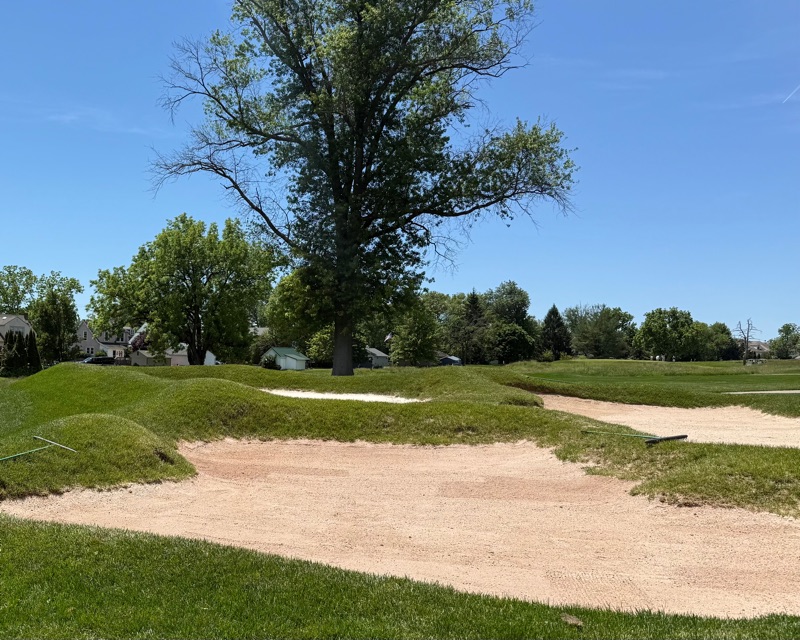
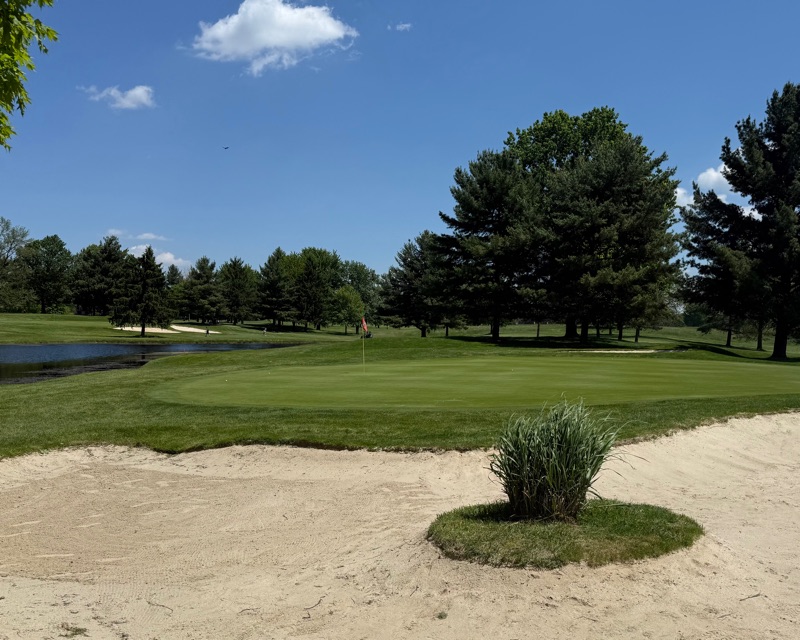
…this photo shows the nest bunkers that Prichard reintroduced to the course. Note the mounding that outlines each one. They’re really cool hazard.)
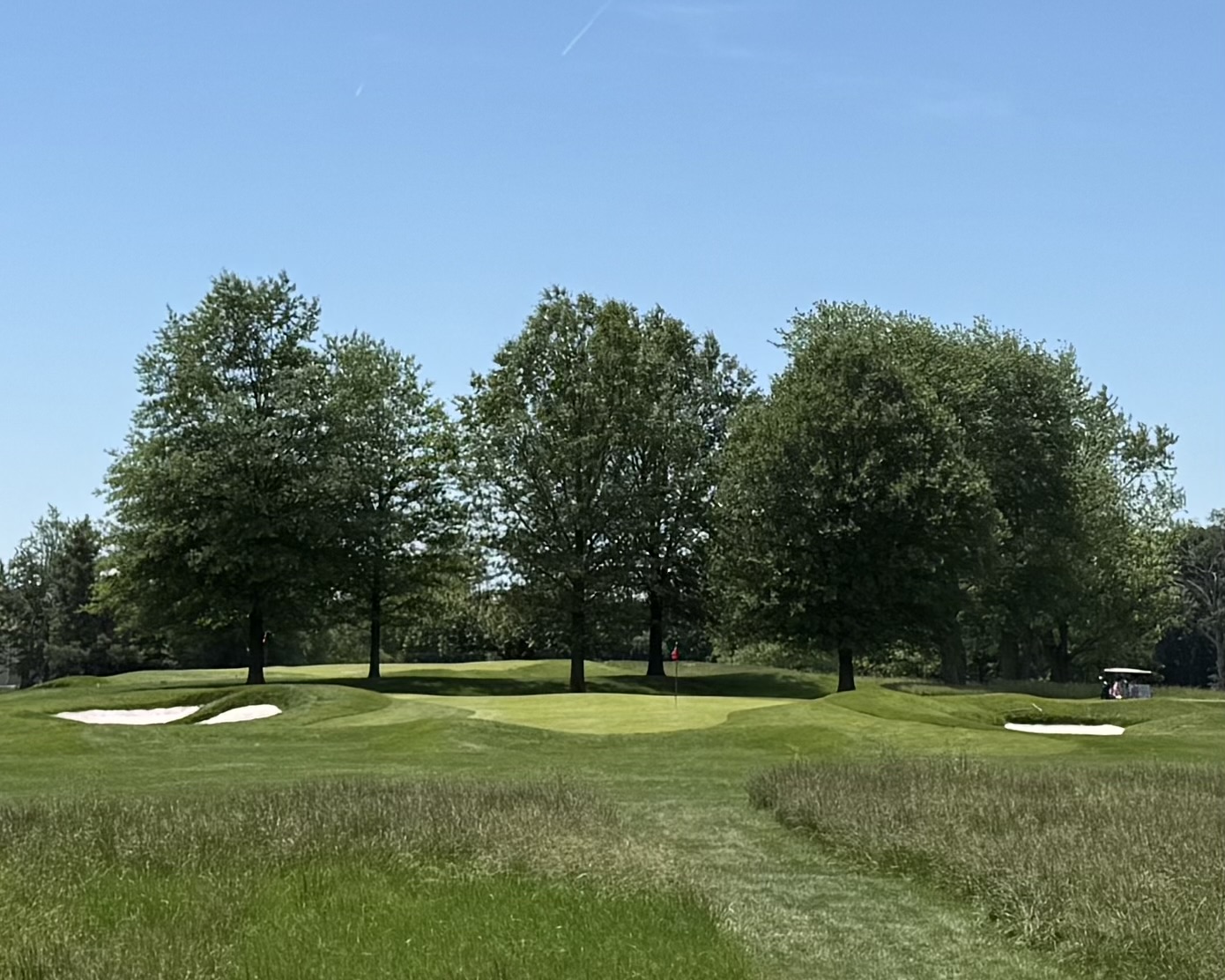
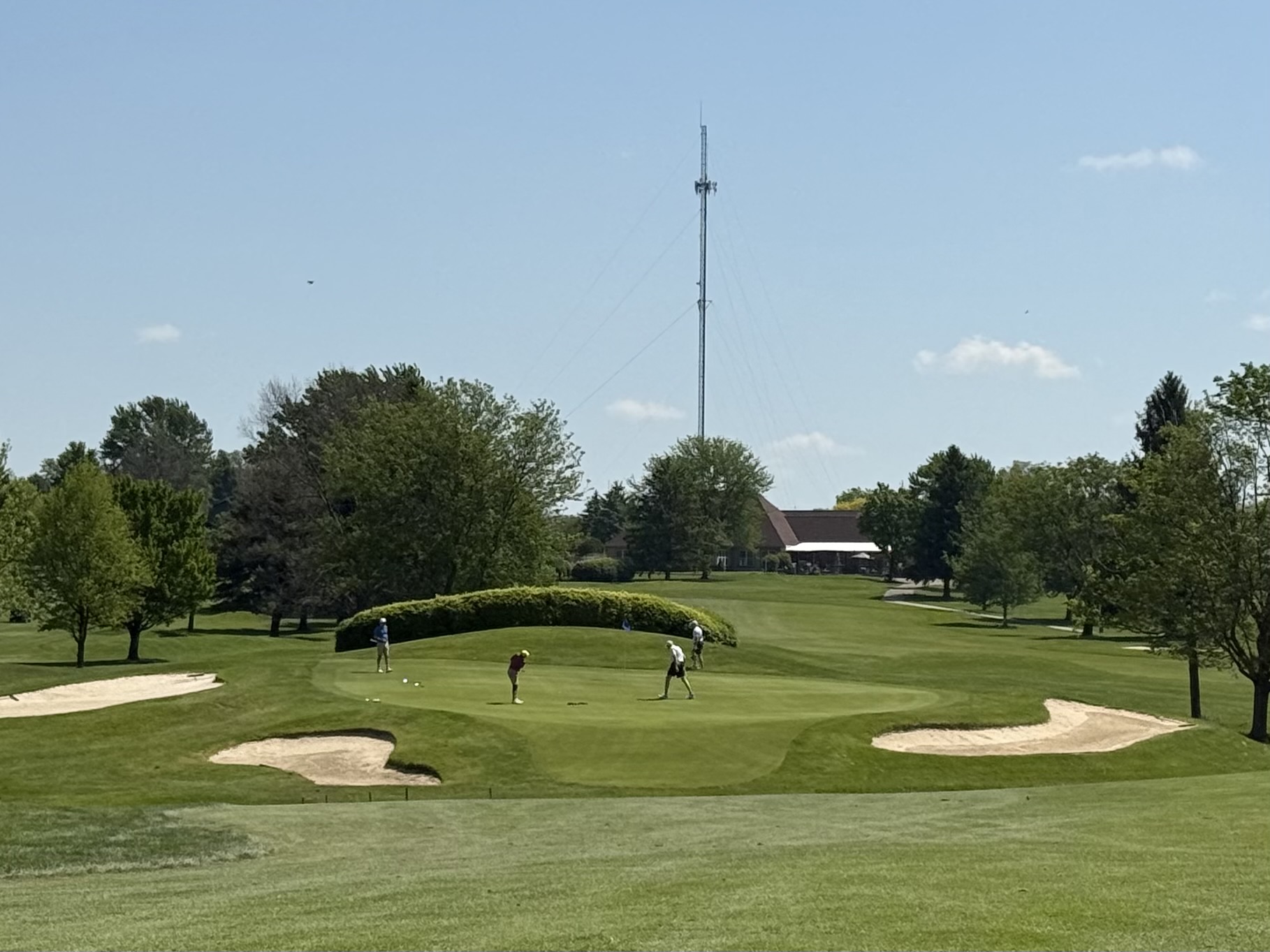
(The 135/120 yard par three fourth has a tiny green squeezed between two bunkers. Note how you can use the backside of each trap to kick the ball towards the flag. My ball did exactly that finishing five feet from the hole.)
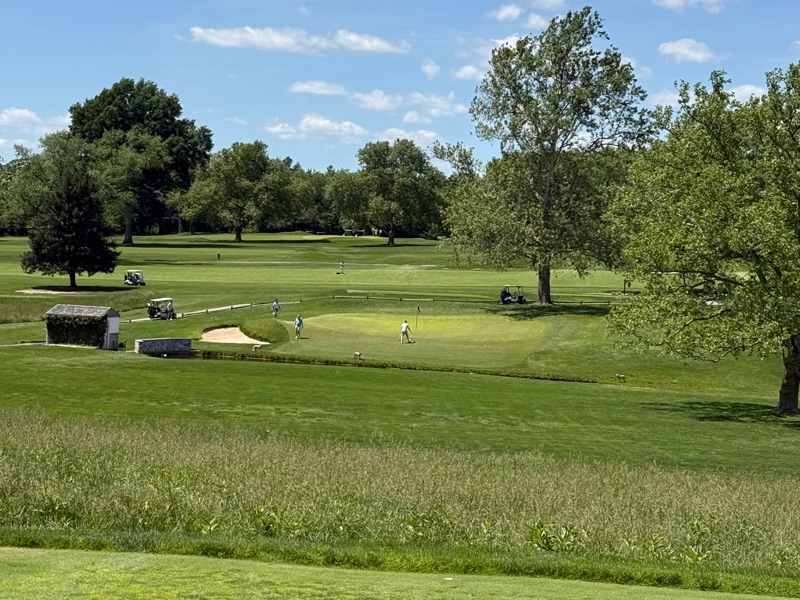
(The 195/178 yard par three eighth is a dangerous downhill shot that must carry the false front, otherwise it will retreat backwards into the hazard. Most balls invariably find the rear portion of the green where the crashing slopes demand a soft touch.)

A good set of greens is what makes Jeffersonville stand out. My favorites are 3,4,8,12,16,18. These six holes have a low profile green set at ground level with a few mounds outlining the high points. You can hit so many different shots into each one. The other greens all require more of an aerial shot. The eleventh stands on its own, placed on the highest spot on the property. A flat area short right allows the ball to bounce in, but the further left you go, the more you have to carry it to the pin.
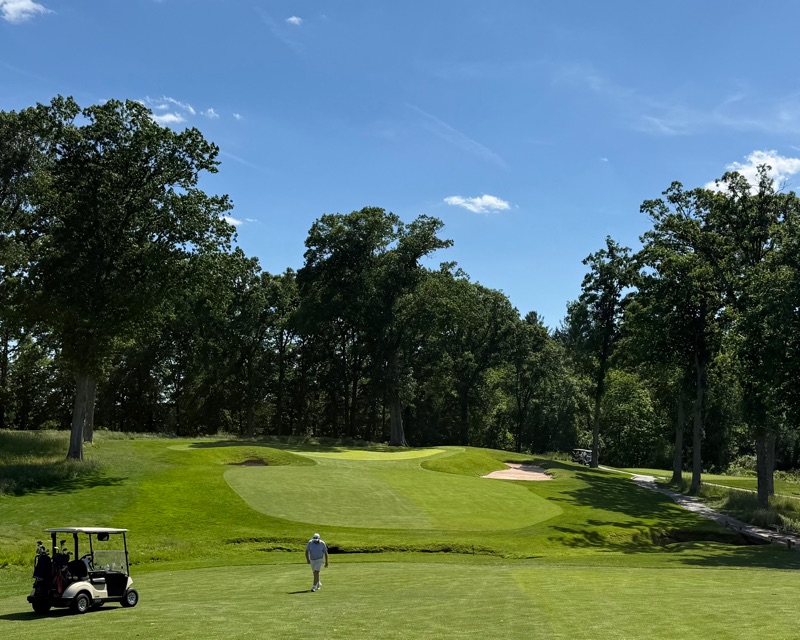
(The 430/408 yard par four thirteenth is most people’s favorite hole as it features a beautiful green set above a shallow valley. The putting surface slopes quickly from back to front while extending further left than you think. It’s the third longest par four on the course.)

Jeffersonville recently held the GAP (Golf Association of Philadelphia) Mid-Am championship. It’s the first time in the association’s 100+ year history that a public course has held one of its majors. This fact is an indicator, in my opinion, that Jeffersonville has been christened the best public course in the Philadelphia area. (I would not be surprised if Cobb’s Creek becomes the second public course to hold one of their majors when its renovation is done) The Jeff, which it is affectionately called, is the type of place, affordable, interesting, well kept, that every city deserves. I can see why the regulars are so proud of it. I give it a 5 (good)(worth driving an hour to play).
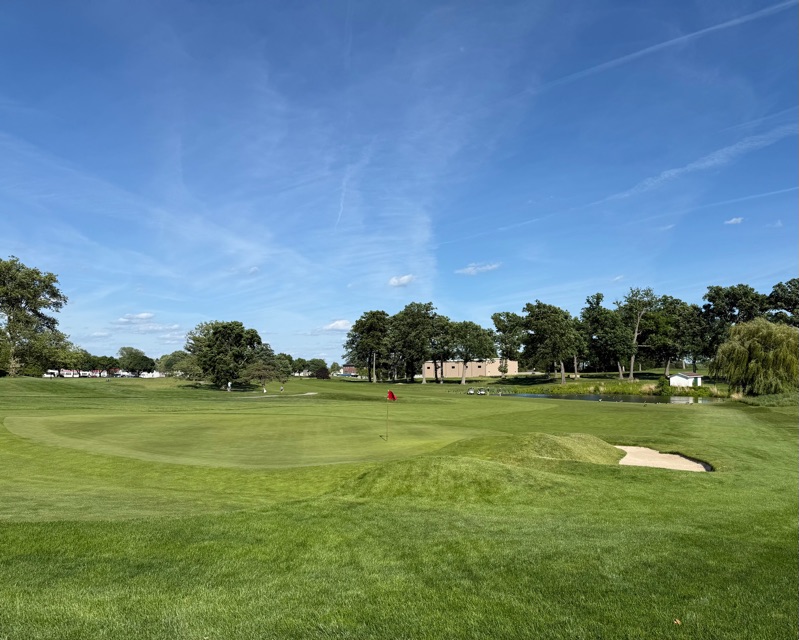
(The 545/516 yard par five eighteenth is a double dogleg bending left off the tee and then back to the right the last 120 yards.For long hitters, it’s a great chance to finish on a high note, but this green has the most slope of any on the course. It slopes hard from back right to front left. I reckon it only has three to four legitimate pin positions mostly sliding along the left side. When the pin is front right, five becomes a great score.)
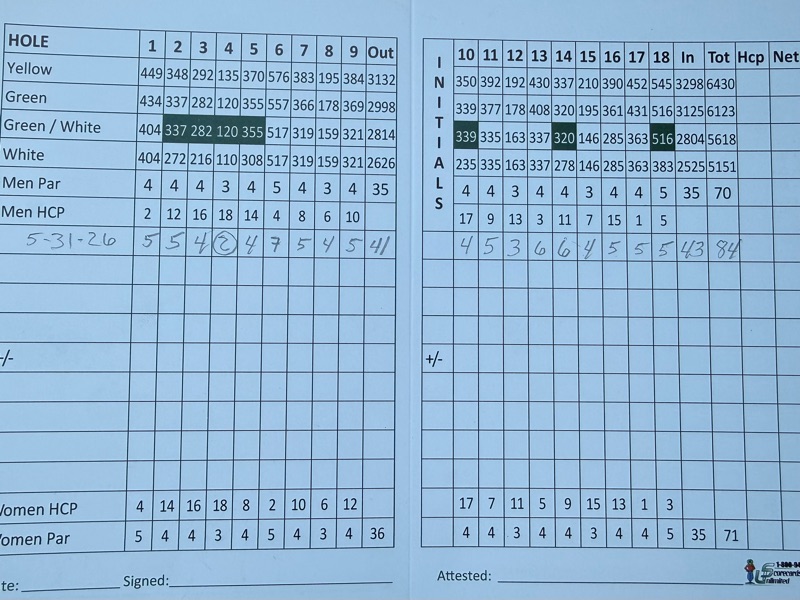
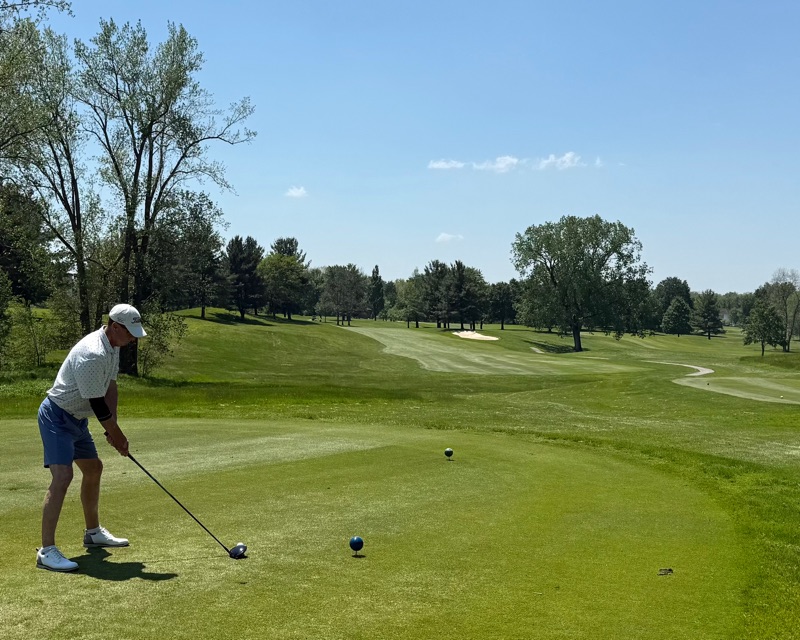
(We played the green tees at 6,123 yards par 70. After getting up at 3:30am and driving seven hours, I felt my 84 was a decent score. I hit the ball very well the first five holes but some loose swings unraveled my game starting with a poor drive on the sixth. Surprisingly, I had the only birdie in my foursome. Two of the guys hit it far and hit a lot of wedges and short irons but couldn’t convert. It was challenging getting the ball close to the flag. The cost was $100 but I paid a little extra for a third party to secure a tee time.)
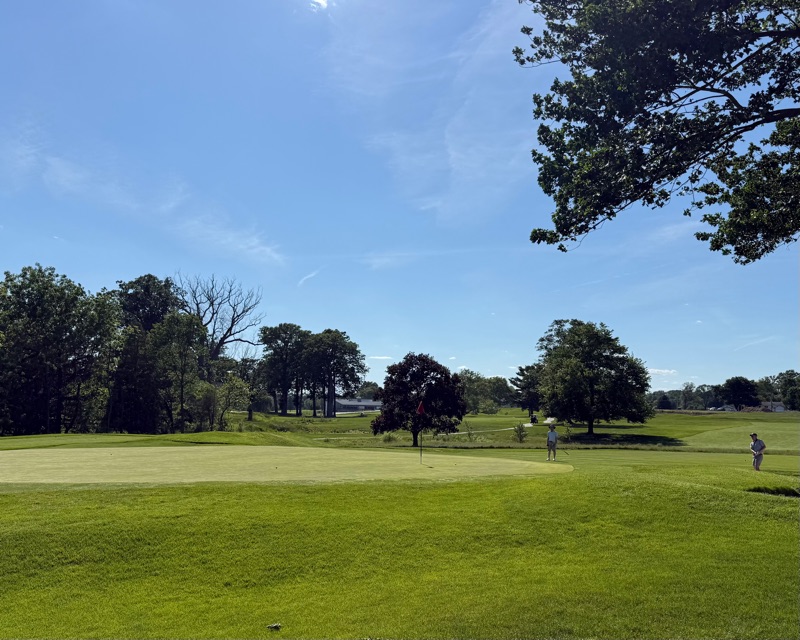
(This is the view of the seventeenth green. The card says it’s the longest par four on the course, but like the opening hole, the long hitter can cut off the dogleg and hit a much shorter approach.)

Blog 505

Sunday, May 17, 2026

Weymouth Country Club (Medina, OH)

Eleven years ago I wrote Weymouth was a disappointing course and I still feel the same today. It starts with the mowing lines and the wavy pattern they choose to cut the fairways. Between hitting a good shot and finding the rough or hitting the fairway and being blocked out by a tree, the course possesses a maddening amount of luck. The holes also dogleg in an awkward manner. Toss in a few ridiculous OB stakes where the housing has encroached at the risk of being dangerous, and one can’t help but sigh. Thankfully the greens are really good and provide thoughtful targets.

Weymouth was designed in 1969 by Geoffrey Cornish. Coming from the Stanley Thompson lineage, Cornish understood how slope and tilt could challenge golfers. His large putting surfaces have multiple pitches separating the green into various sections. They’re all contained in a three to five point mounding system. Several greens have handles, or narrow pinnable areas, that make for a testy pin positions.

(The 196/185/176 yard par three seventh shows how the lack of short grass makes this a hit it or else proposition. The green is not particularly wide so it’s an elusive target.)

(The 514/504/484 yard par five eighth doglegs right around a copse of trees and the equipment barn…

…the prudent play is a layup but the long hitter has a large green to attack. Water short and three bunkers protect it from being an easy birdie.)

(The 192/183/156 yard par three twelth is all carry over water. Not too many options so taking an extra club will keep a big number away.)

Cornish reminds me of Jack Kidwell. Both men were budget conscious and did everything they could to design an efficient and sustainable golf course. The way Cornish designed greens; the way he limited the amount of maintained short grass; and the way one bunker provides all the challenge; Everything helps the course be more profitable. Weymouth still has a countryside vibe to it which allows it thrive as a private course. The back tees are over 7000 yards and sets up well for various qualifiers. I’m reluctant to nudge it up one from my original rating so I’m sticking a 3 (average)(worth driving 15-30 minutes to play).

(The 420/405/390 yard par four sixteenth tees off at an angle, begging the golfer to turn the ball over and climb the hill. The shortcut left looks inviting, but failure to carry the yardage will leave you blocked out.)

Blog 504

Monday, May 4, 2026

Double Black Diamond Golf Club (Ellicottville, NY)

Holiday Valley draws golfers from all over western New York thanks to Paul Albanese’s 2007 renovation. By simply making the back nine more playable, opening up views of the countryside, and ridding the property of a do-it-yourself ridiculous par five, the course has become a favorite of those looking for a mountain golf experience.

Double Black Diamond was originally designed in 1964 by Fred Garbin. The front nine is still his routing but Albanese pushed the tee of the par four seventh up onto the hillside and then made a terrific par three from the driveable ninth to make room for the Tamarack Lodge. (The old green is still there and can be used by guests to play as a little pitch n putt hole) On the back, he used the old elevated tee box trick again at the tenth before tackling what must have been an insidious 360 yard par five where one hit three iron shots to reach the green in regulation. By taking out a ton of trees, it can now be played like a formidable short par four. (I think the fairway is still too narrow (17 yards) but a quality 200 yard shot followed by a 150 yard shot over the ravine makes for a memorable hole) At thirteen, he widened out the hole again, but this time making a split upper and lower fairway. At seventeen and eighteen, he flip-flopped the fairways making them both more playable. It was a well done renovation that brought the course into the modern era.

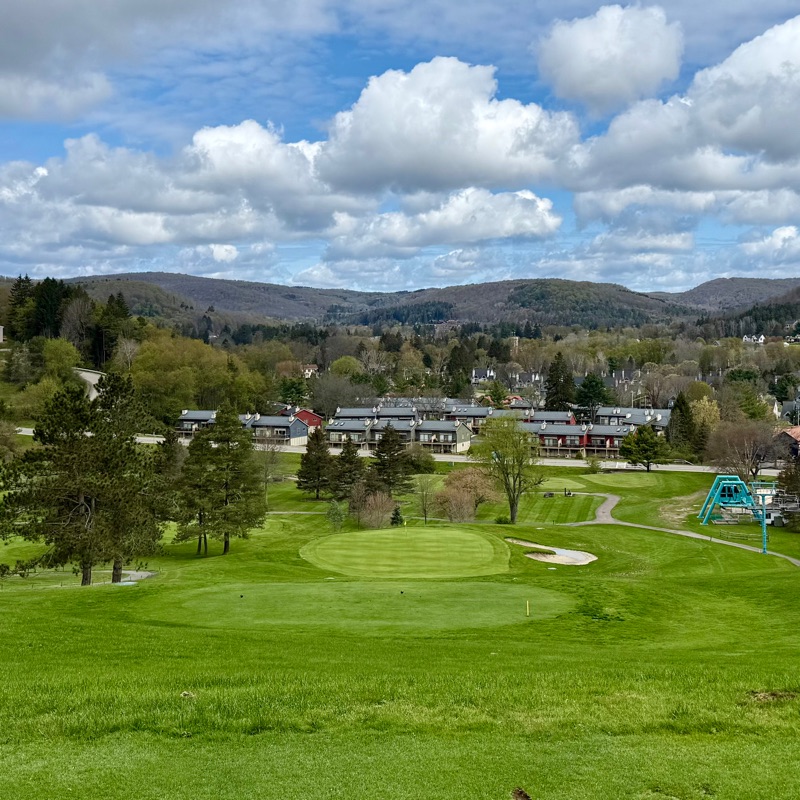
(The 374/363 yard par four seventh is one of the highlights on the outward nine. By moving the tee up the hill, a slight dogleg was created and the view was enhanced. The drive must be threaded between two lakes before attacking a slightly elevated green.)

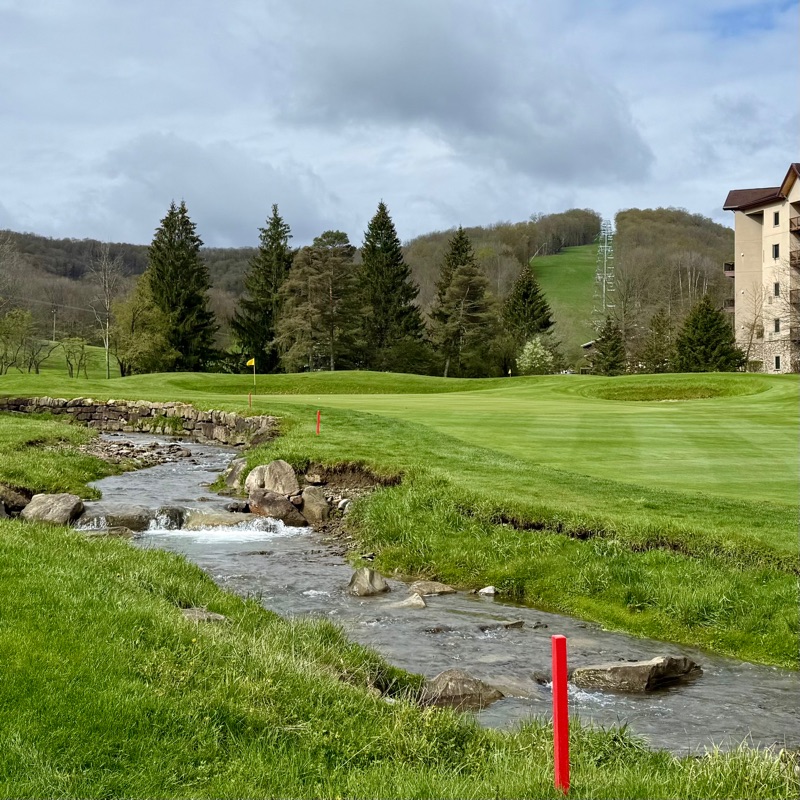
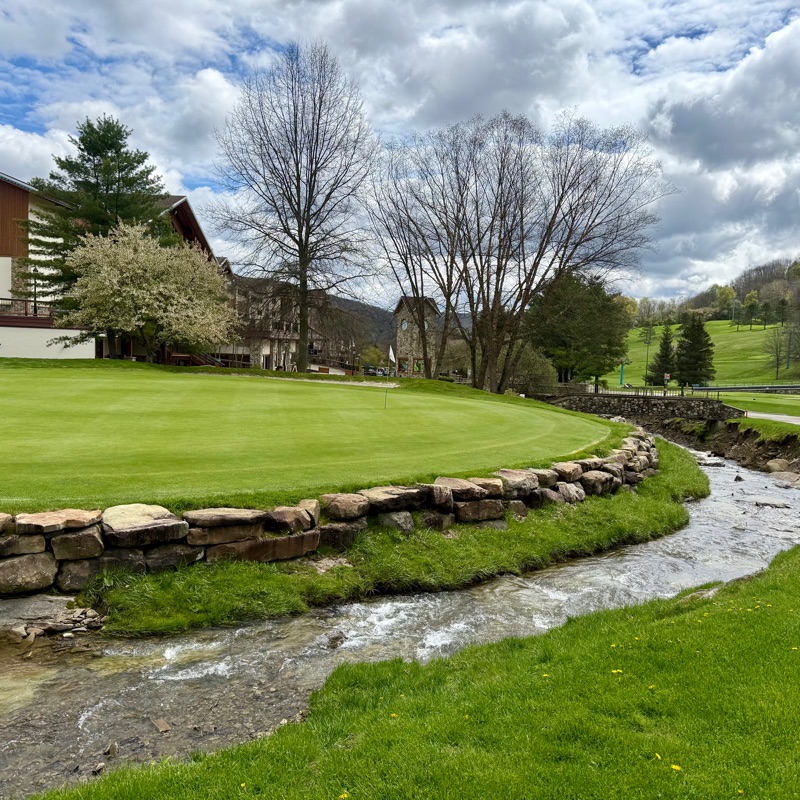
(It was easy turning the ninth into a great par three. The mountain stream makes for a perfect hazard. The green is set diagonally behind it with a rise in the middle hiding the back half.)

The secret to Double Black Diamond success is only two holes play across the ski slope. This limits the quirkiness that could have been the defining feature. Starting at the ninth, the player will encounter three par threes in a four hole stretch. This gets them out of the valley and up to the par four thirteenth where the “cascade” hole will give a fantastic view and begin the descent down to the finish. From the seventeenth tee, the routing climbs straight uphill, and then plunges back down on the final hole. While the last two are a bit awkward, they don’t detract from the fun.

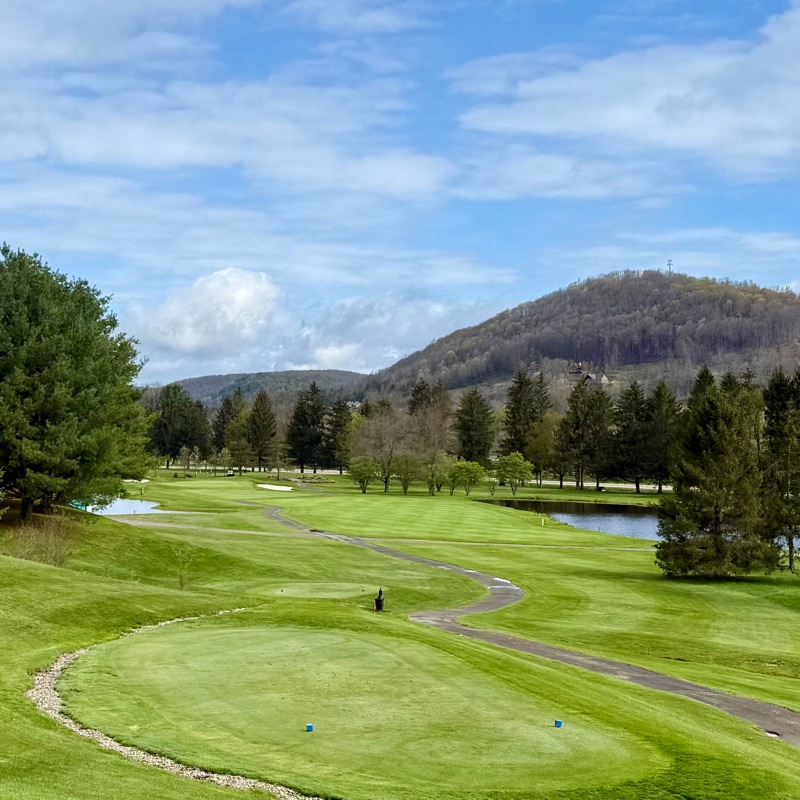
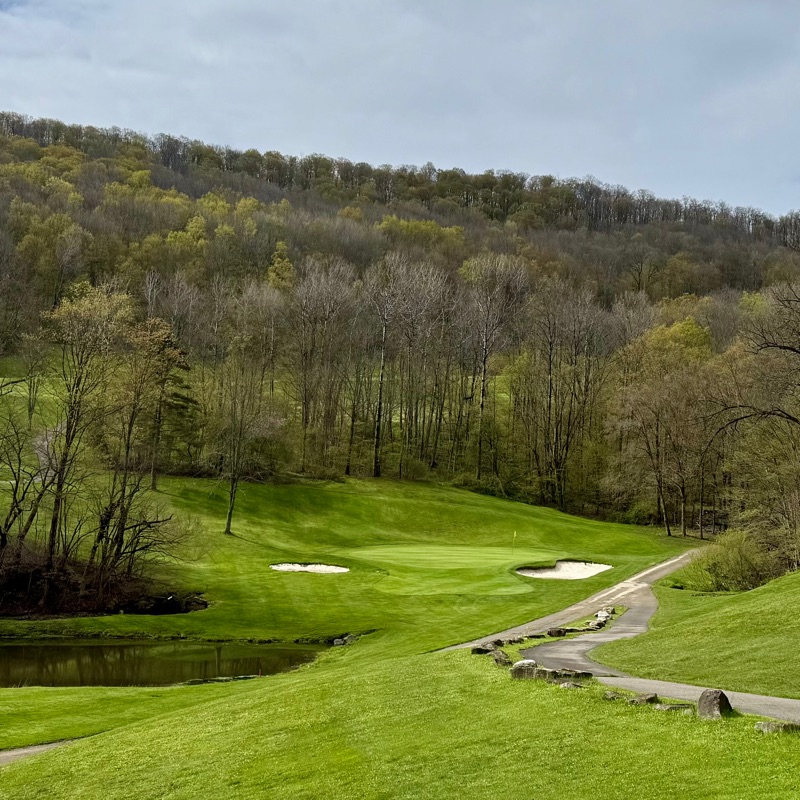
(The 170/150 yard par three tenth plays in a natural bowl. It’s all carry with a false front shaved to fairway length. It’s a beautiful hole and a strong start to the back nine.)

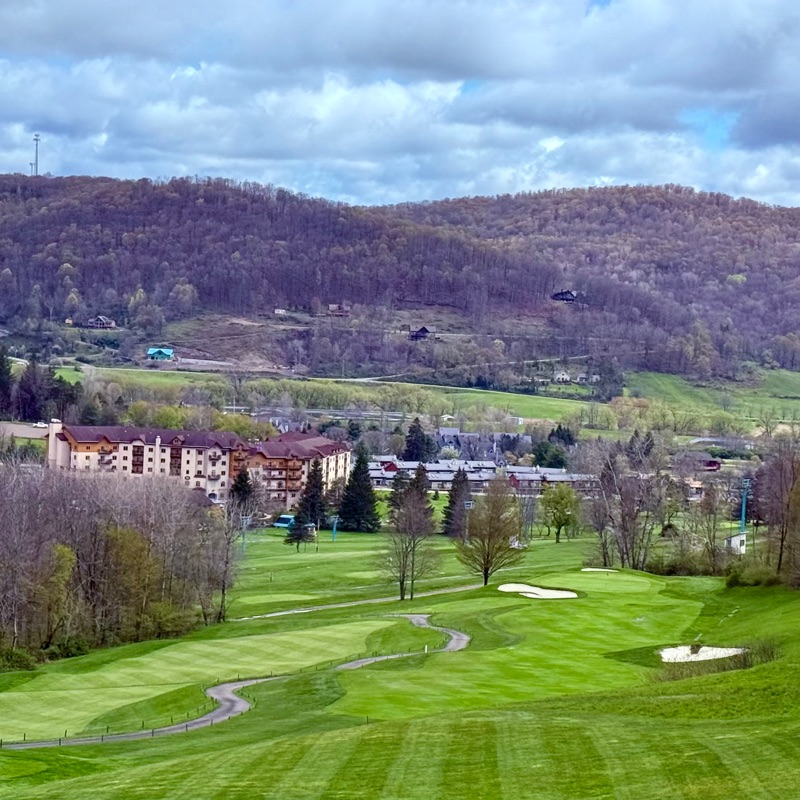
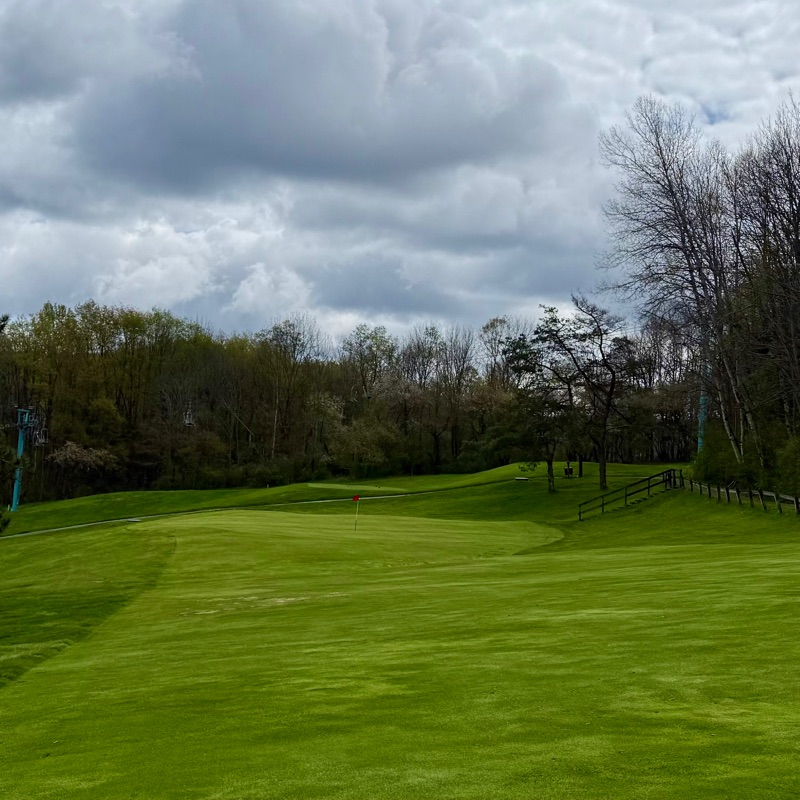
(The 220/200 yard par three fifteenth drops significantly from tee to green and features a large putting surface. A bunker catches a miss to the right while one to the left will find trees. It’s another beautiful view of the resort and mountain backdrop.)

(The 480/459 yard par five seventeenth is an absolute slog up the hill but it possesses a really well constructed green that slopes away. Birdie will be well earned.)

As nice as Double Black Diamond is, it’s the town and resort that make it so popular. Ellicottville has multiple shops, a winery, and a brewery that beckon golfers to come. Together, it becomes a great way to spend the day or weekend, and that to me is an organic amenity that is hard to replicate. I give Double Black Diamond a 5 (good)(worth driving an hour to play).

(The 429/407 yard par four eighteenth plummets downhill to a green fronted by a stream. With how close the resort backdrops the putting surface, I can’t help but think they plugged it here on the fly. It’s a challenging shot especially if you’re on the downslope.)

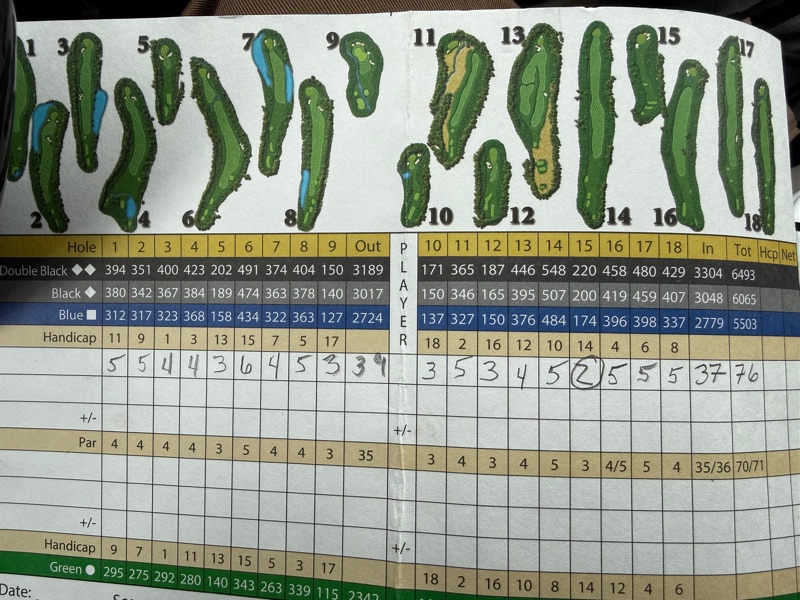
(My 8:30 am tee time was the first one of the day, and the 35 degree temperature had me second guessing if I was making a mistake. It had rained the day before and the course was very soft. I decided to play the blues at 5,503 yards par 70. It was great decision and I had a fun time.)

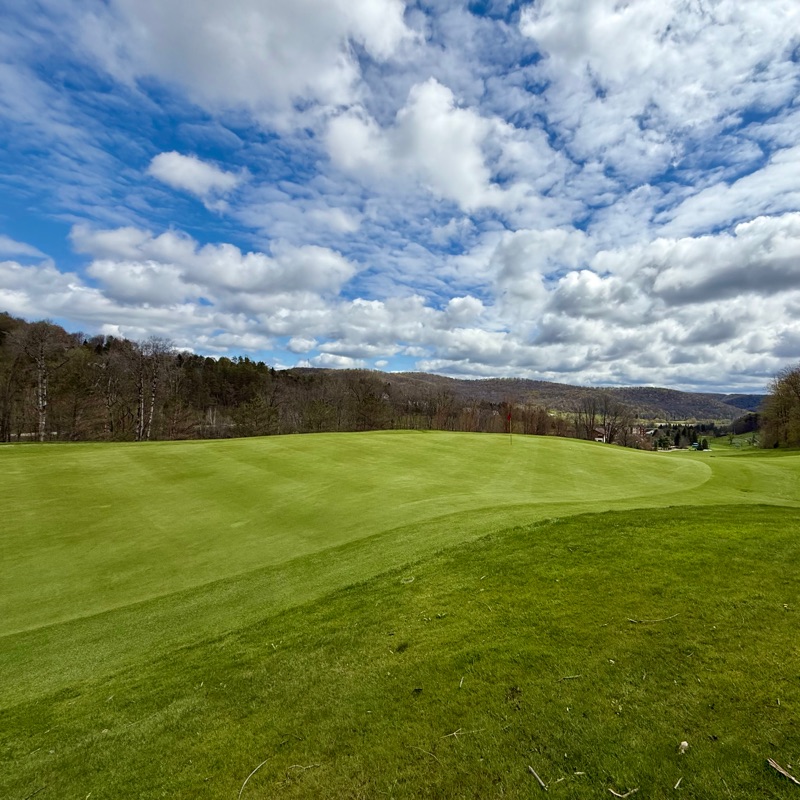
(The 548/507 yard par five fourteenth plays across the slope and finishes at this green benched into the hill. Expect to turn the ball over on your third shot with the ball above your feet. No bunkers needed here.)

Blog 503