If you’re the pencil and paper type who likes to write clean numbers on their scorecard then you might want to avoid Yatesville Lake which is one of the wildest courses I’ve played in my blogging years! This heart thumping, blood pumping, adrenaline rushing course features multiple forced carries over ravines and gullies with elevation changes well over 200’!
Yatesville Lake was designed in 2003 by Arthur Hills and Steve Forrest as part of Kentucky’s state parks signature golf series. As soon as it opened, the buzz ringing in golf circles focused on the thirteenth, a driveable par four that drops 240’ down to the valley floor. You can count the seconds as the ball hangs in the air before plummeting down to its destination. The par five fourth is another one that drops hundreds of feet as the second shot launches off the terraced fairway down to the lower landing area. These are holes unlike anything you’ll find elsewhere.
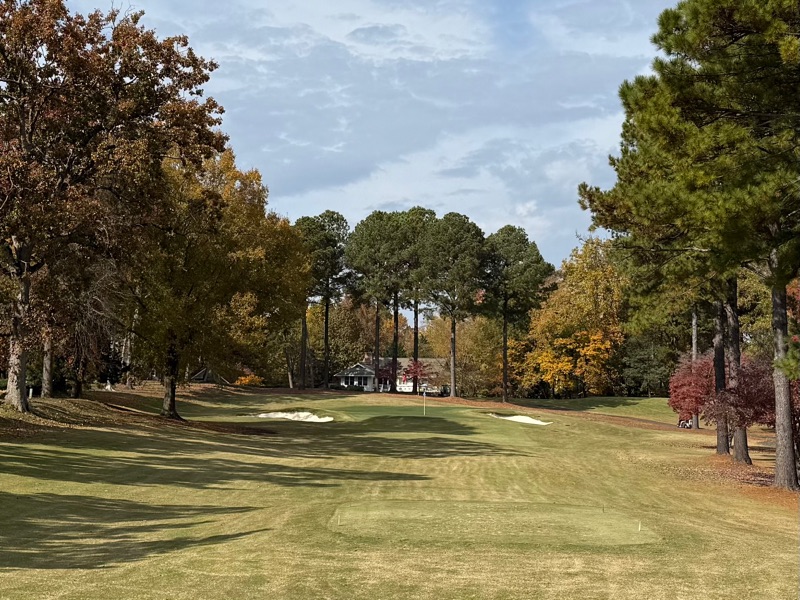
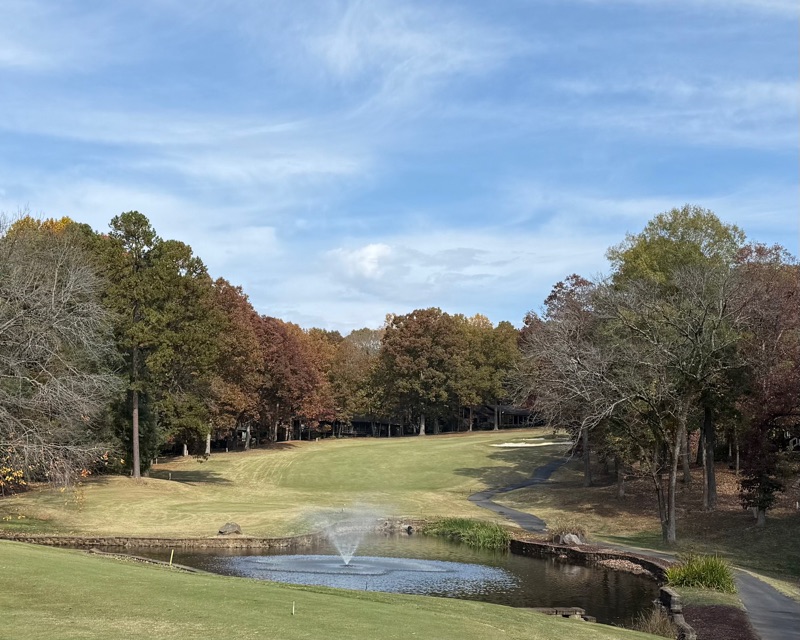
(The 414/385 yard par four second plays downhill to a fairway that ends before a deep valley. Aggressive players can try to carry it over the bunker line and get a superior angle…
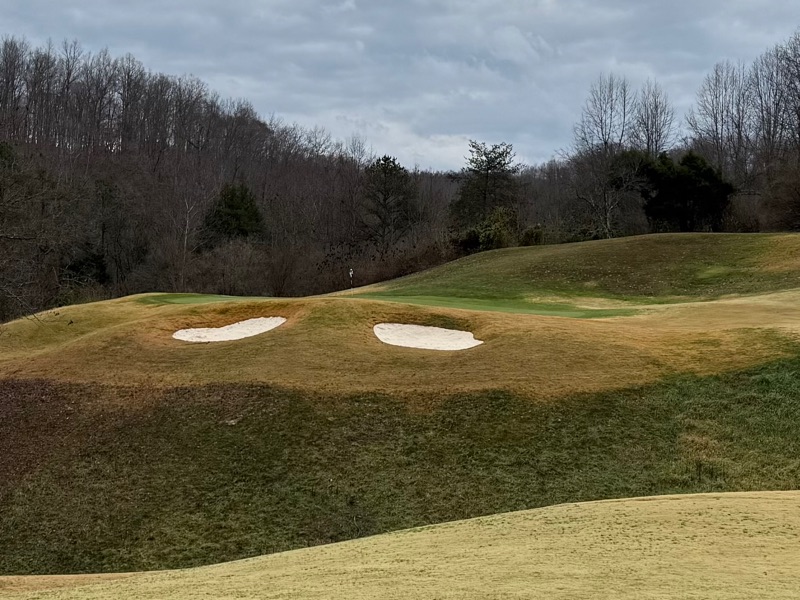
…those who took the routine route face this look to a partially hidden green. It should be a short iron approach which takes most of the fear out of the shot.)
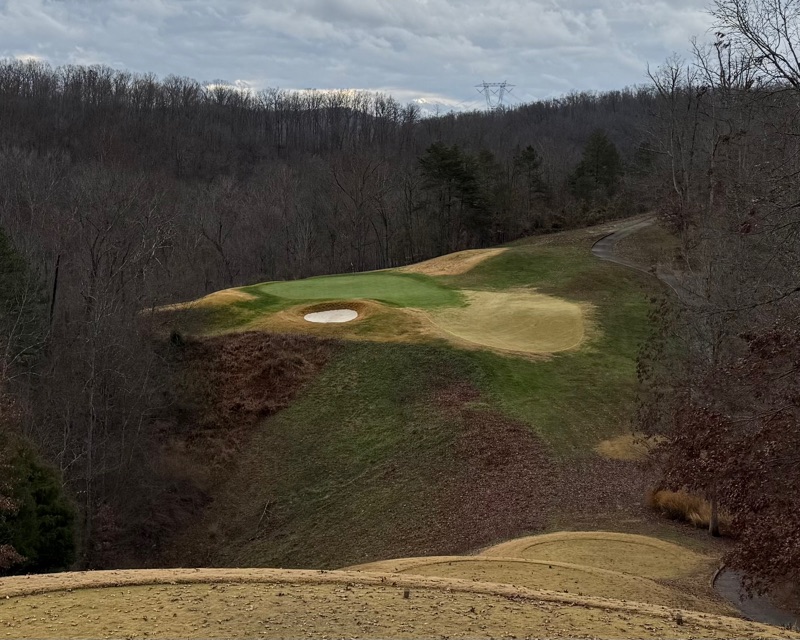
(There is nothing timid about the 220/200 yard par three third. There is fairway short right for those looking to bail out but the direct assault requires a pure strike to make the carry. It’s here where you’ll reassess your decision to play the #2 tee and move up to the #3 tee where it’s a more manageable 173 yards.)

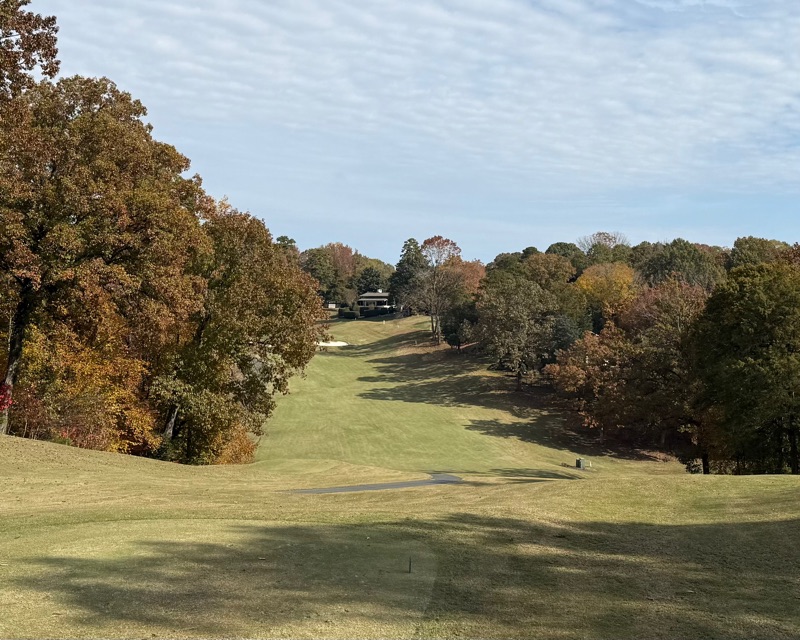
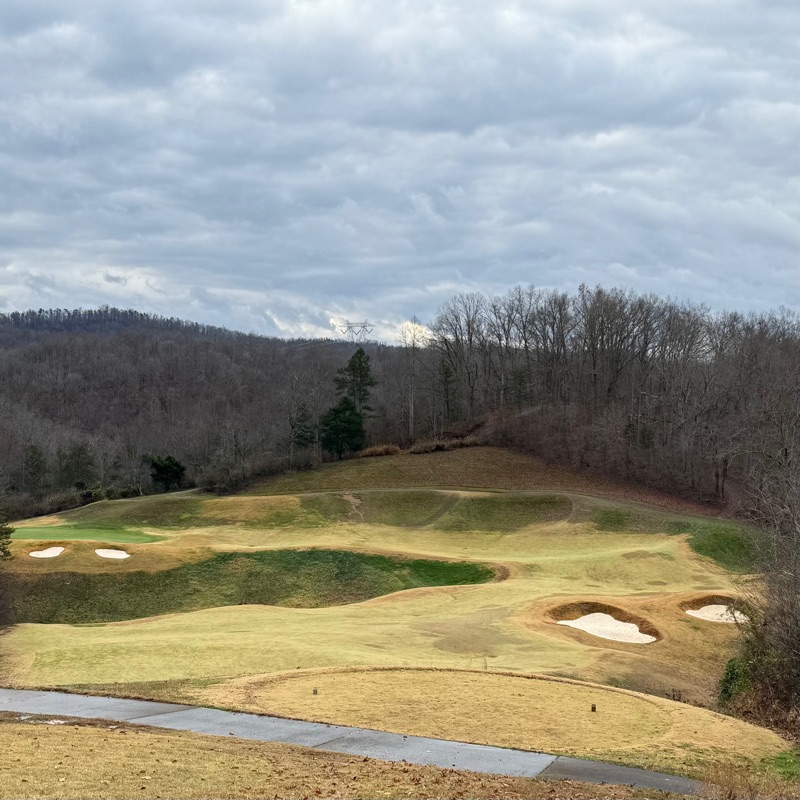
(The 582/565 yard par five fourth begins with this intimidating drive over a plunging ravine. The right side is more forgiving and will push the ball back to the left. The second shot is mythical…
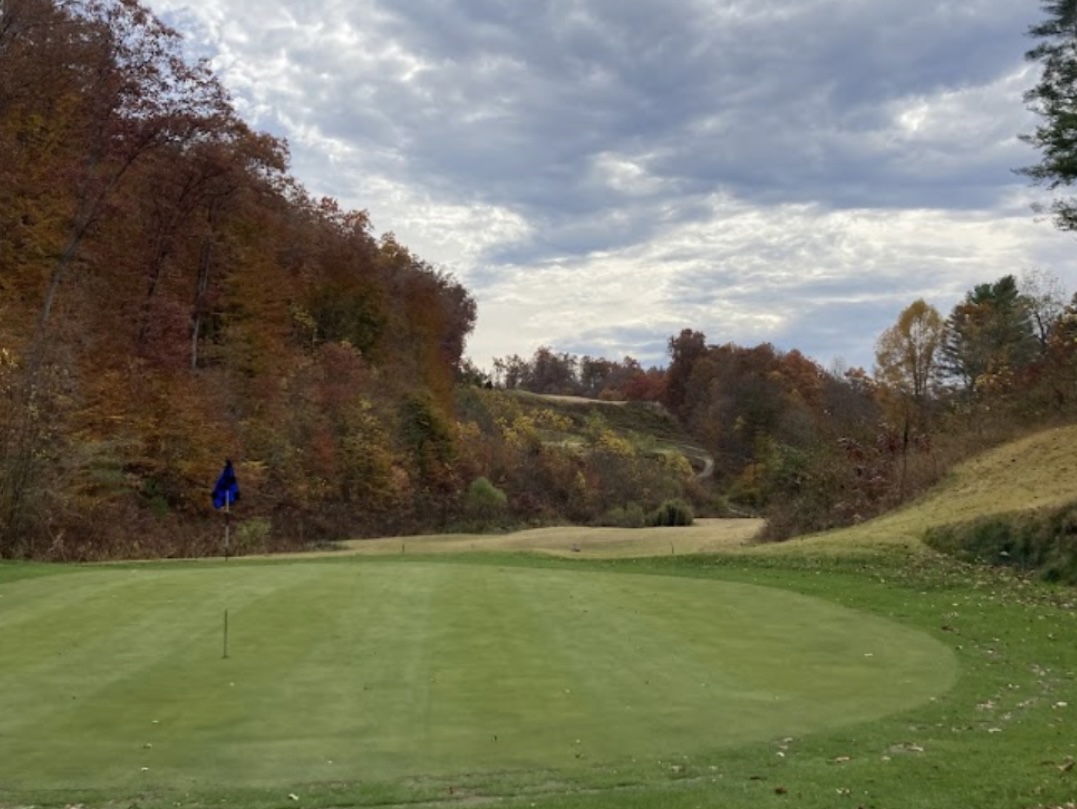
…it drops over 200’ down to this narrow landing area. A creek guards the right side of the fairway with a hillside full of pine trees serving as the aiming point. Longer hitters can carry it all the way to the green. The rest of us will hit a little pitch for the third. Regardless of what you score, you won’t forget it!)
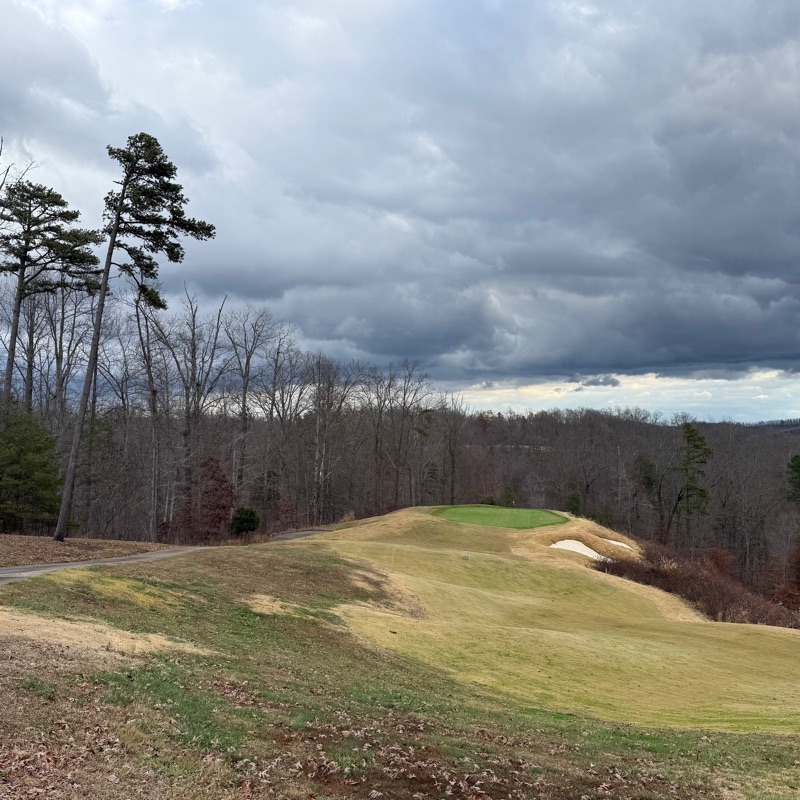
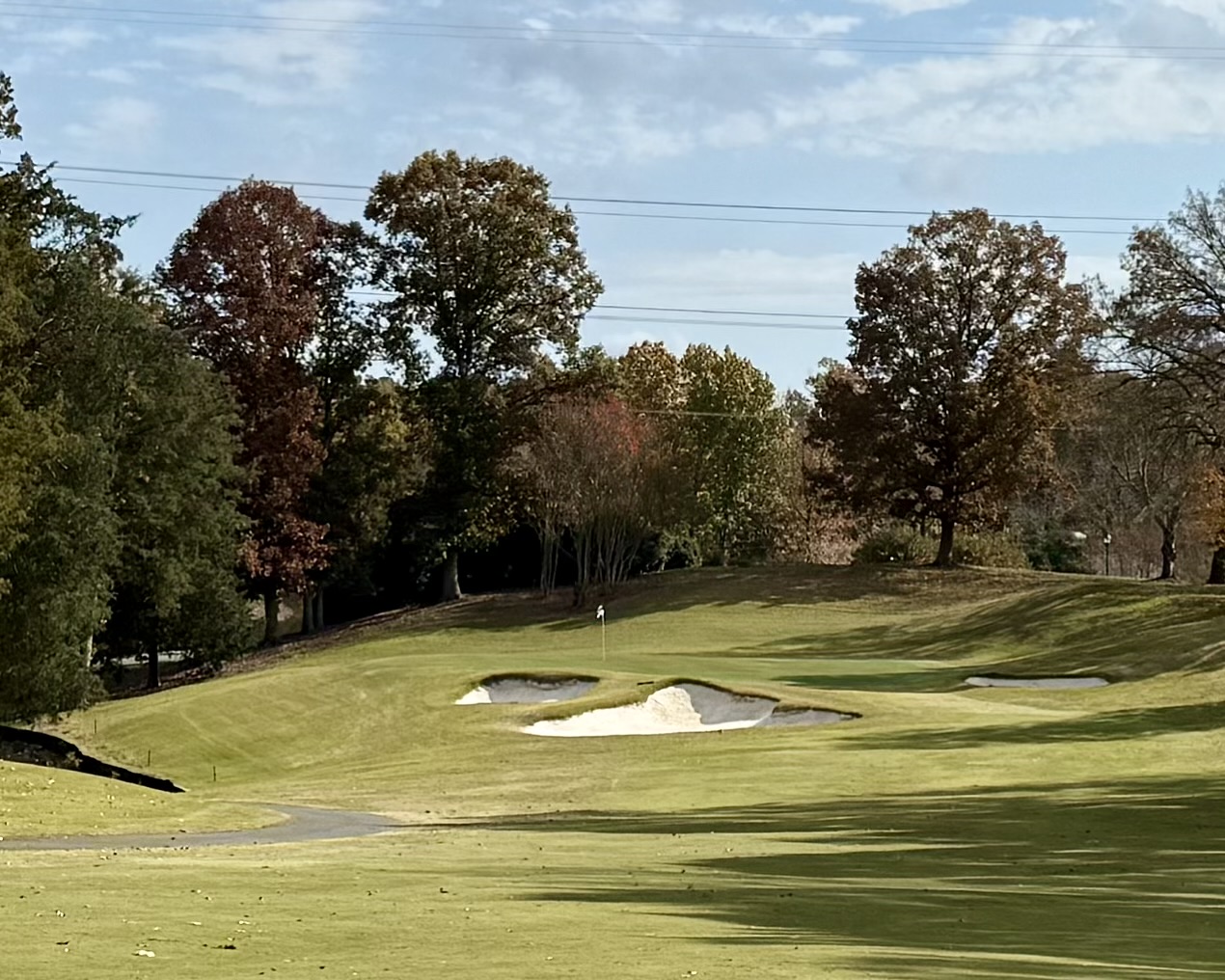
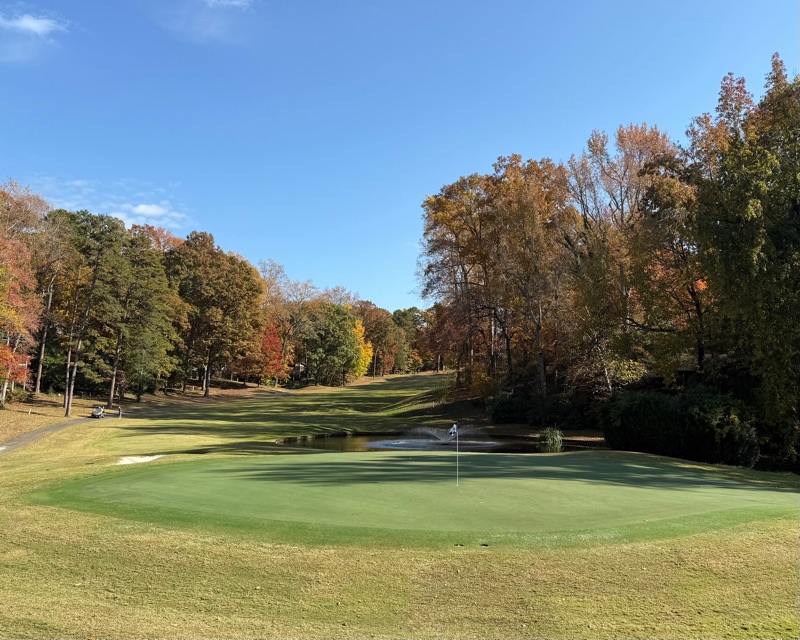
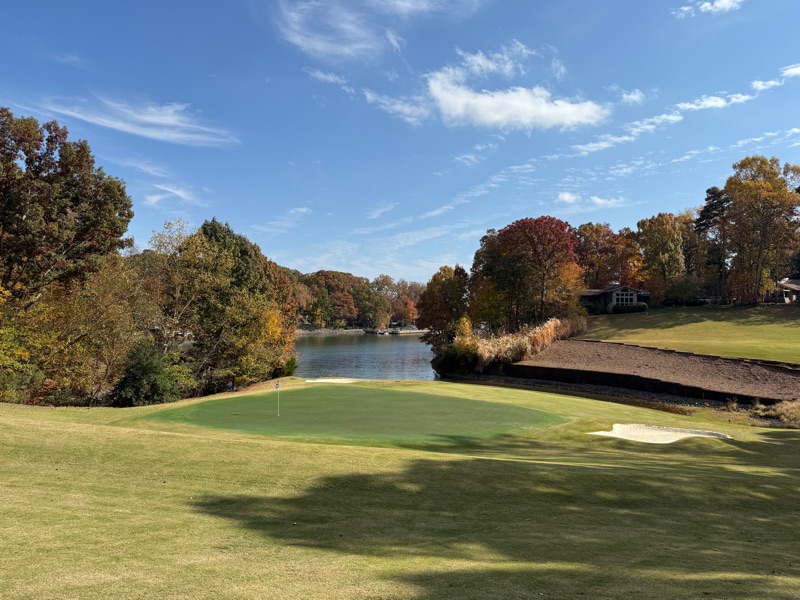
(The 374/342 yard par four fifth button hooks to the right around a deep gorge. Most of us will have a difficult shot over the ravine to what is essentially a peninsula green. The long hitter who can hit it past the bunker will have this little pitch back to the putting surface. You’ll see a wide variety of scores here.)
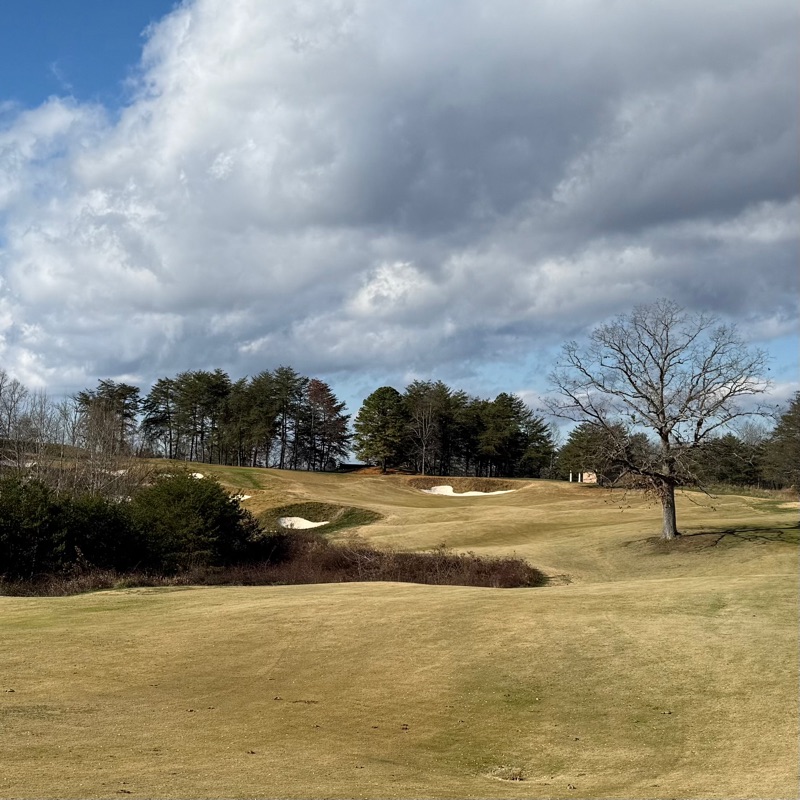
(The 577/535 yard par five seventh is full of decisions as a tree forces you to decide how much you’d like to challenge the hazard on the left. The optimum play is past the tree further up the right where the higher ground gives a better view…
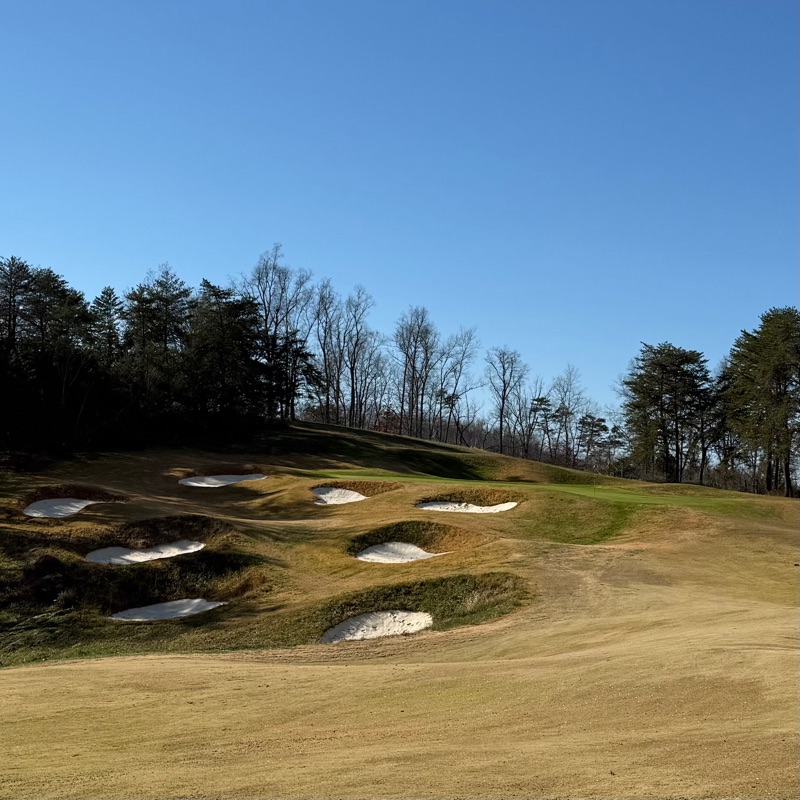
…a ball that funnels back to the left will leave an uphill shot to angled green protected by a bevy of bunkers. These traps will make the long hitter think twice. A par is a great score.)
This is a very severe piece of property and I find it amazing that Hills and Forrest were able to massage a golf course on it. If you were to try to shoot a real score, I think throttling back and playing to the fat part of the fairway would be a smart decision. The first five holes have the greatest potential for a big number so managing your game to secure a bogey at worst is key. The course becomes more playable at six with wider fairways and less sloping terrain. The 9-15 stretch features shorter holes where a bunch of pitches and short irons will be the club of choice. One will have many birdie opportunities during these seven holes. The final three holes are a bear and par will be a good score. With a 145 slope rating, anything under 78 is a really good score from the tips.
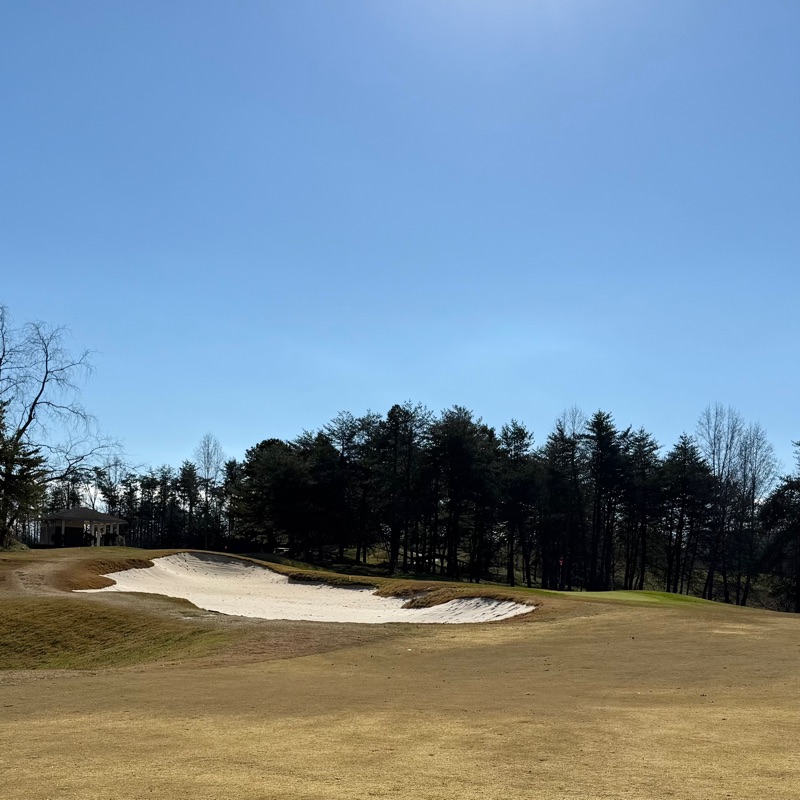
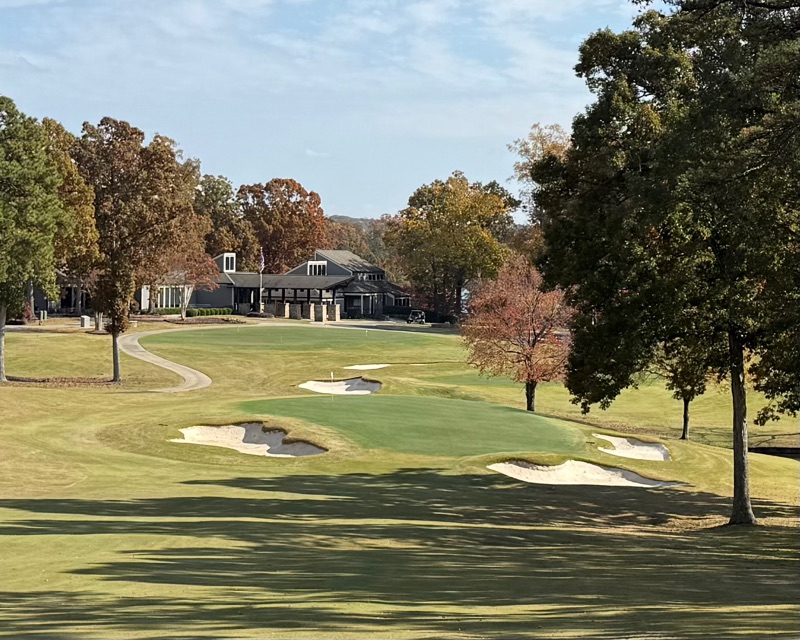
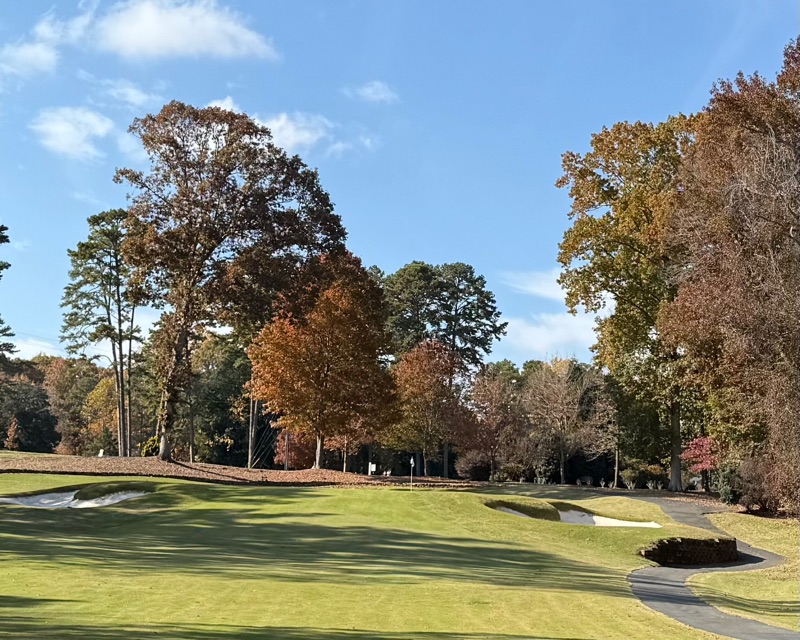
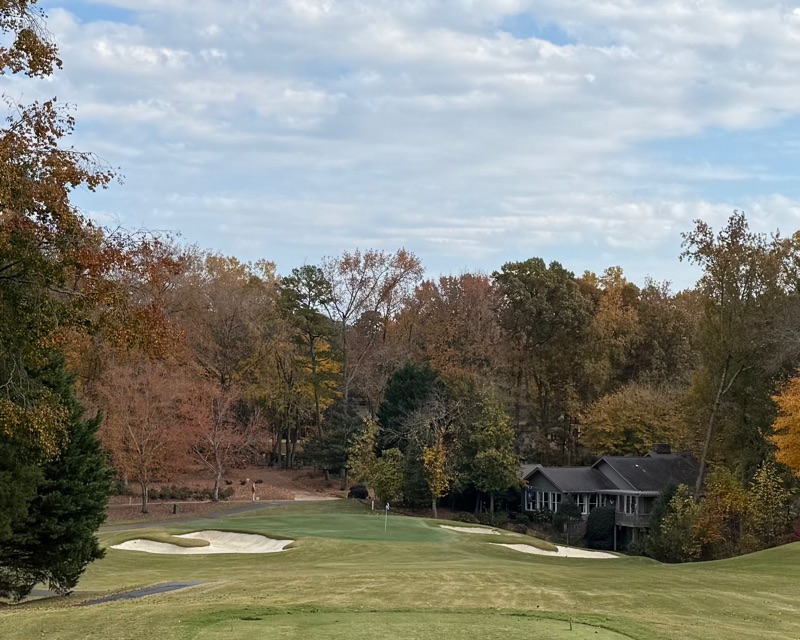
(I love the bunker work at Yatesville. Look how it hides the putting surface and makes even the shortest pitch seem so difficult. This is the view on the 336/314 yard par four tenth. It was my only birdie of the day.)

(The 347/320 yard par four eleventh is a great golf hole. The fairway occupies a heavily left to right slope. You can hit it far left and let it bound back to the right or you can peel a draw down the right and let it ride the hill down short of the green.)
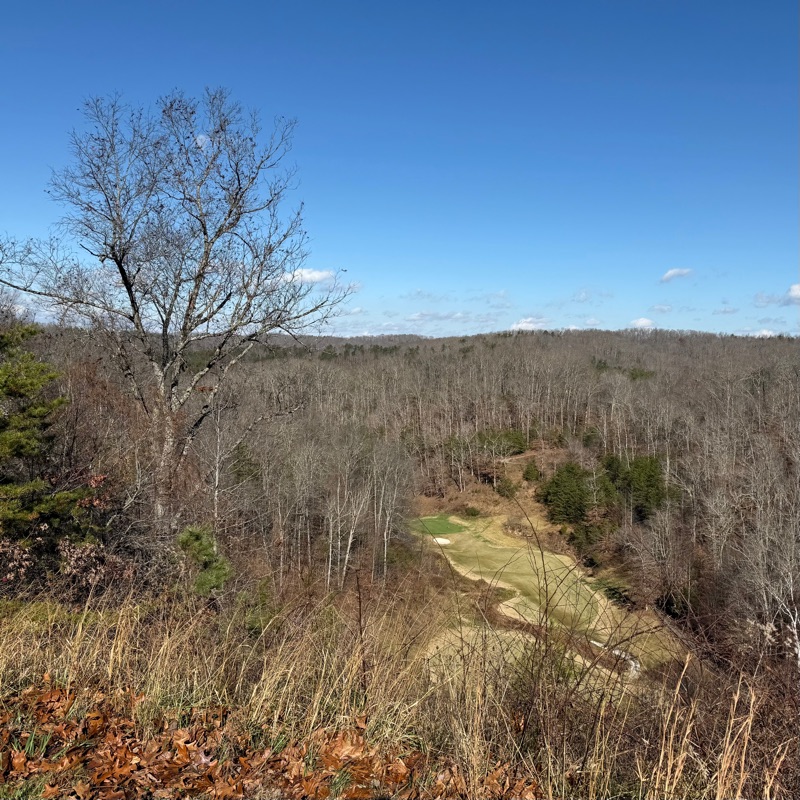
(The 304/290 yard par four thirteenth put Yatesville on the map. It falls 240’ from the tee box! The two things that gave me the most trouble were picking a line to start my tee shot on and then watching the entire ball flight as it went below the treeline. The pro tip on the sheet suggested hitting your 175 yard club to the fairway but I don’t blame you if you decide to give it go. It’s a super cool hole!)
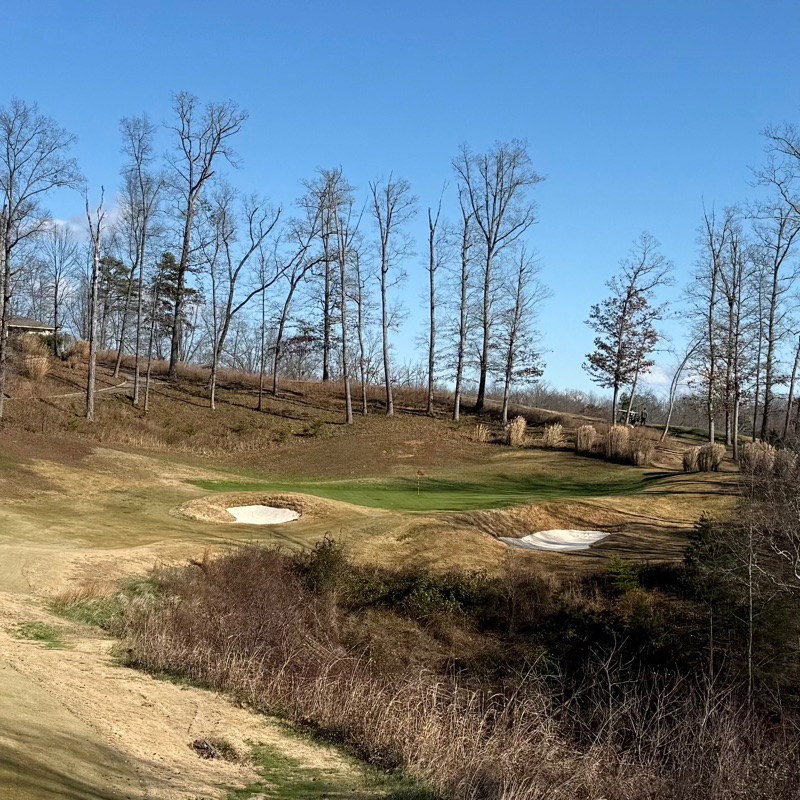
(The 400/378 yard par four sixteenth has a generous fairway and then this shot over the corner of the hill. The rear left and right corners of the green demand specific shots to get close while the front middle section is somewhat of a bowl. Birdie is in play here.)
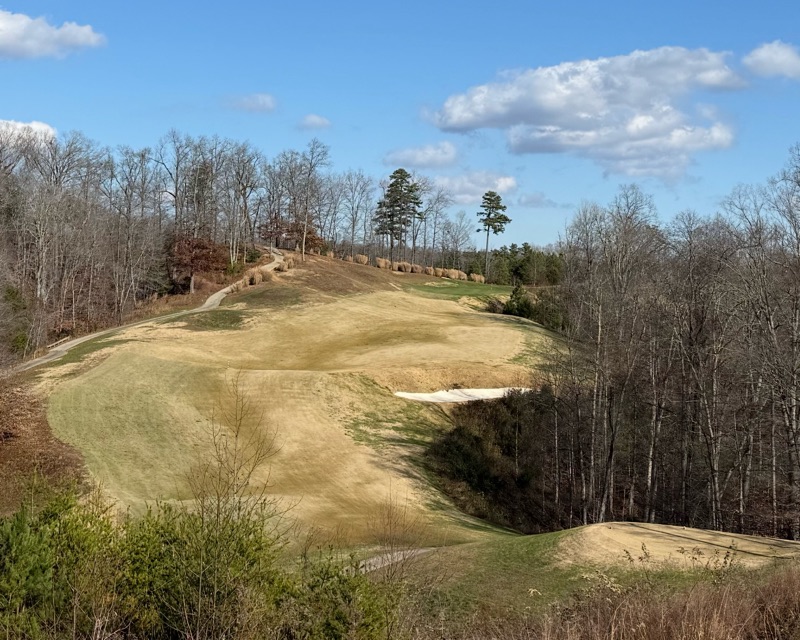
(The final hole is a 382/348 yard par four across a valley to a climbing fairway. It plays much longer than its listed yardage. From the back tee, it’s 220 yards to carry past the right bunker. The approach is to a green that slopes left to right. Four is a good score.)
Yatesville Lake is not for everyone and there’s a whole subset of golfers who will hate it. However, and this has proven to be the case, it has developed a cult following and players come from as far away as Canada to experience a unique and unusual round of golf that pushes the boundaries of what a golf course can be. I’m sure with multiple plays figuring out the places to miss and not miss will increase one’s enjoyment. I personally loved the drama and craziness off it all. Count me as a fan. I give it a 7 (great)(worth driving 3-4 hours to play).
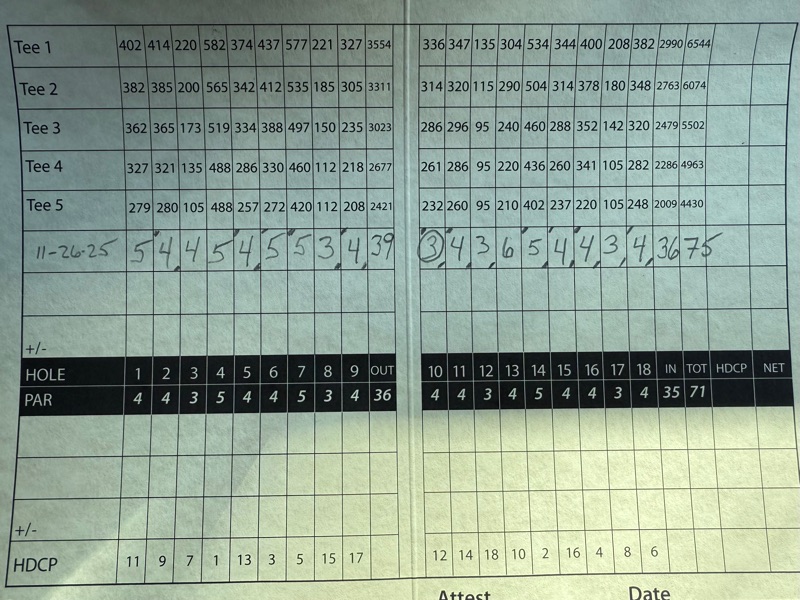
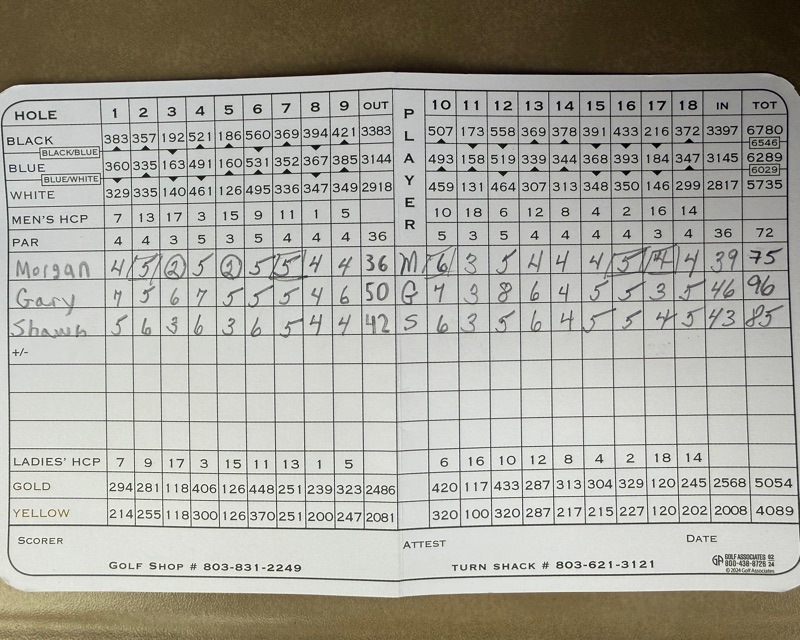
(75 is not a real score. I hit multiple balls from different tee boxes and took the best one. I mostly played #2 and #3 tees but did mix in a couple #1. If I was playing stroke play, I think I’d move up to the #3 tee and play it at 5,502 yards. The course is perfect for a four-man scramble. Blog 491.)
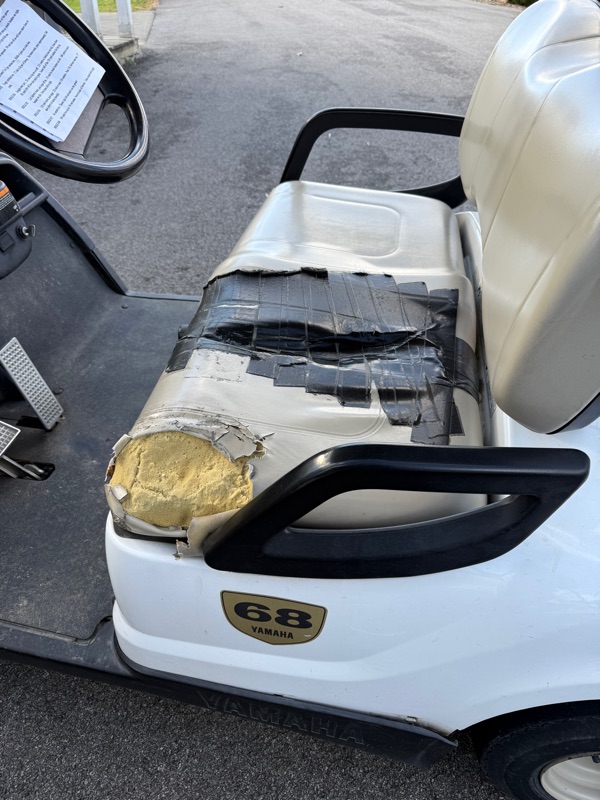
(They had the winter carts out and this was my chariot for the day lol! Thankfully I had a blanket to cover the seat.)
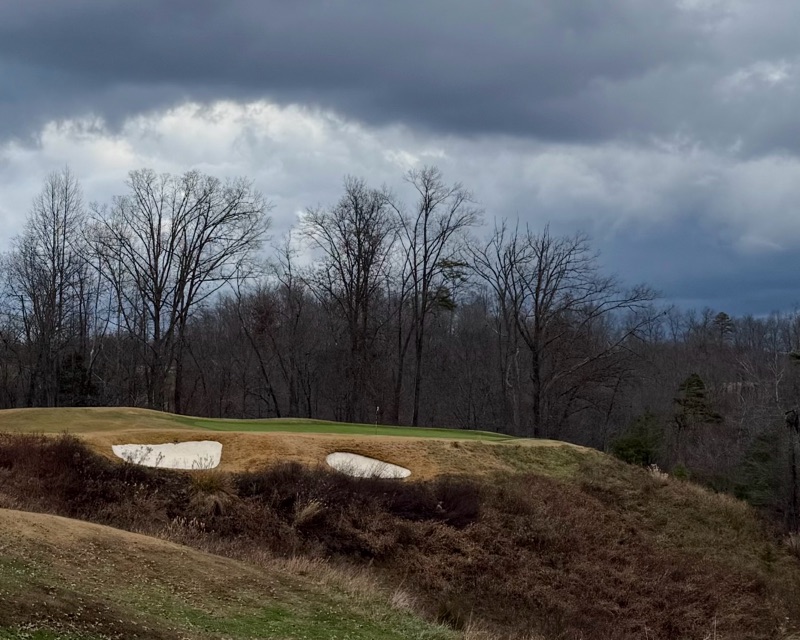
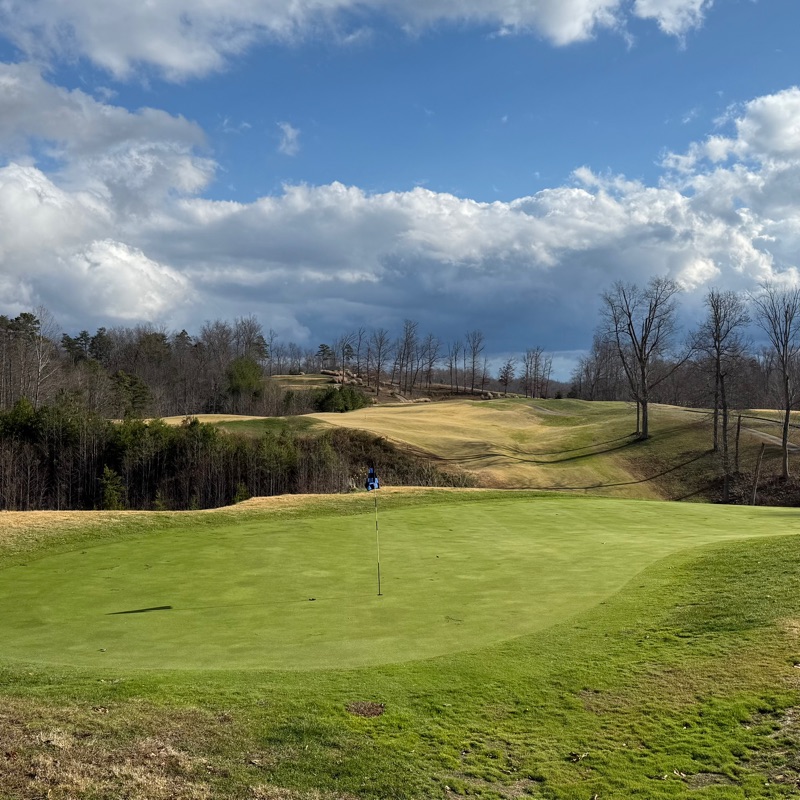
(The Kentucky State Parks do a good job keeping their golf courses in great shape. At $35 on the weekdays and $45 on the weekend, this may be the best value in America. This is an alternate view for the par four fifth approach.)