1920 Western Open Jock Hutchinson
1925 PGA Championship Walter Hagen
1927 Western Open Walter Hagen
1928 U.S. Open Johnny Farrell
1934 Western Open Macdonald Smith
1961 PGA Championship Jerry Barber
1968 Western Open Jack Nicklaus
1971 Western Open Bruce Crampton
1997 U.S. Senior Open Graham Marsh
2003 U.S. Open Jim Furyk
2015 U.S. Amateur Bryson Dechambeau
2017 PGA Women’s Championship Danielle Kang
2020 BMW Championship Jon Rham
2023 BMW Championship Victor Havland
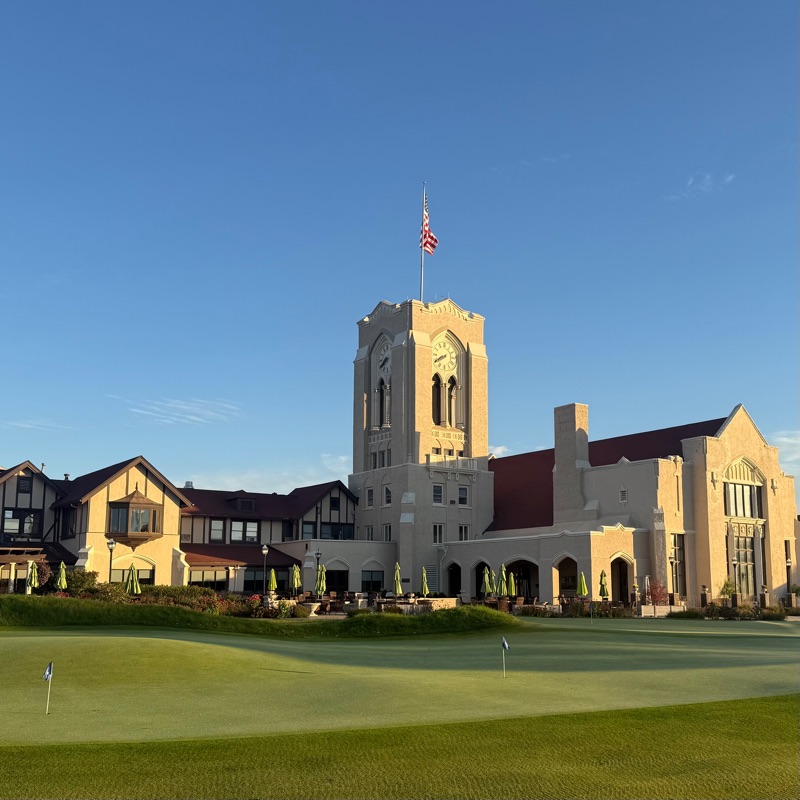
Olympia Fields is one of the heavy hitters in American golf. The list of major championships and winners extends over 100 years. Back in the roaring twenties, this place had four courses but had to contract during the Great Depression. The two courses that survived were the first and last ones built. The South is the original, designed by Tom Bendelow in 1915.
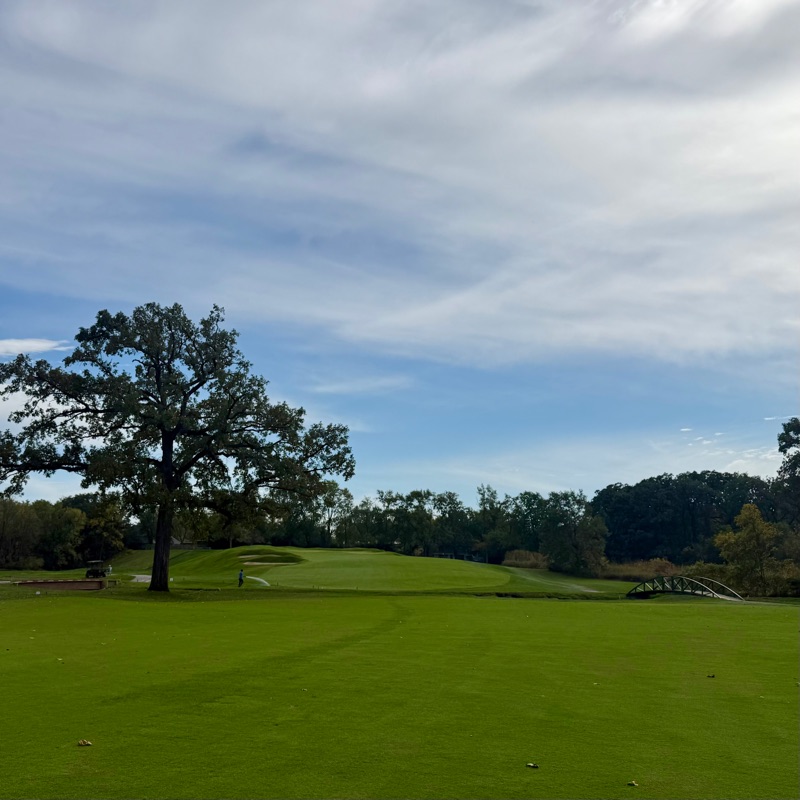
(The 410/380 yard opening hole reminds me of Cape Cod Country Club’s “Volcano Hole” fourteenth. The biggest difference is the green complex isn’t caldera like. The first two holes are actually from course #2. The second hole is the eighteenth hole from that course.)
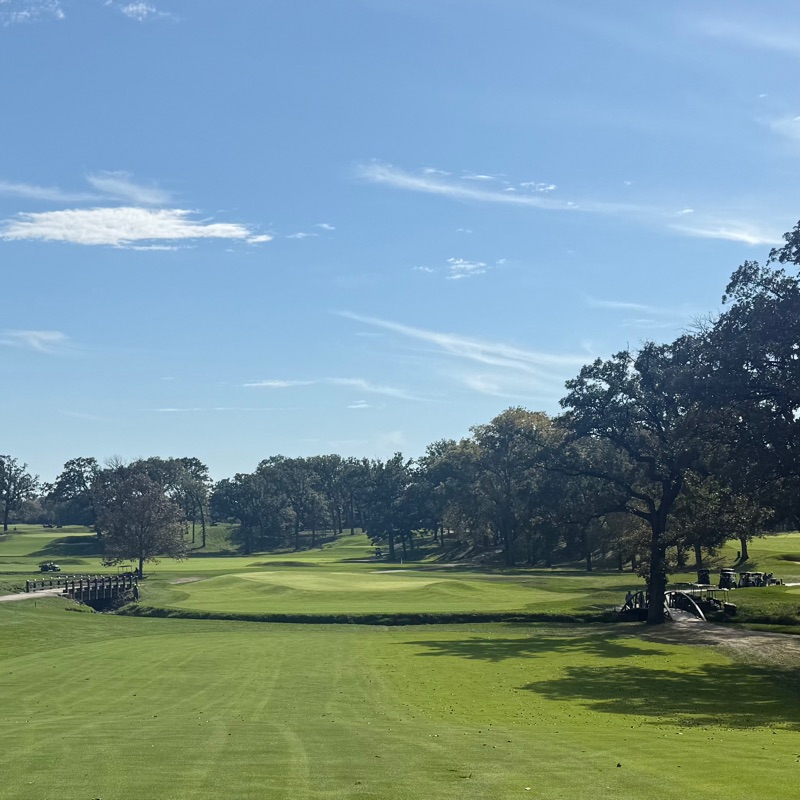
(The 495/400 yard par four fourth doesn’t have a single bunker yet the green is mischievously placed with the creek short and left. Short grass surrounds the putting surface and one can see the sharp edges and the testy chips you can encounter should you miss.)
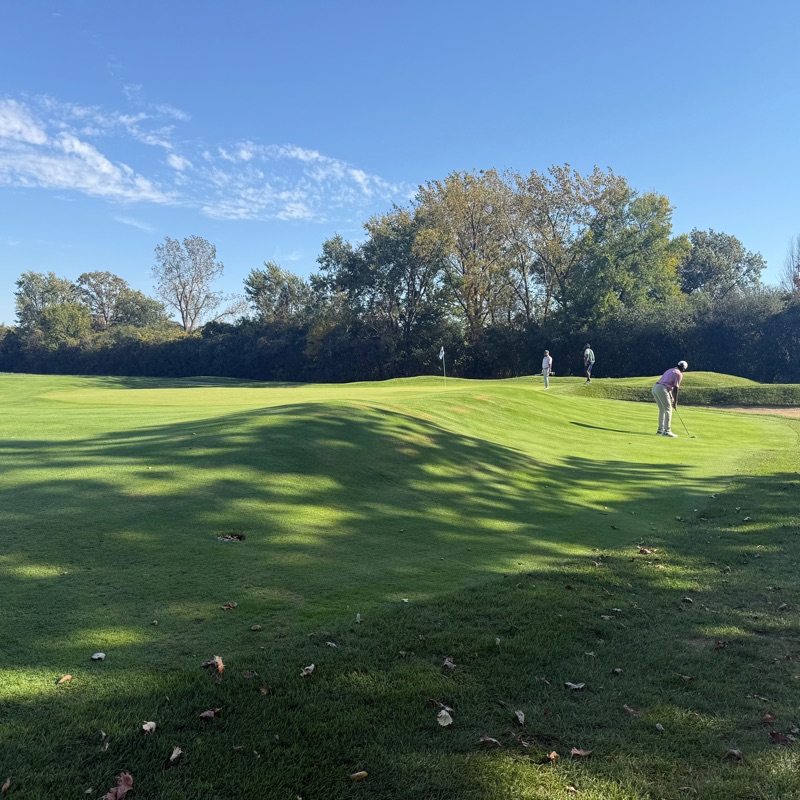
(This is a great view of the delicate shots you’ll find at Olympia Fields. Andy Staples restored the course in 2023 and settled on reintroducing the short game shots that Bendelow often employed in his designs. This green is from the 550/517 yard sixth.)
I am not usually star struck when I visit a new course but when I saw the clock tower, I knew I was in a special place. It’s one of the most recognizable symbols in golf. The North course, which sits on the other side of the clubhouse, is the championship layout. The South is the course the members enjoy the most. It’s more playable, more fun, and has plenty of variety. Butterfield Creek in one way, shape, or form, is in play on ten holes. Eight of the greens sit atop ridges or plateaus. Those are the features you want when you’re designing a course.
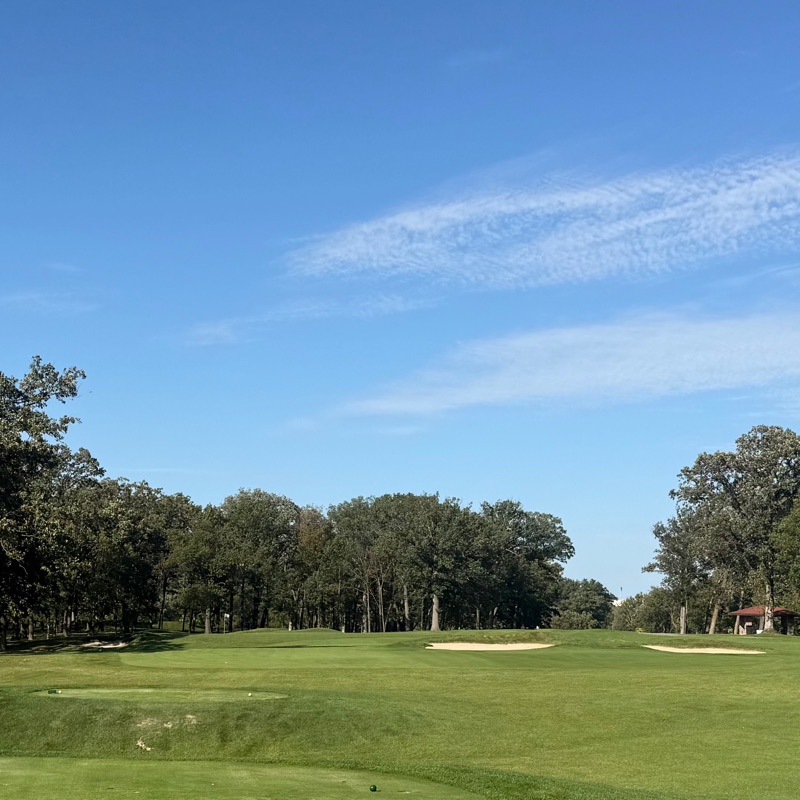
(The 249/183 yard par three seventh has a Redan-ish green where you can use the terrain to funnel the ball towards a left pin position. It originally was a short par four which illustrates how cool this putting surface is!)
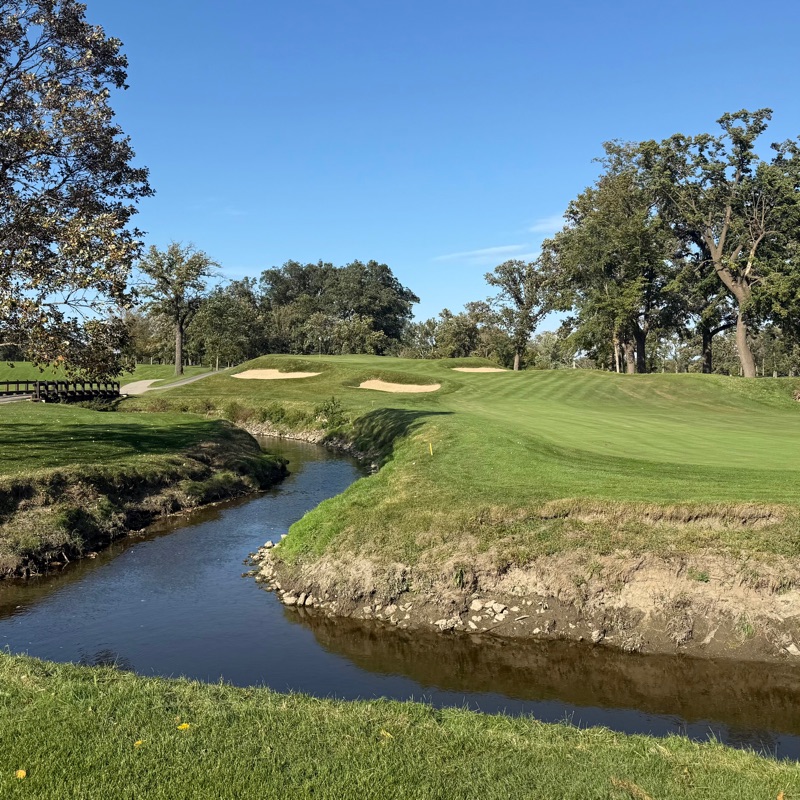
(The 387/337 yard par four eighth is all world! With the creek cutting across the fairway and snaking up toward the green, players must decide just how aggressive they want to be off the tee. This angle is thwarted by a set of traps that squeezes the approach…
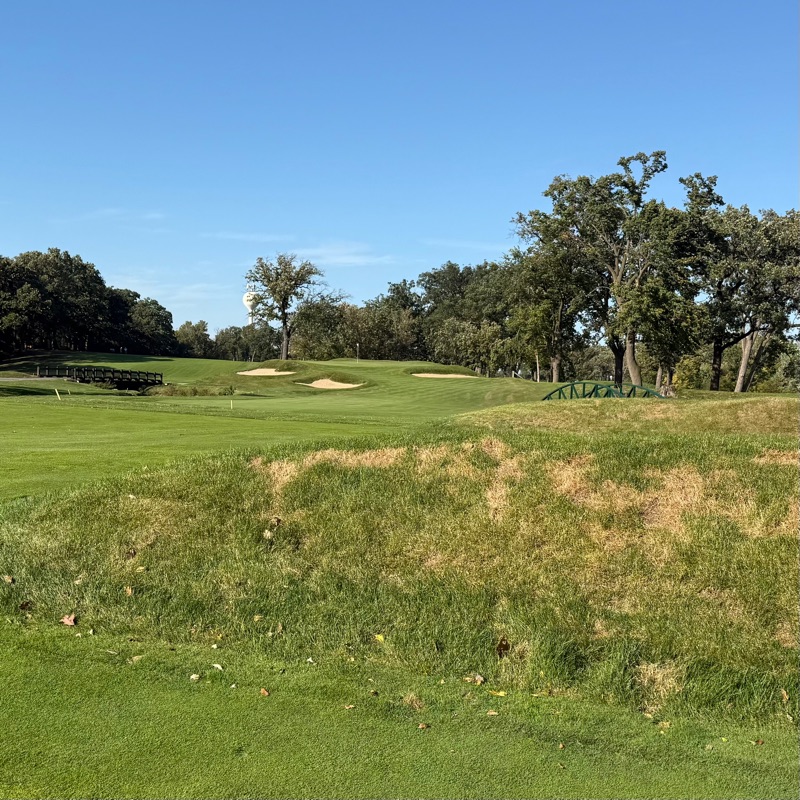
…the right side opens up the green but it’s protected by three high cops. Missing left is obviously bad, but even worse is losing it to the right where a twenty foot drop into “Hell’s Kitchen” becomes a death kneel…
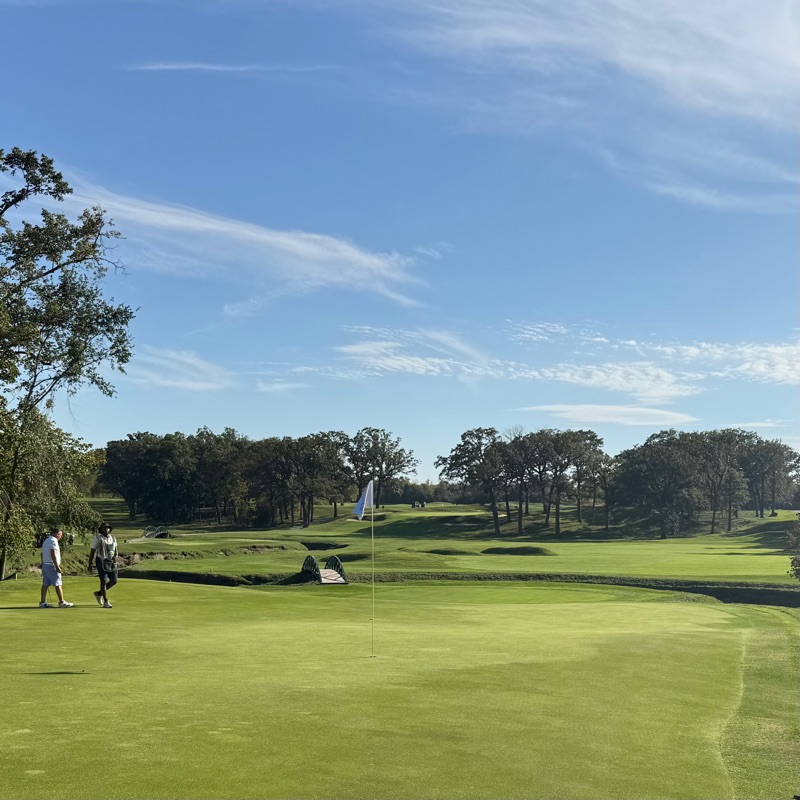
…looking back, you can see the width of the fairway and all the choices from the tee. Two of my playing partners took turns hitting it left of the green, long into Hell’s Kitchen, and then left of the green again!)
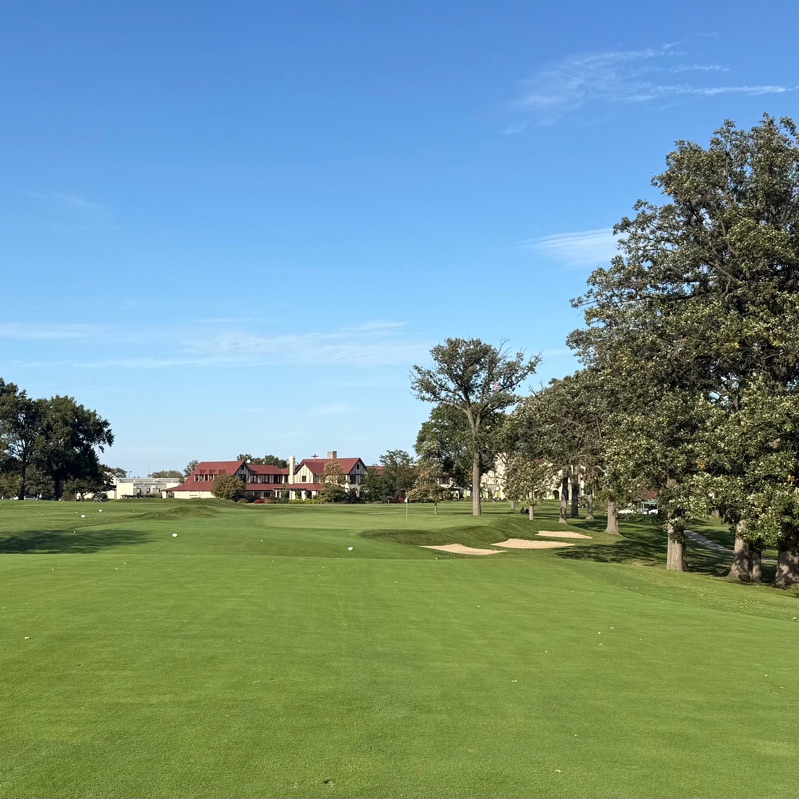
(The 571/540 yard uphill par five requires three well struck shots to reach this in regulation. Note the strong left to right cant of the green complex. Let the slope be your friend.)
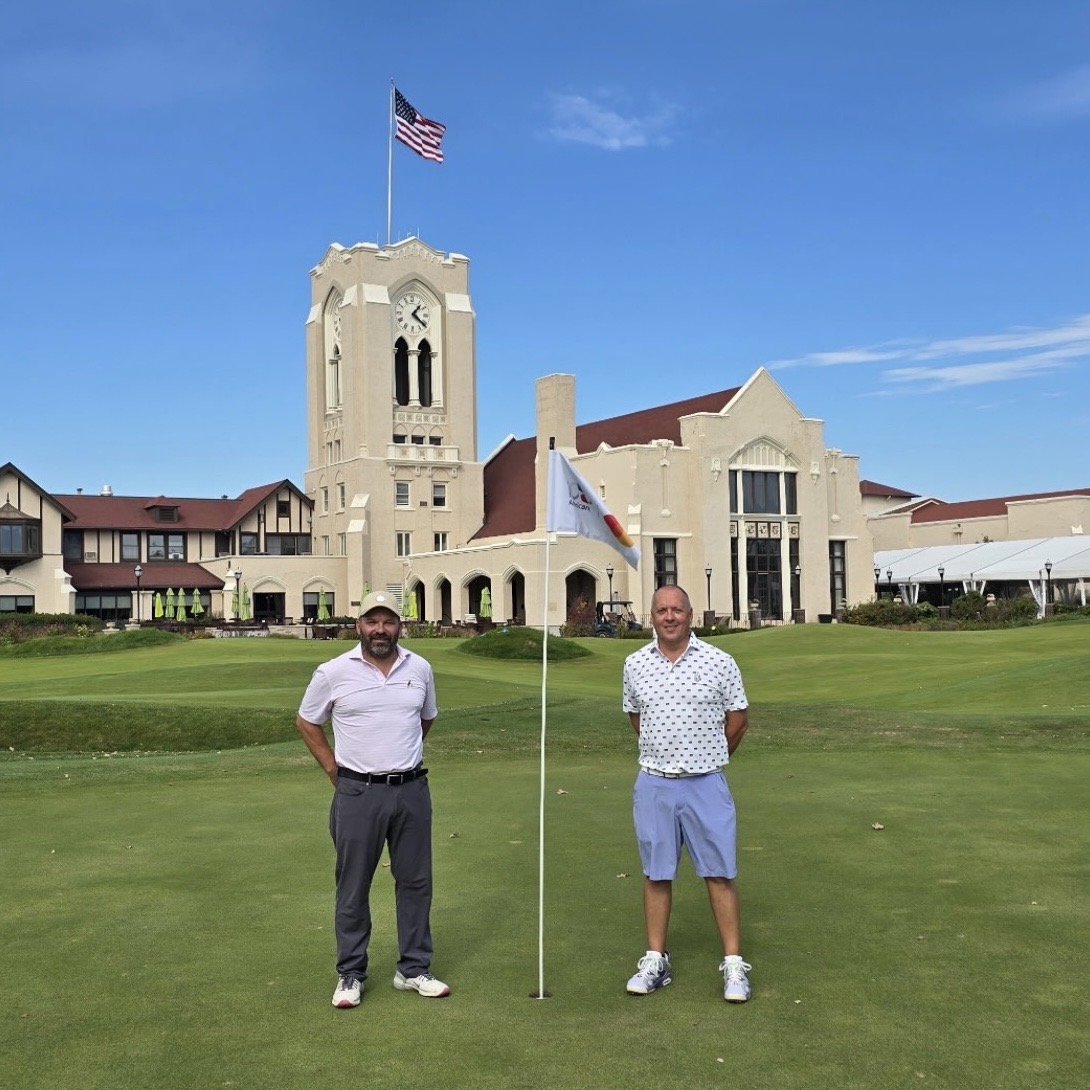
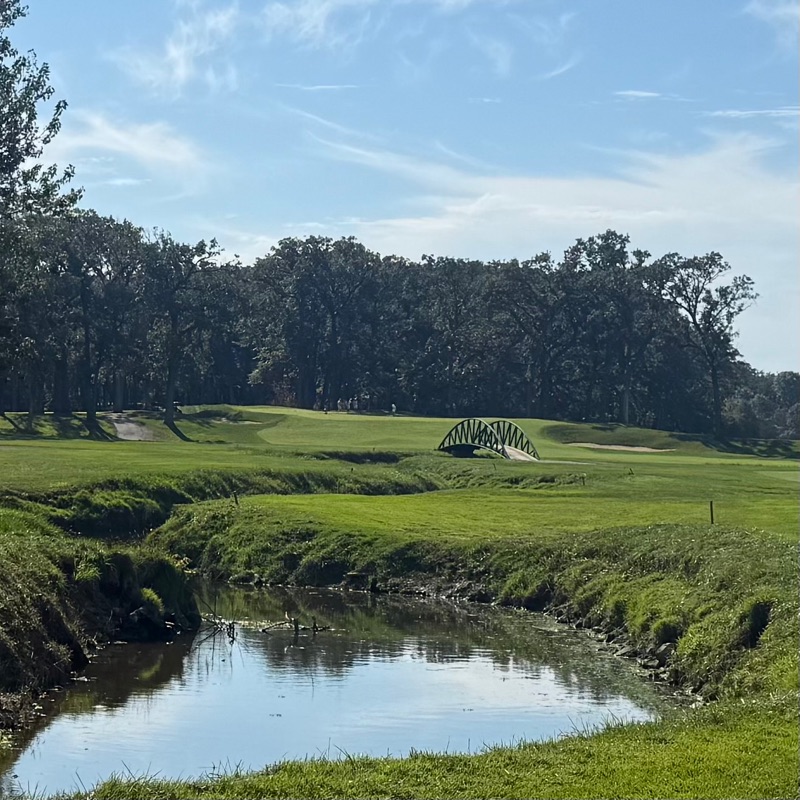
(The 530/478 yard par five tenth is reachable in two with a good drive. The green is elevated on a ridgeline with bunkers carved into the front slope. The creek on the left comes up fast and even crosses the fairway for shorter hitters to consider hitting over in two. In big tournaments, they play this as a par four.)
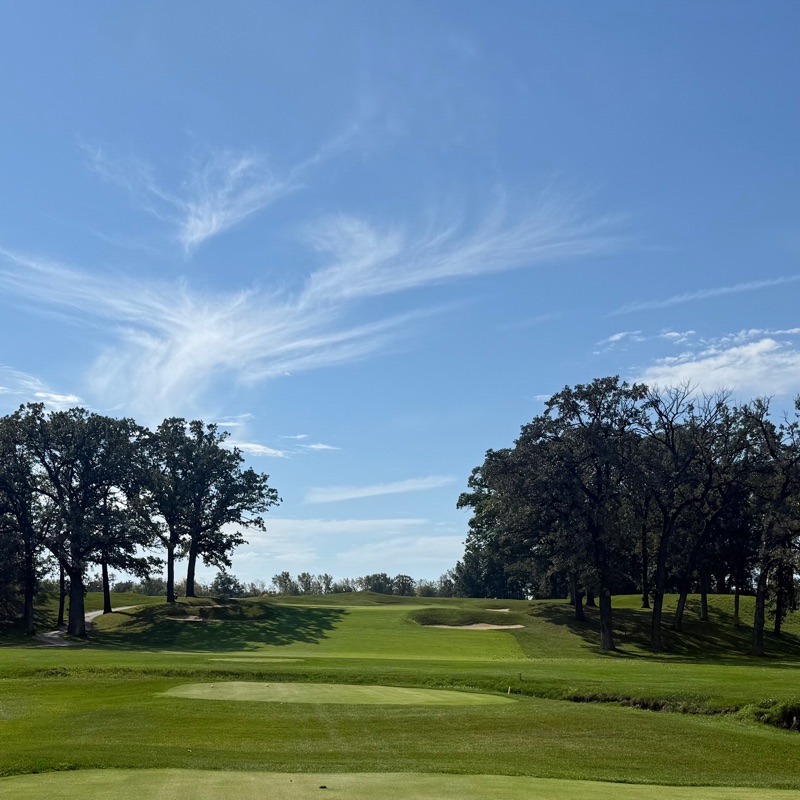
(This long par three has a classic look! Boldly bunkered in the front with fairway between, a ball that spins off can roll down to the flat area. At 212/170 yards, a shot to the middle is perfectly fine.)
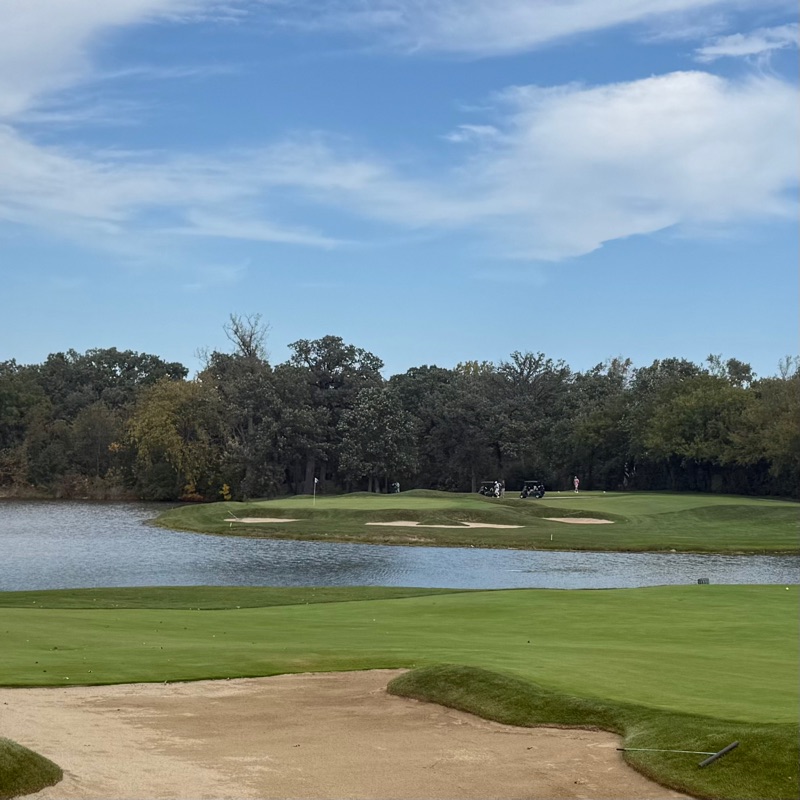
(Peeping over from behind thirteen green, the short par three fourteenth is ringed by bunkers with water short and left. At 161/135 yards, it’s the shortest hole on the course.)
Many of the championship venues with multiple courses have a “little brother” that gets little recognition but are generally preferred by its membership and visitors. The South, as Tom Doak said in his Confidential Guide, is a hell of a good golf course! Difficulty and resistance to scoring are two categories that raters use to determine what is in the Top 100, but for the majority of us, these two topics just mean it’s going to be a long day. The South has many of the characteristics that make golf enjoyable, and the club does a fantastic job keeping the creek clean from overgrowth. It’s the key feature. Overall, it has one great hole (8th), a couple average ones, and a bunch of strong ones. The 7-12 stretch is the heart of the routing. It’s no coincidence that both 8 & 11, two cool short par fours, are in this sequence. It’s one of the top ten courses in Chicago. I give it a 7 (great)(worth driving 3-4 hours to play).
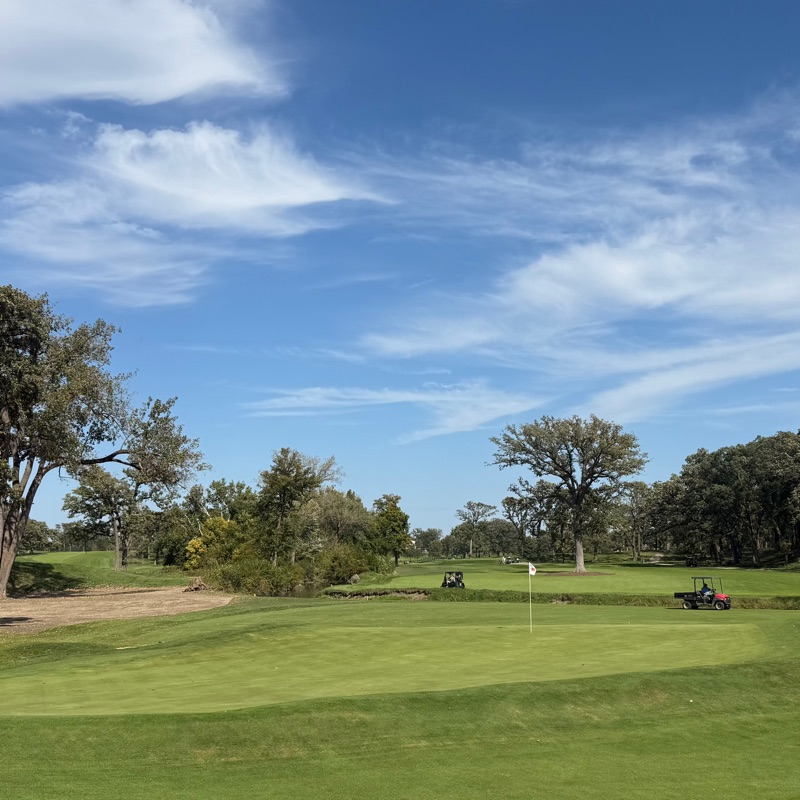
(The 350/331 yard par four eleventh has a large tree dictating playing lines and shot options. The creek crosses the fairway eighty yards short of the green. A false front topples over the brow with the putting surface sloping away to the back right.)
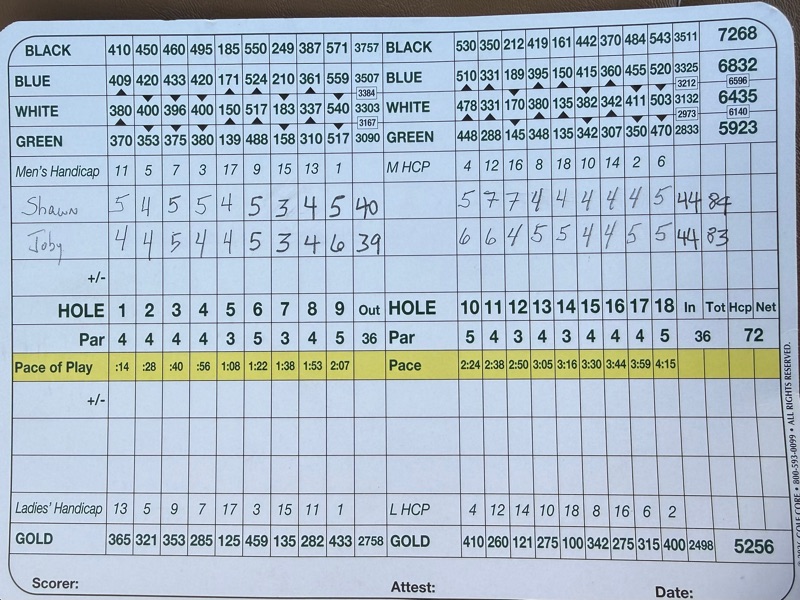
(We played the white tees at 6,435 yards. We started on the back nine and a triple and quadruple pair of sevens (11,12) derailed my score very quickly. After settling down, I did a nice job finding a groove and carded eleven pars. Joby had a good round too as he also struggled on eleven. We had the opportunity to play here thanks to Mastercard/American Airlines points redemption.)
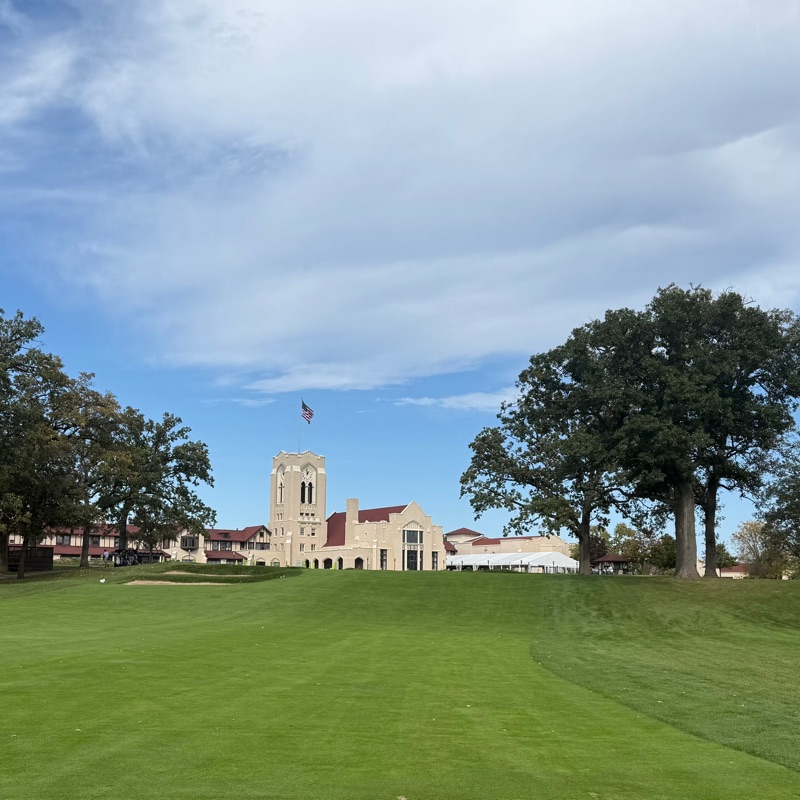
(The 543/503 par five eighteenth doglegs slightly right with the creek cutting across the fairway once again. The green is on a plateau well above the fairway and is a blind third shot. Long hitters can reach this in two. What a great view of the clock tower in the background.)

(Neal Shipley was the ambassador for our event and gave us a short game clinic. Hope he wins a major soon!)
Blog 530
