Thursday, April 30, 2026

Pitch Shots - French Lick

It only took ten years but I finally made the trip to French Lick! These are my observations and opinions about the Dye course, the new Sand Creek pitch and putt, and West Baden Springs Hotel.

Pete Dye Course

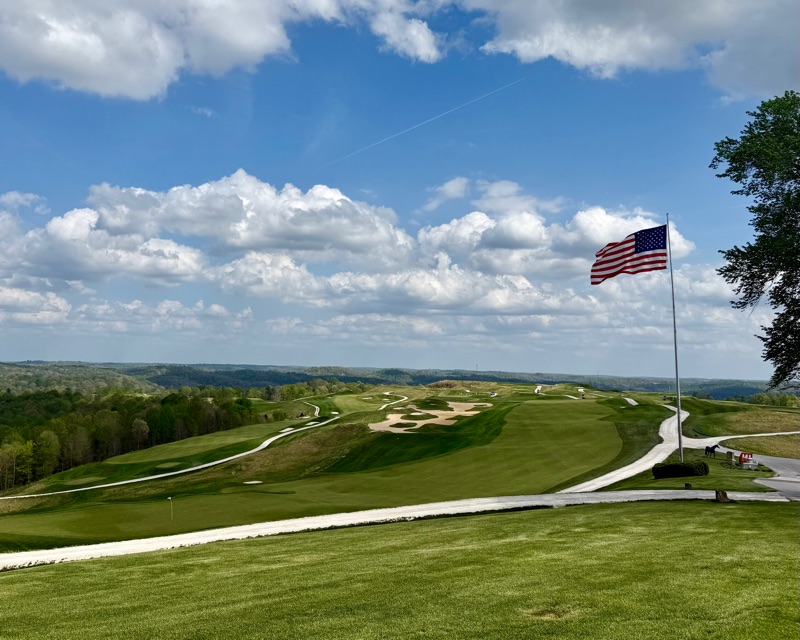
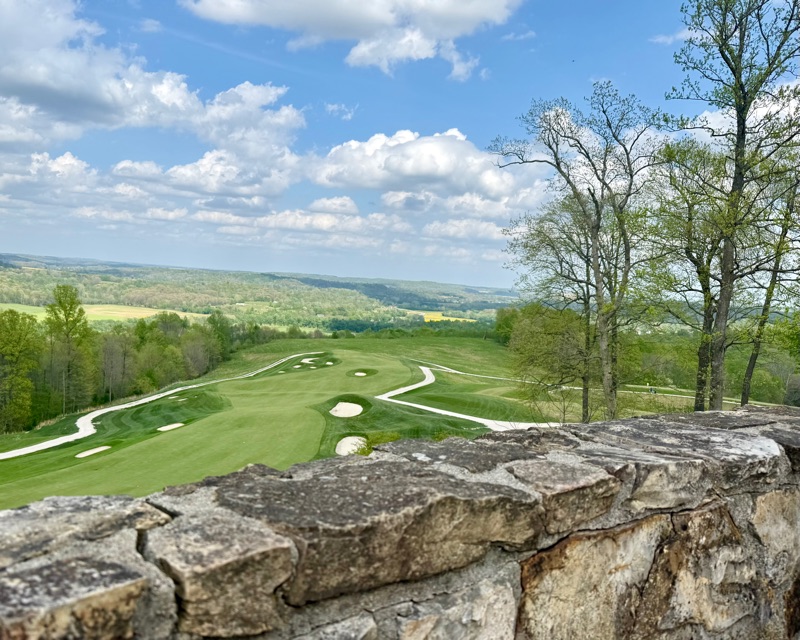
Pete Dye designed the French Lick course after finishing Whistling Straits in Wisconsin. Coming off that massively successful project, he opted to create an inland version in the hills of Indiana. Many would concur that he did a fantastic job as it is rated as the number one public course in the state, and it even made Golf World’s top 100 resort courses, however, they charge $500 plus caddy fees! That’s a lot of money! We’re talking Ocean Course and Whistling Straits prices! In my mind, the value isn’t there, and judging by the empty parking lot when I visited, it’s in many other people’s minds too. They’d be much better off comparing themselves to Bulle Rock, a Pete Dye design ranked as the #1 Maryland public course.

(If they lowered the price to $250-300, I think the place would be packed. It has cool long range views and many of Pete’s volcano bunkers.)

(The view of the first hole from the stone terrace at clubhouse.)

(The par five ending hole is super cool as it curves around a massive valley.)

Sand Creek Short Course

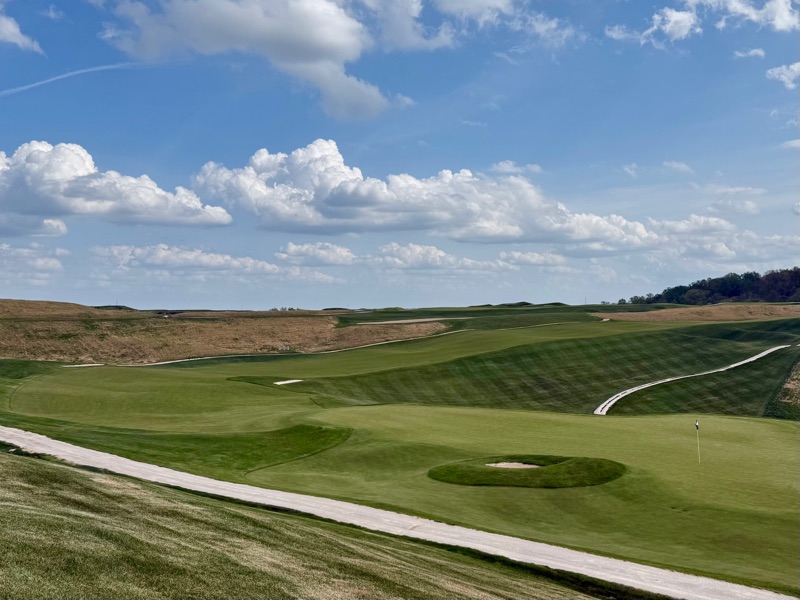
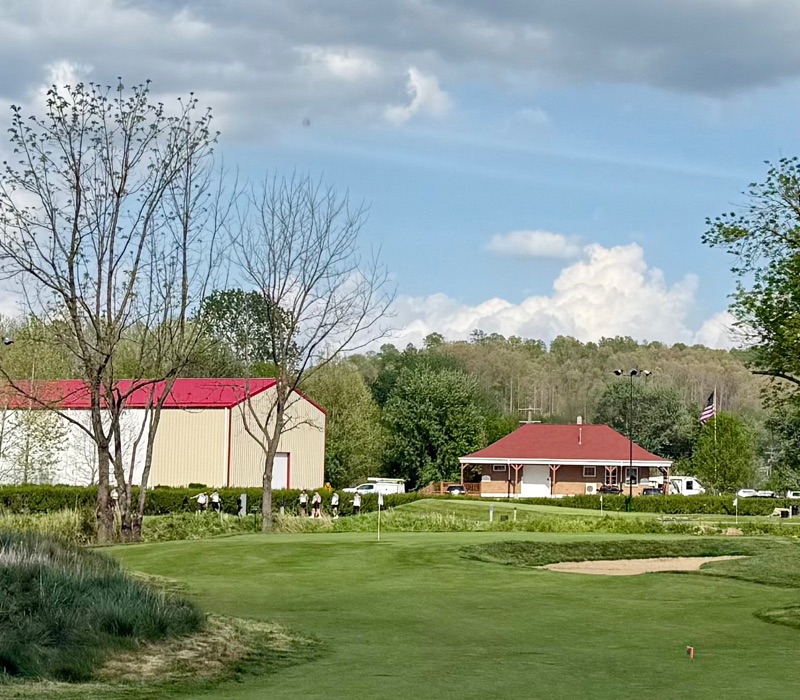
The short course phenomenon got another boost in the arm this week when it was revealed that Tobacco Road would design one between the 12th and 13th holes. At French Lick, Sand Creek fills that role with holes ranging from 41 - 90 yards. It was an in-house project designed by the agronomy team from the Dye course. Cool concept but once again, I’m opposed to the cost as it’s $50 to play it twice (18 holes). I feel these places are like driving ranges, a practice themed short game area, and the price should reflect that ($15-18). I saw bachelor parties playing it in their bare feet, having a great time extending their group game. It should be noted that once the Valley course expands to eighteen holes, this will be the only opportunity for beginners to learn the game.

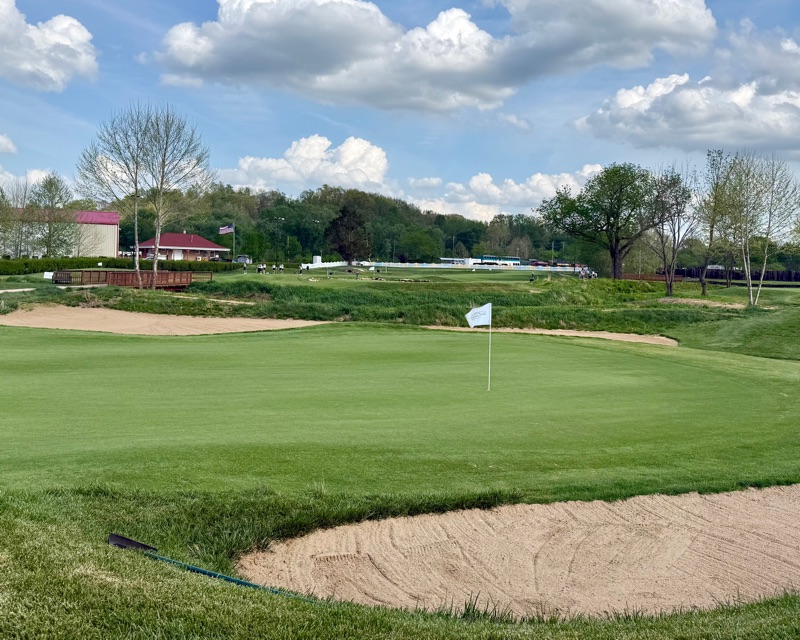
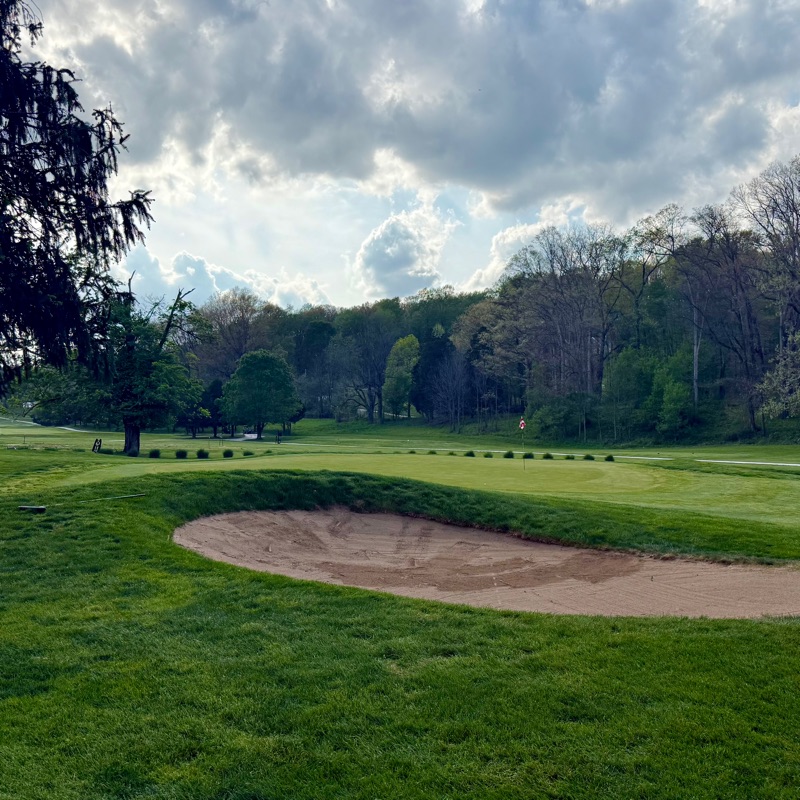
(This is the 77 yard opening pitch shot)

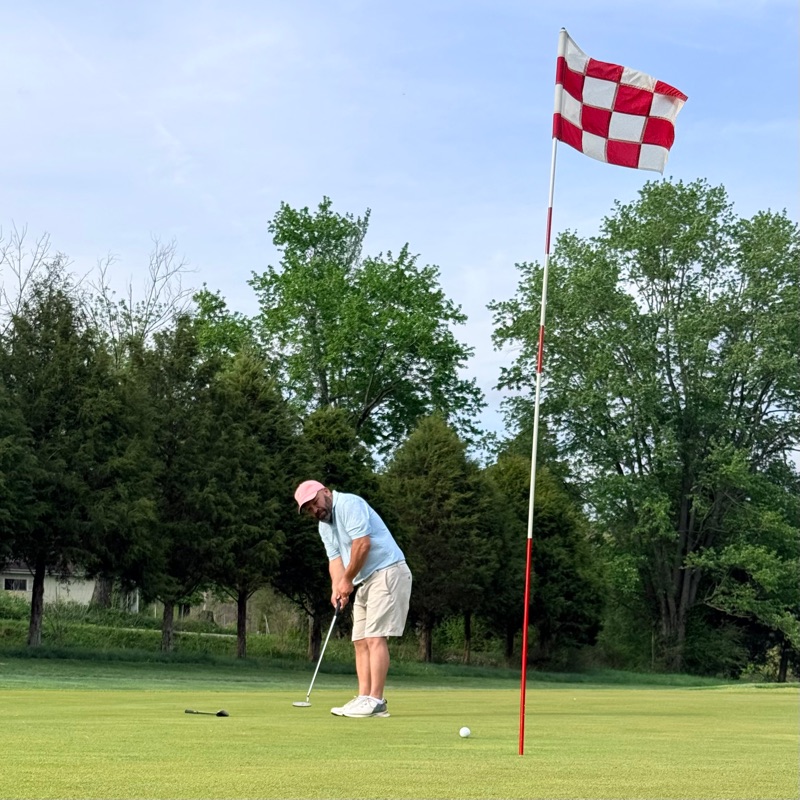
(This pitch n putt course uses short flags as their pins.)

West Baden Springs Hotel

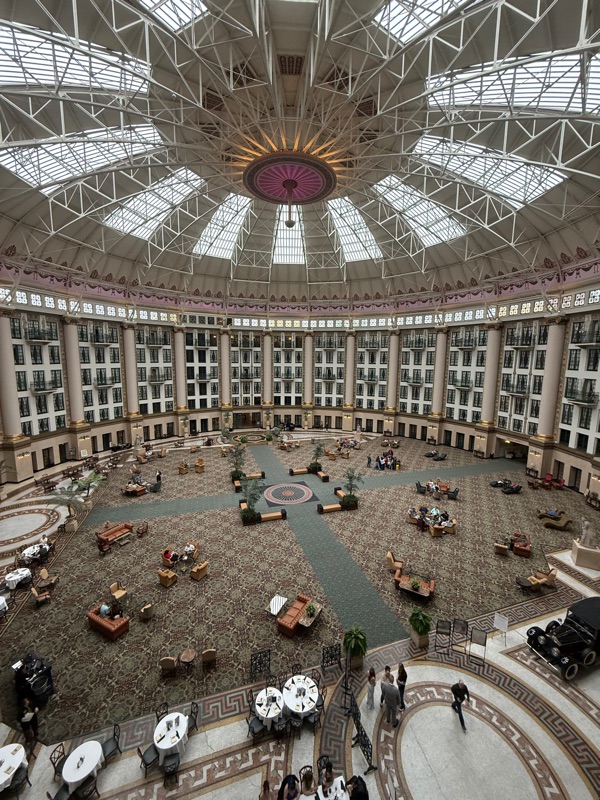
There’s two places to stay in French Lick, either West Baden Springs or French Lick Springs. We stayed in West Baden. Now this place is on the National Register of Historical Places, once being called the eighth wonder of the world as the largest domed building on the planet. Everything is inside including the hotel rooms which overlook the circular atrium of the domed canopy. It’s a really cool experience!

Blog 502

Friday, April 24, 2026

French Lick - Valley Links Course (French Lick, IN)

The Valley Links is a user friendly nine hole course that the resort, for better or worse, is turning into a full eighteen. While this will give French Lick 63 holes, making it one of the largest golf resorts in the Midwest, it is in my opinion a net loss as families and junior golfers will have to turn to the new Sand Creek pitch and putt course for the introduction to the game. I know these short courses are all the rage, but a regulation nine allows bonding, a connection to nature, and offers a wide variety of shots that give young people experience. Kids 12 and under play for free while 13-18 only pay half price. Those are two reasons why I believe they should leave it the way it is.

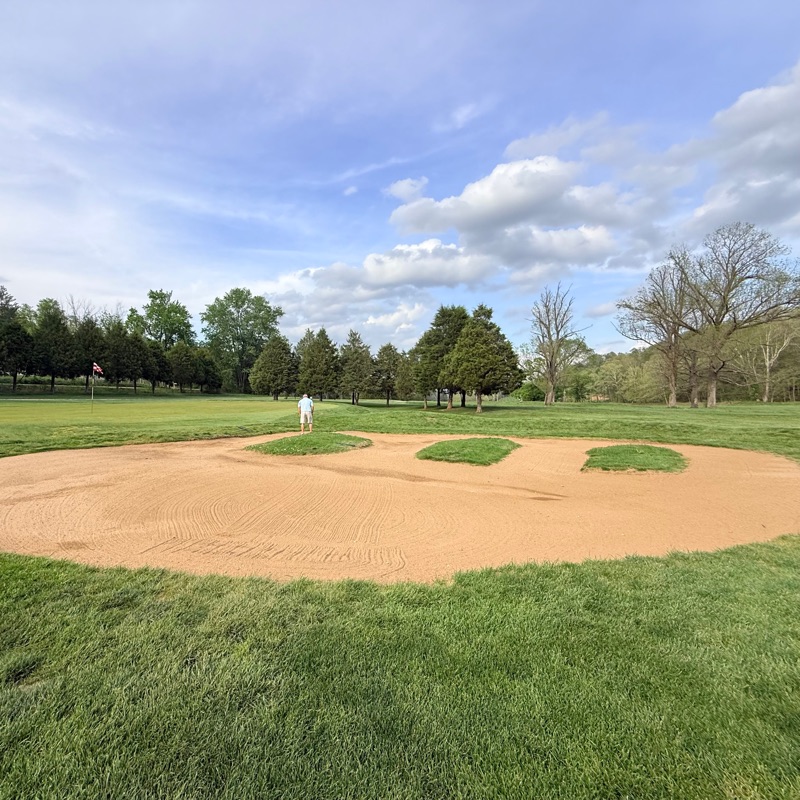
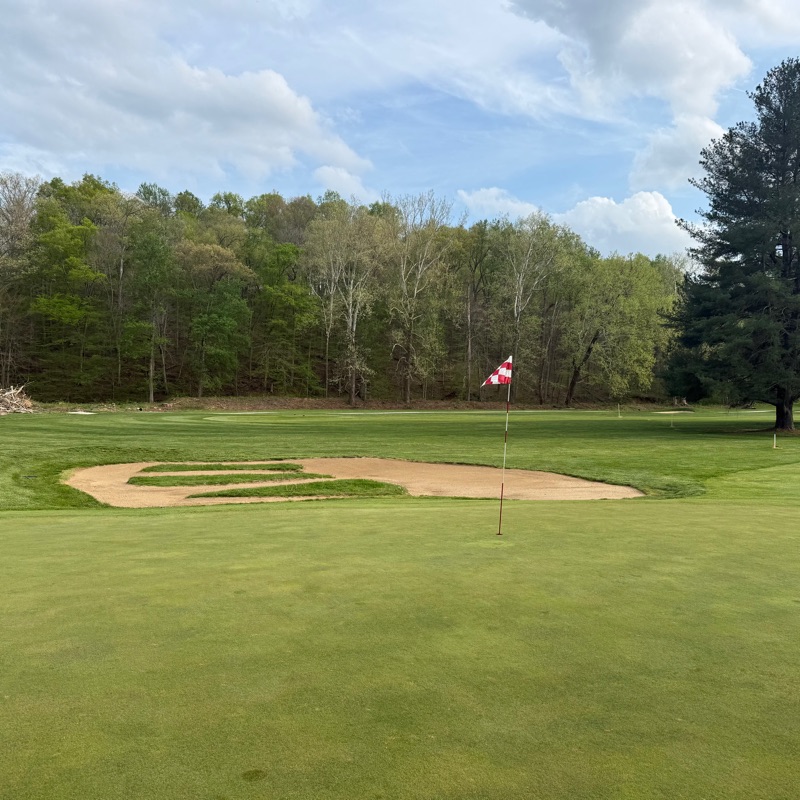
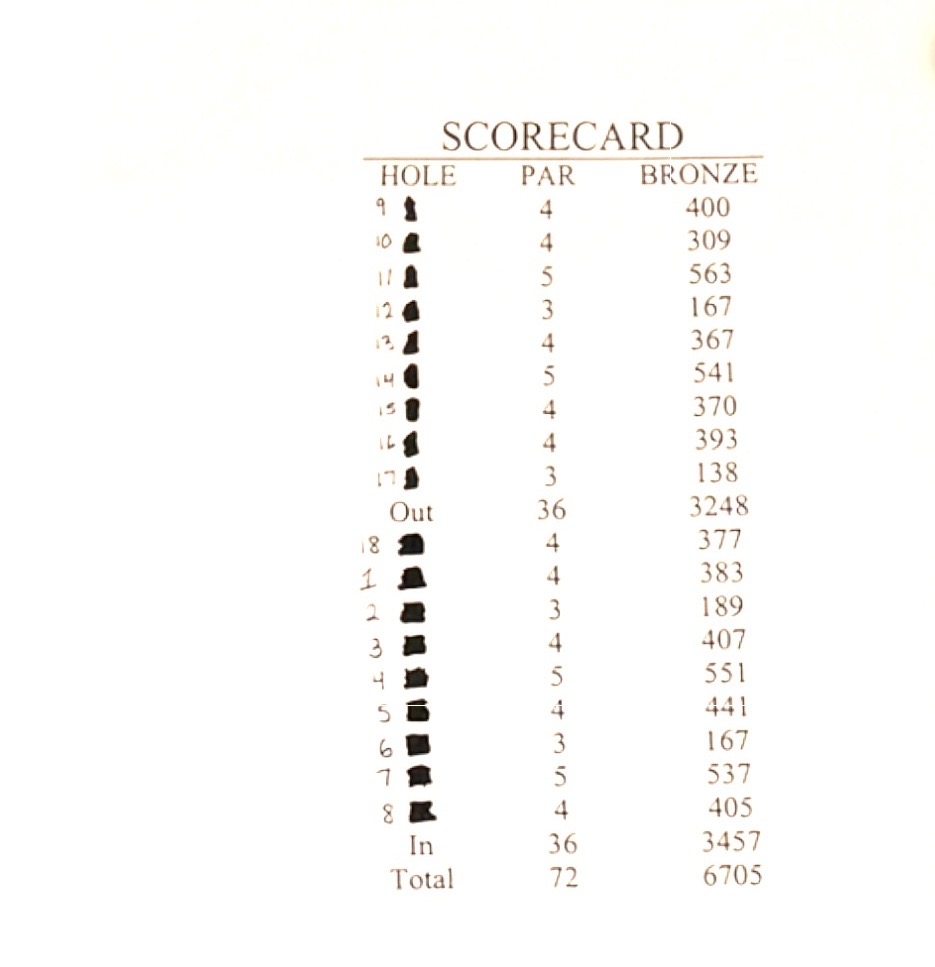
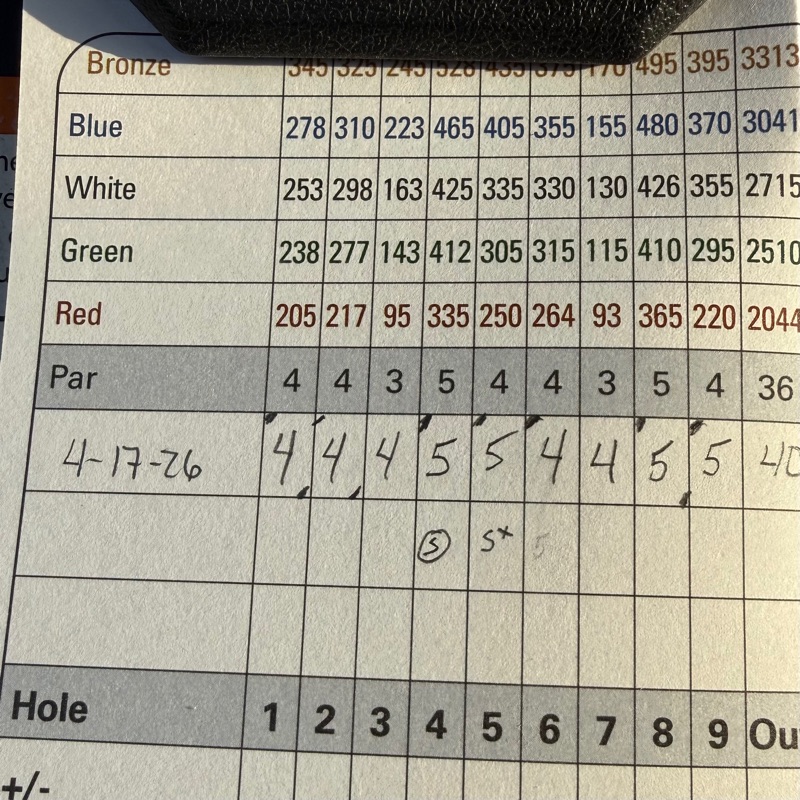
The Valley course was designed by Tom Bendelow in 1907 and later updated by Lee Schmidt. It originally was eighteen holes (one reason why many are okay with expanding it) but was reduced to nine. The present nine holes is a basic out and back routing. The first two holes are short par fours which should give the player easy pars. The incredibly long par three third, 243 yards, will prove to be the toughest hole. It’s plenty flat and plays every yard. The short par five fourth follows, and then a it’s onto a couple solid par fours. The par four fifth has a cool greenside bunker that has three grass islands inside it. The only topographical feature is a rise where the seventh green and eighth tee sit. They are both scenic holes, a 170 yard uphill par three and a downhill 495 yard par five. The eighth has a hazard crossing the fairway, and is big moment for those who can drive over it. The ninth finishes with a strong par four. Looking at the scorecard, it has good length and most will find matching its par 36 a challenge.

(The 435 yard par four fifth has this cool bunker guarding the green…

…being a long par four brings every one of those islands in play. Expect some uncomfortable stances when the ball trickles in.)

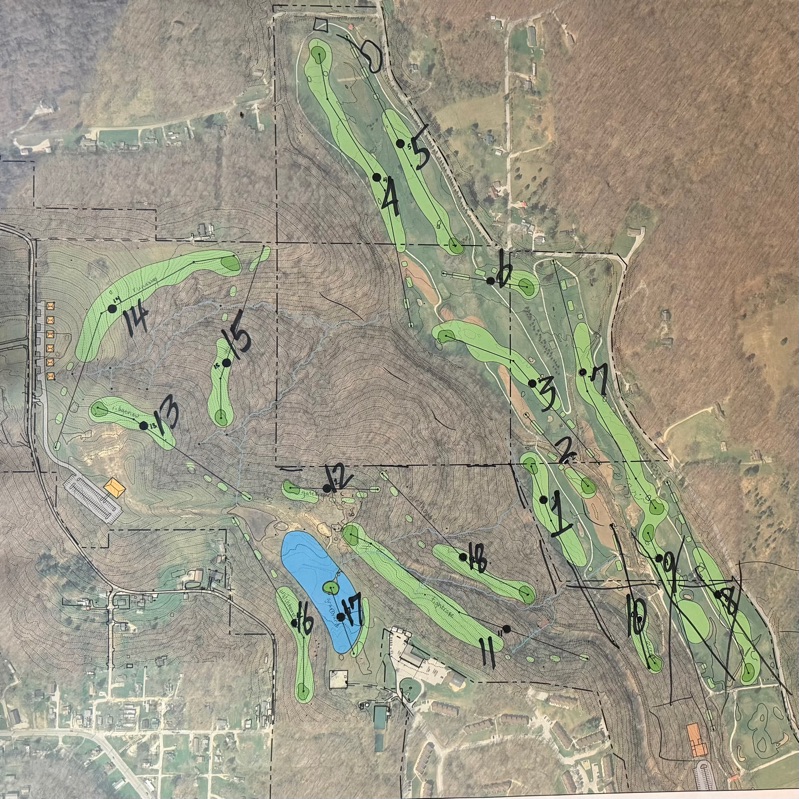
Pete Dye protege Chris Lutzke is redoing the course, and you can be guaranteed that he will try to match the Dye course atop the hill. I’ve seen the schematic routing and there’s an island green which will be the seventeenth hole. I’ve seen Lutzke’s Eagle Eye in Michigan, and he does a great job matching Pete’s architectural style. Surprisingly the project isn’t getting much publicity so I’m interested to see if that changes when the new course is near opening. As is, the valley course is a simple 3 (average)(worth driving 15-30 minutes to play).

(Today’s Valley course are holes 1-9 with the ninth being the opening in the present routing…

…you can see the hole numbers on the left so the island green will be 138 yards. Several holes will be altered with the uphill par three sixth coming at a completely different angle than present seventh.)

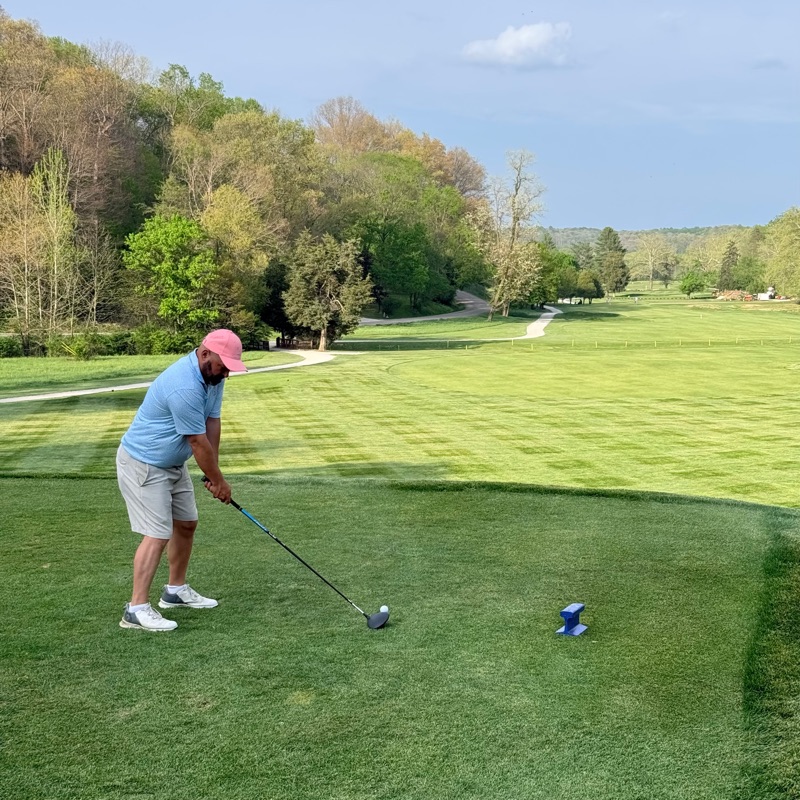
(I played the blue tees at 3,041 yards. The cost was $50. It’s a bit pricey but I’m willing to absorb it if kids are free or half price depending on their age.)

(Worm cam photo!)

(My new caddy will be working the drone for upcoming blogs. Hopefully we can get some really cool pictures!)

Blog 501

Wednesday, April 15, 2026

French Lick - Donald Ross Course (French Lick, IN)

#99 Top 100 Public (Golf Digest)

#57 Top 100 Public (Golf Magazine)

#90 Top 100 Resort (GolfWeek)

#2 Best Public Courses Indiana (GolfWeek)
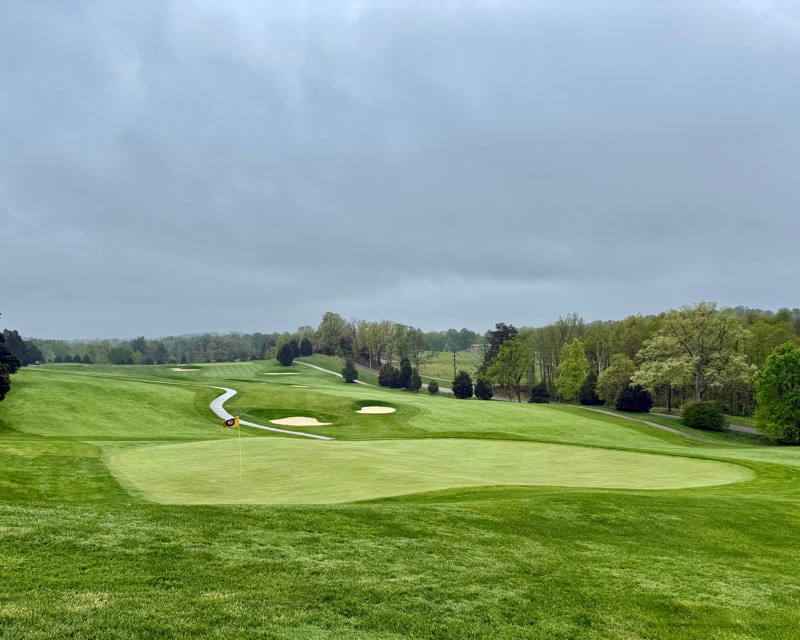
Where did these greens come from?! Most people equate Donald Ross with Pinehurst and the turtleback putting surfaces that define it but his earlier work was characterized by bold features with bowls, tiers, knobs, and rolls. Take the picture above of the seventeenth hole. It has two levels with five feet of slope separating them! While the lower level provides accessibility and birdies, the upper demands precision, and often times, difficult recoveries including putts from below. It’s this type of fearlessness that sets French Lick Donald Ross course as one of Ross’ best.
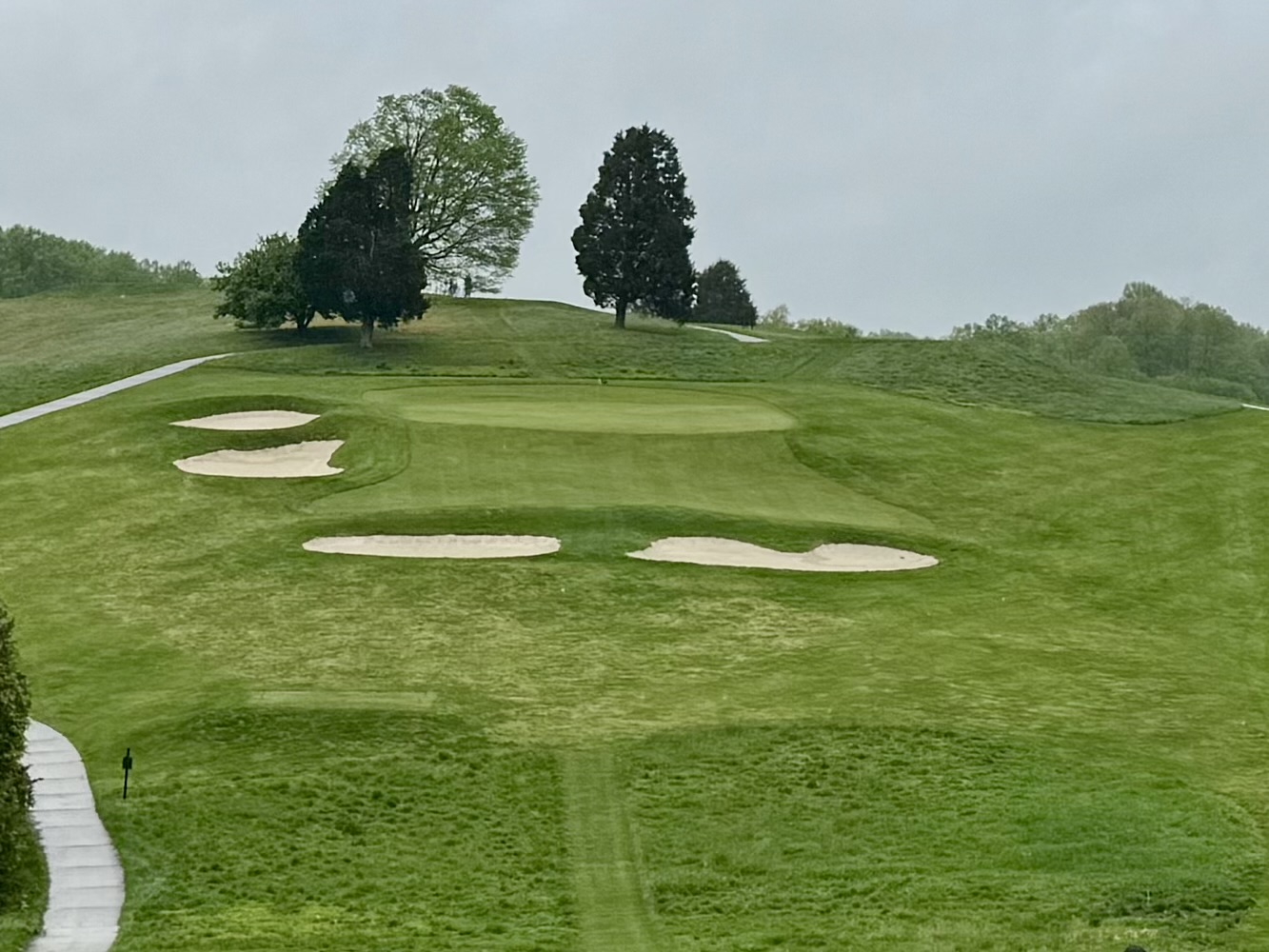
(The 240/194/166 yard par three fourth hole plays across a valley to a green set in the hill. The cross bunkers short define the least amount of carry you must make while the terrain slopes away left and right. Behind the green is a canted bowl that allows a long iron to release and roll back onto the putting surface.)
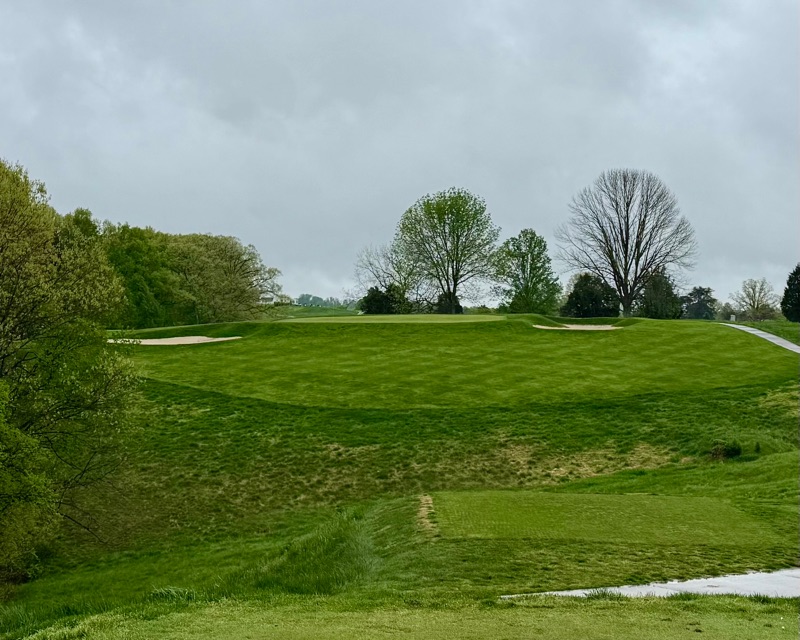
(The 249/210/153 yard par three sixth plays across a ravine to a bilevel green that stands alone atop the crest of the hill. One must carry it all the way to the putting surface (the picture flattens out the slope). The black tee was nearly forty yards back of its regular spot when we played it at a 189 yards. A par is a great score.)
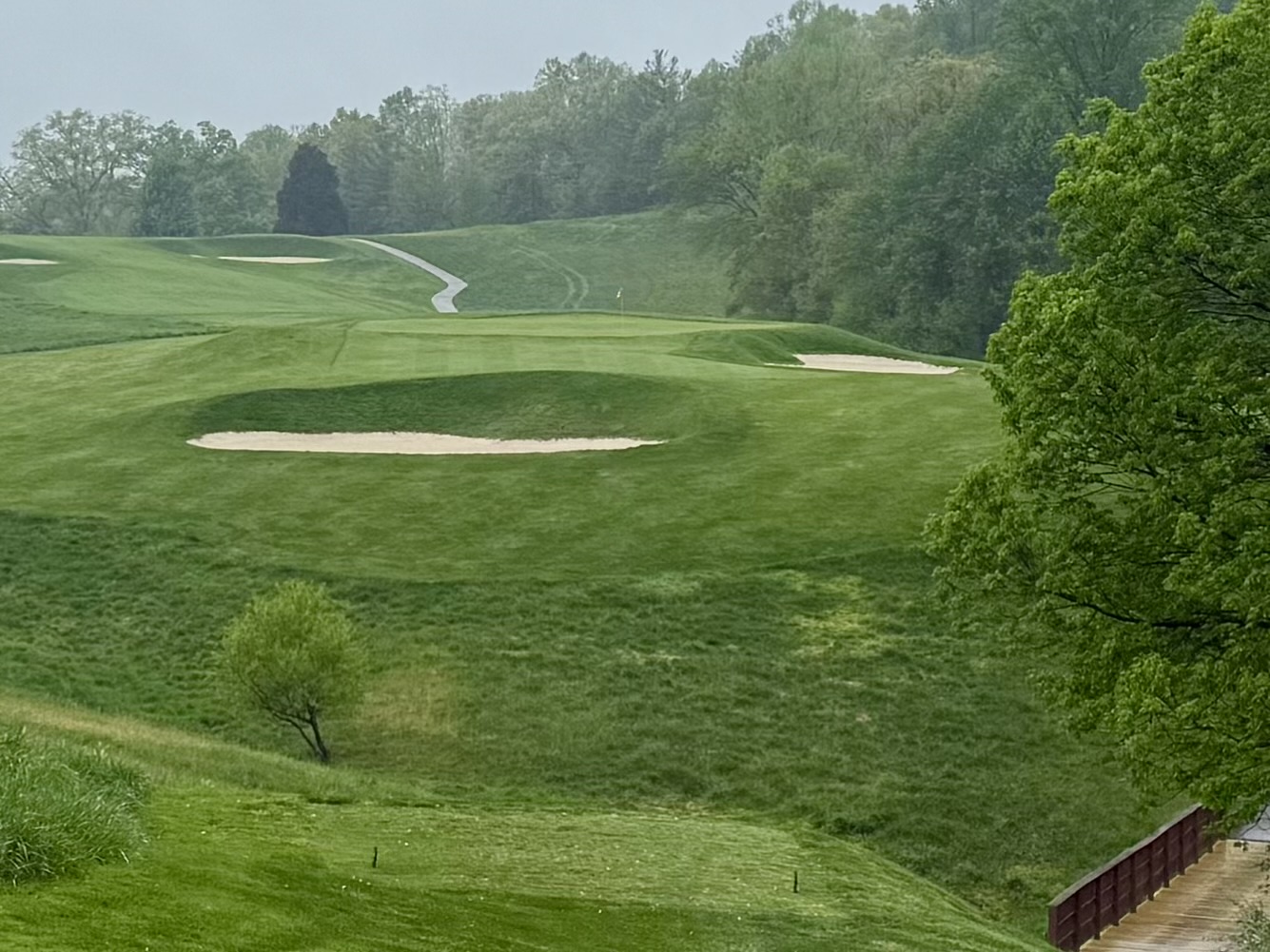
(The 252/228/208 yard par three thirteenth is an incredible hole. Depending on the tee box, it’s actually uphill and carrying that cross bunker becomes the goal. We played it in a hurting crosswind. My ball ballooned up in the air and finished in the grass face. I was able to hacked it out, but it trickled over the green. It was an easy double bogey. The green has three tiers, each slightly barreled, making a chip or pitch a delicate situation. It was my favorite hole.)

The Ross course sits on a tumbling piece of property full of hillocks and valleys. The holes spill and rise over the land, leaning and canting to well guarded greens. Ross used a butterfly routing with the first and tenth playing parallel to each other, one dipping into the valley while the other plays along a ridgeline to a pulpit green. The course is loaded with strong par fours, twelve in all, but it’s the par threes that are the lynchpin, transversing the most severe parts of the property with three of the longest (from the tips) one shotters you’ll see on a public course.
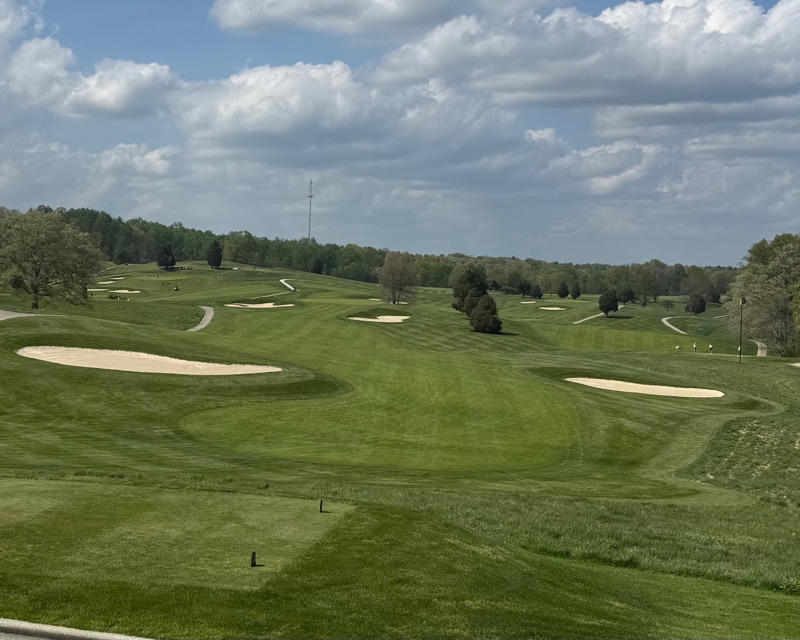
(The 422/401/394 yard par four first plays downhill before slightly rising to a well bunkered green. The Ross course is not too stringent on accuracy, allowing loose drives to be found…
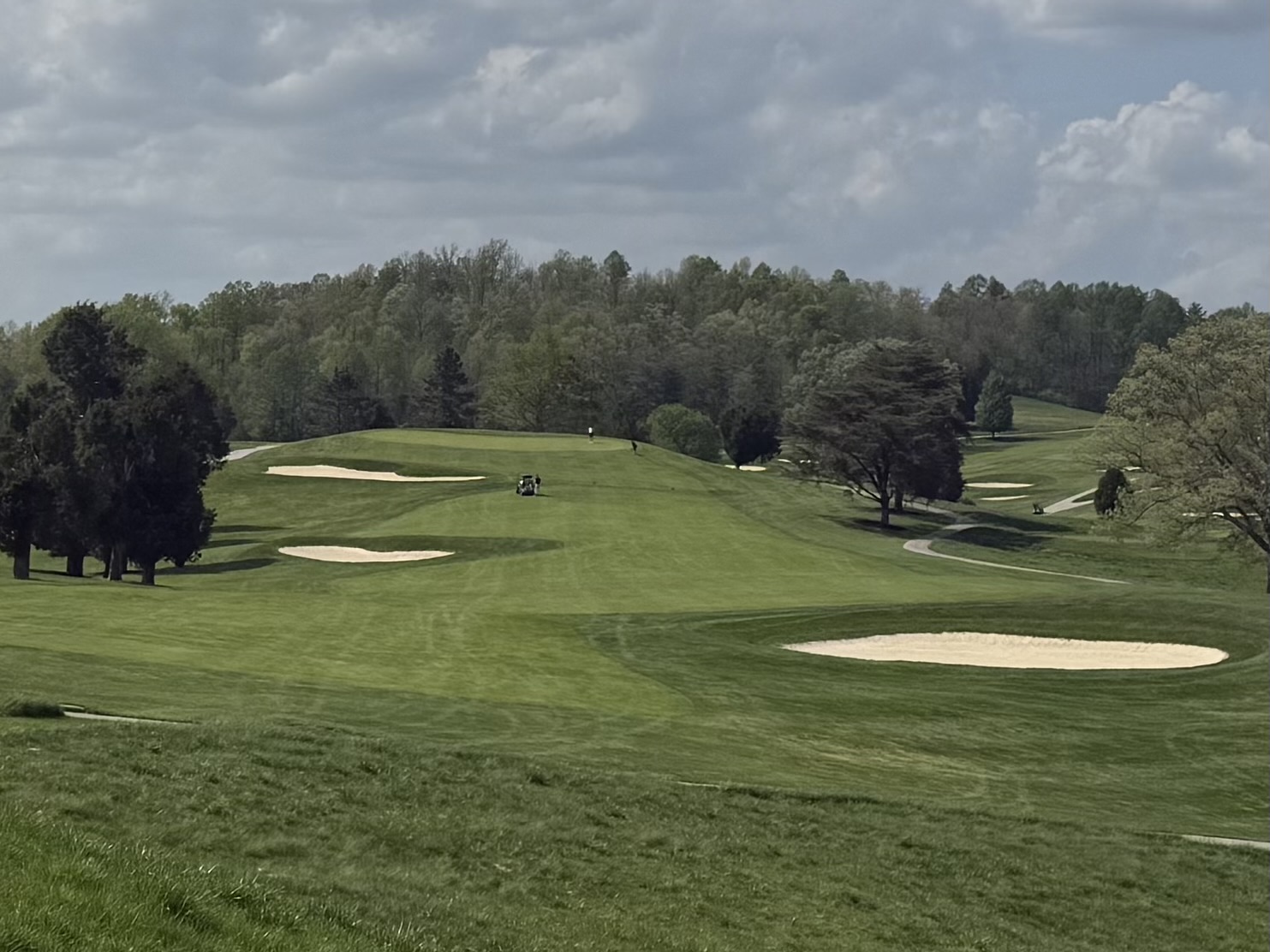
…meanwhile the 383/374/363 yard par four tenth plays straightaway to a green that has been raised several yards above the fairway. While a tad shorter than the first, the green proves a bit elusive as players tend to be short with their approach.)

As I said in the opening paragraph, the greens are unbelievable! Tom Doak said in his Confidential Guide that these were the most audacious greens he has seen on public Donald Ross course. Besides the big slope on seventeen, the eighth green drops seven feet from back to front. Other holes have steep pitches too. When I stopped by the day before, I watched two men putt off the green and down the fairway on the eighteenth. When you add in the ridges, rolls, and knobs, reading the breaks and hitting confident putts becomes extra important.
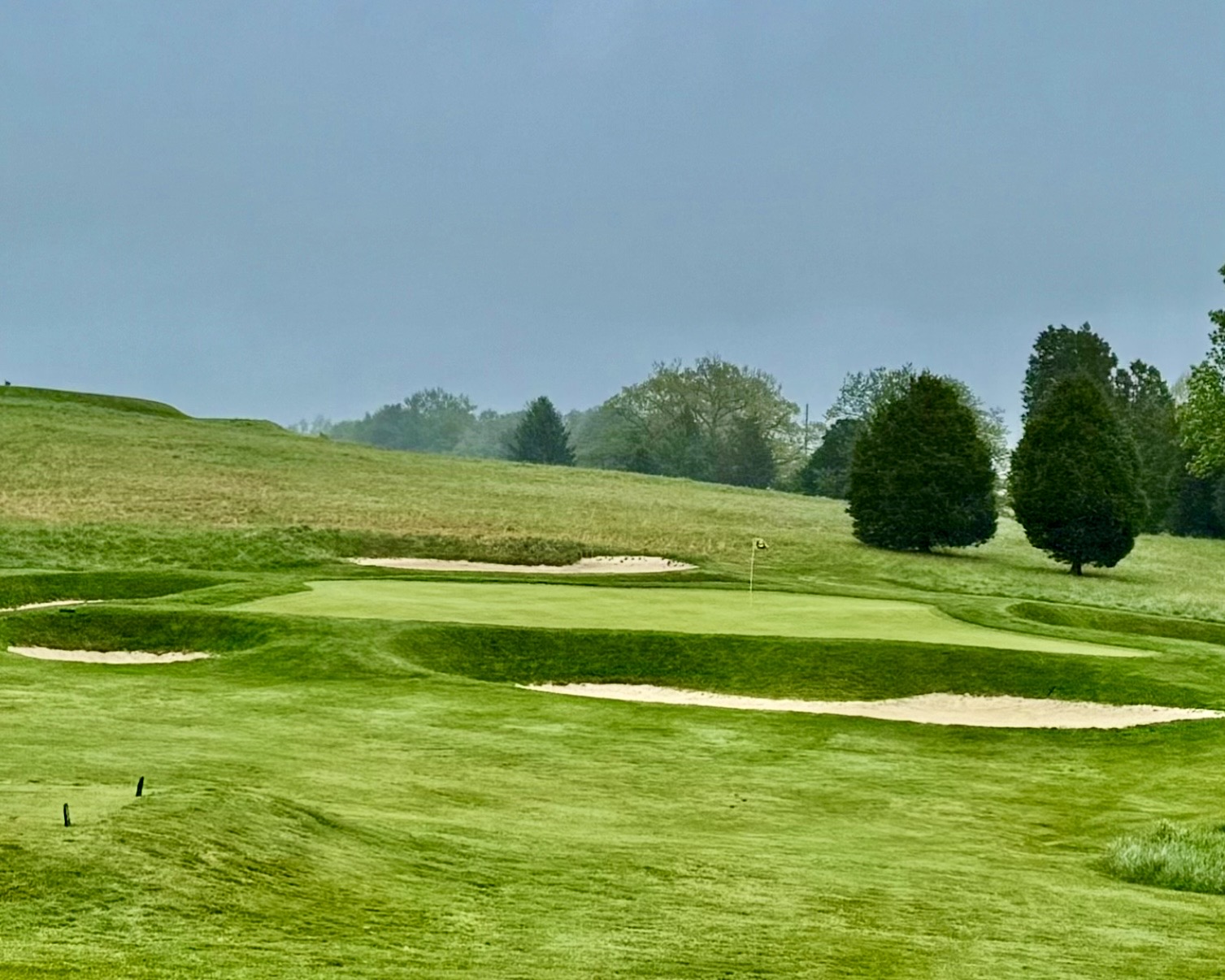
(The 151/133/119 yard par three sixteenth is almost one hundred yards less than the previous three! It’s just a short pitching iron but a couple internal mounds makes a star shaped area for hole locations. There are multiple ways to spin the ball towards the hole. A front right flag will prove really spicy as only one slope will be helpful.)
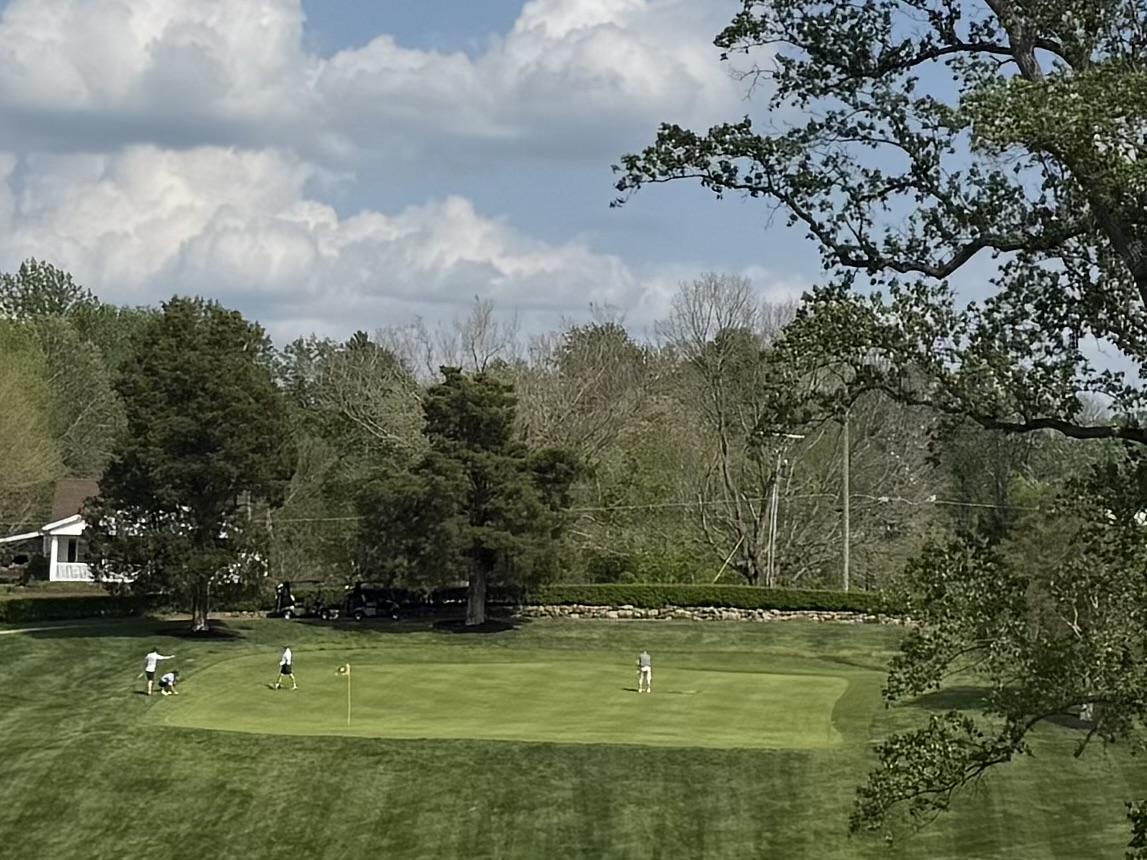
(This is the 392/368/305 yard par four eighth green and its seven feet of slope from back to front. There’s a grass ravine short of the putting surface so players tend to hit long and spin the ball back. Unfortunately that doesn’t always work and one is left with a dreadful putt like the man on the right. The pin in picture is in a bowl. You can sort of make out the upper left and right tiers plus the pseudo bowl on the upper front right.)

It’s too bad this is a resort course because multiple plays is needed to fully appreciate all the nuances. As a daily fee or private club, the returning player could explore and execute a wide variety of cool shots. That maybe the biggest reason why the course flies under the radar and is undervalued by the publications. If it was in a major metropolitan area, it would be critically acclaimed. My personal nitpick is the seemingly constant uphill approach shots. The course plays a solid 400-500 yards longer than is listed yardage. Nonetheless, the course is really good and a great study if you love wild greens. I give it an emphatic 7 (great)(worth driving 3-4 hours to play).
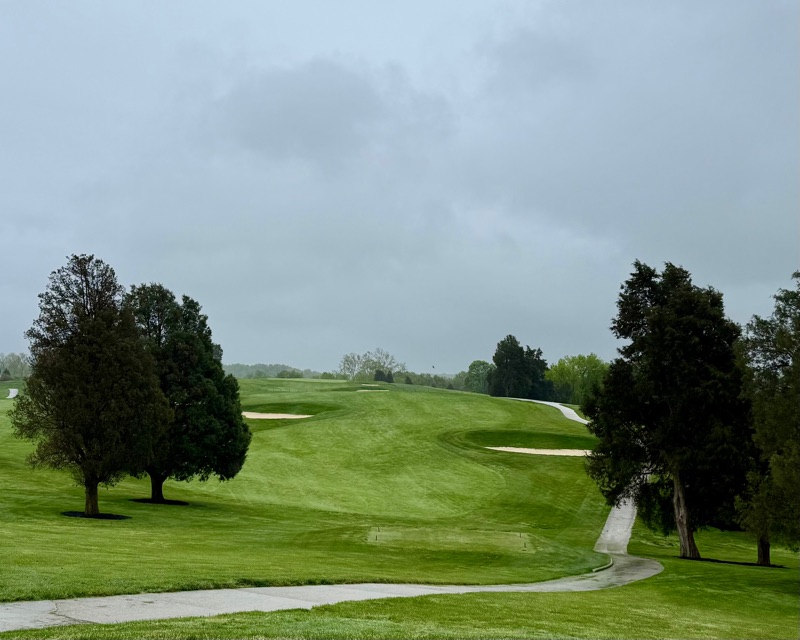
(The 420/418/394 yard par four eighteenth plays across a valley to a rounded fairway. The long hitter who carries it to the top will benefit and have his ball race down the other side…
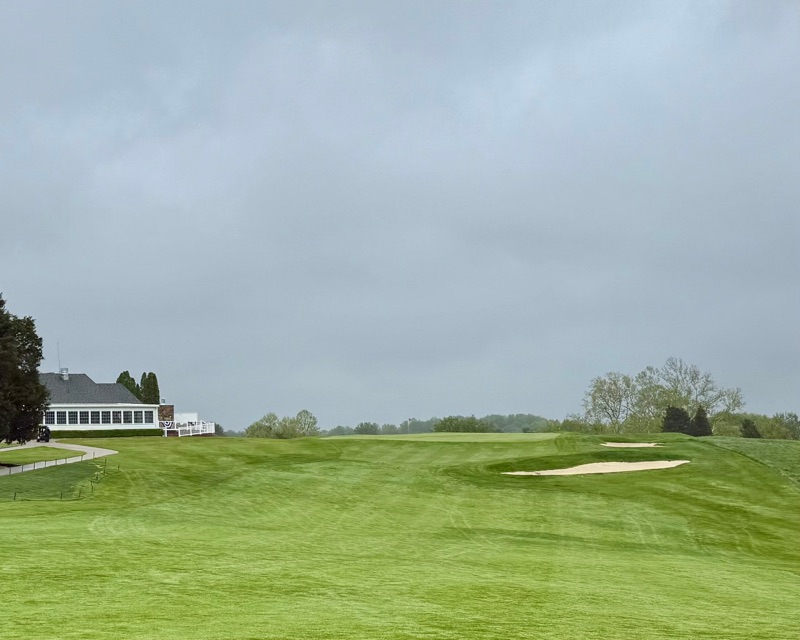
…the approach is uphill to a skyline green. The putting surface slopes to the front right with a shallow tier going across the back. A four is a fine score.)
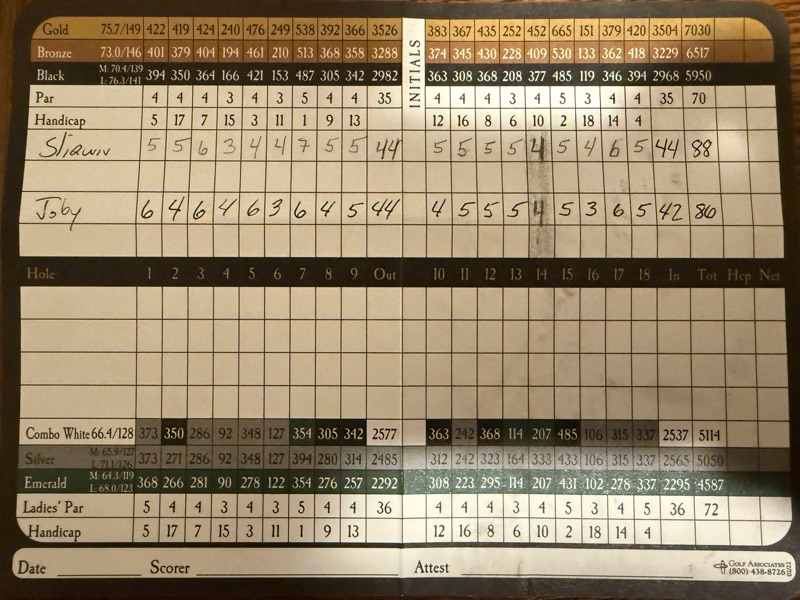
(We played the Black tees at 5,950 yards. Note the course and slope rating from those tees! 70.4 and 139! Yes it’s under 6,000 yards and a half stroke higher than its par 70. Unfortunately we had to tee off in slight rain, and only played five holes in okay conditions. At the tenth, a cold front came through dropping the temperature 10-15 degrees while it misted in a stiffening wind. If it wasn’t for my 500th blog, I’m not sure I would’ve played. It was really difficult. The cost was $175. Walter Hagen won the 1924 PGA Championship here with a 2&1 win over Jim Barnes.)

Blog 500