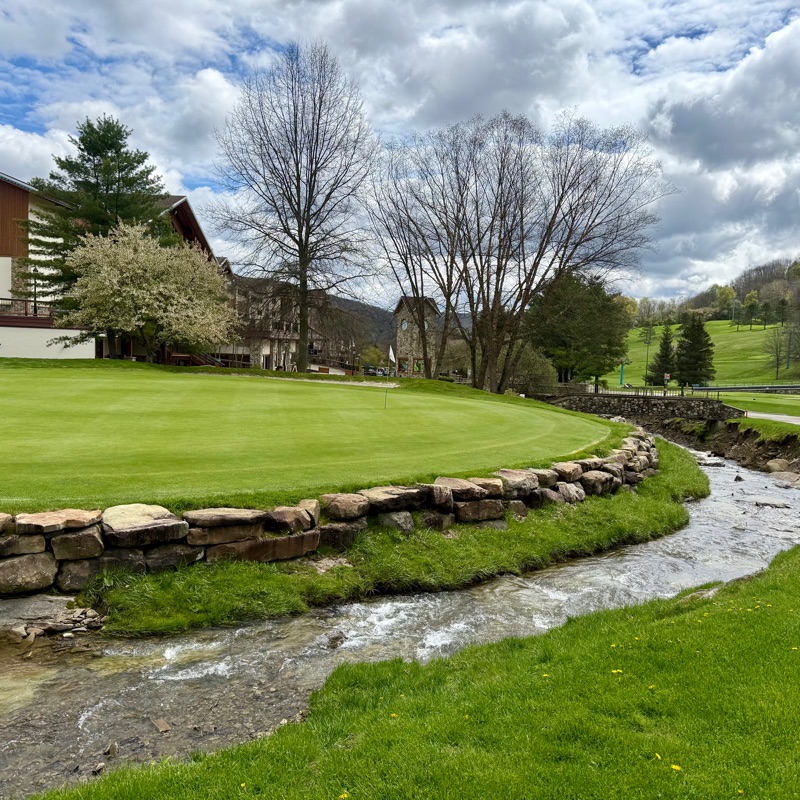
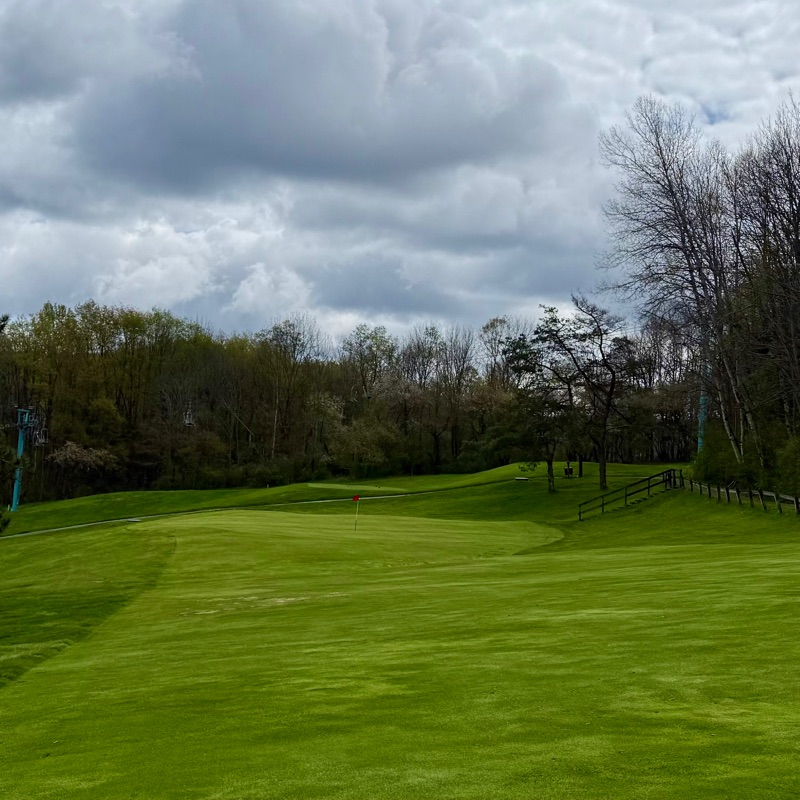
Jeffersonville’s reputation has been reverberating across Pennsylvania as one of the better municipal courses in the region. Most of the credit belongs to Ron Prichard who did a wonderful job renovating and remodeling it in 2000. It was designed in 1931 by Donald Ross with today’s eleventh and sixteenth holes occupying the ground that used to be an oval horse racing track.
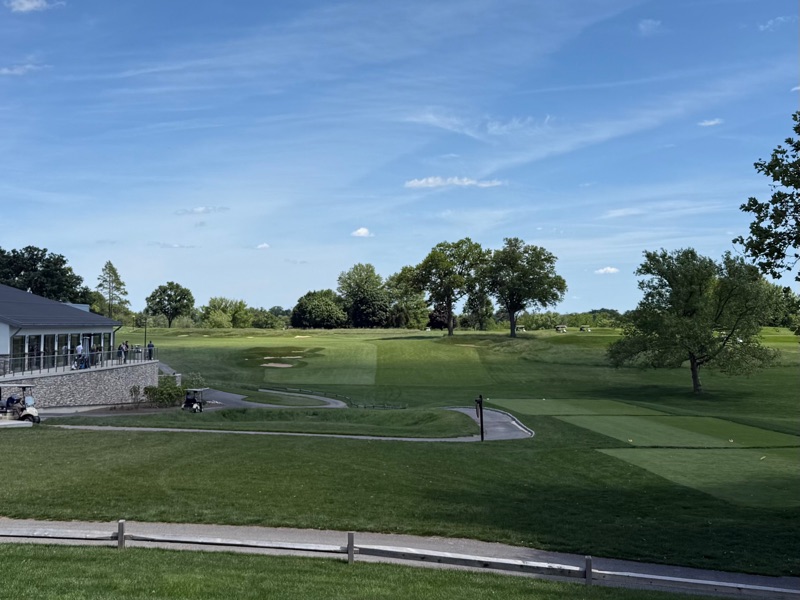
The routing at Jeffersonville is a bit disjointed. The ninth hole actually plays away from the clubhouse with the tenth coming back. A jaunt through the parking lot will take you to the eleventh tee, and after you putt out on the sixteenth, you’ll cross the entrance road to play the final two holes. It seems like a mishmash setup, but Prichard eliminated a couple par threes, including the old eighteenth, and combined a few others to make this routing work.
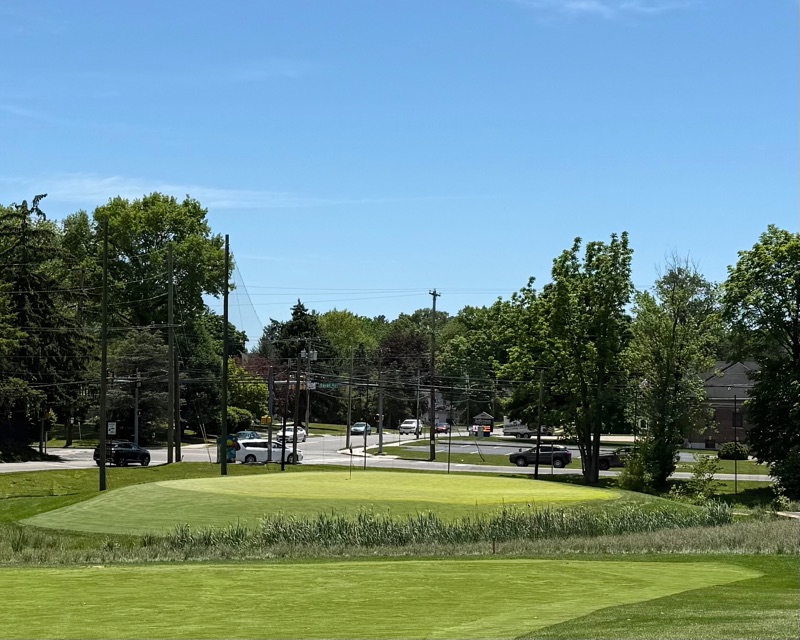
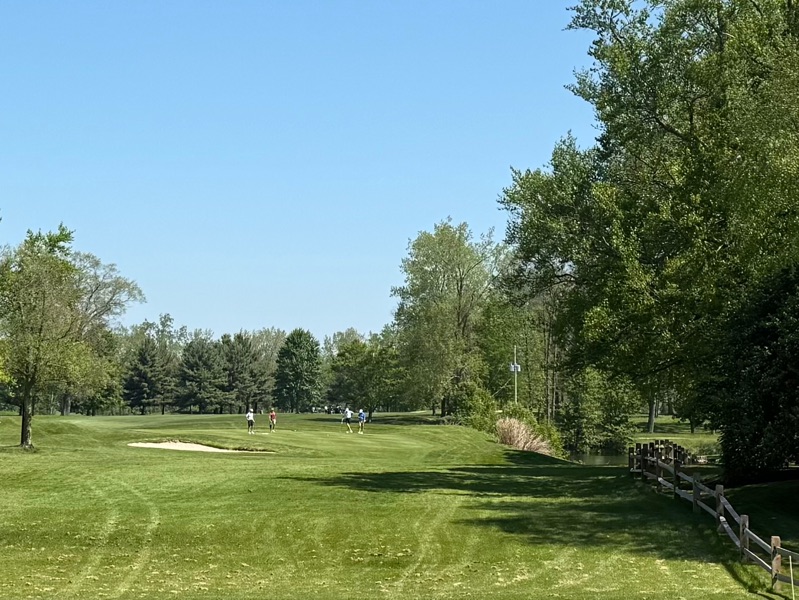
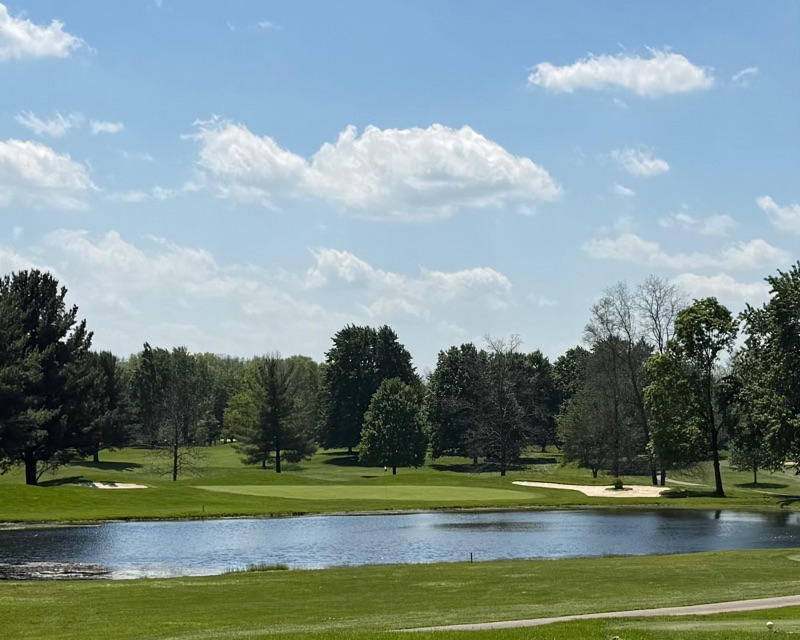
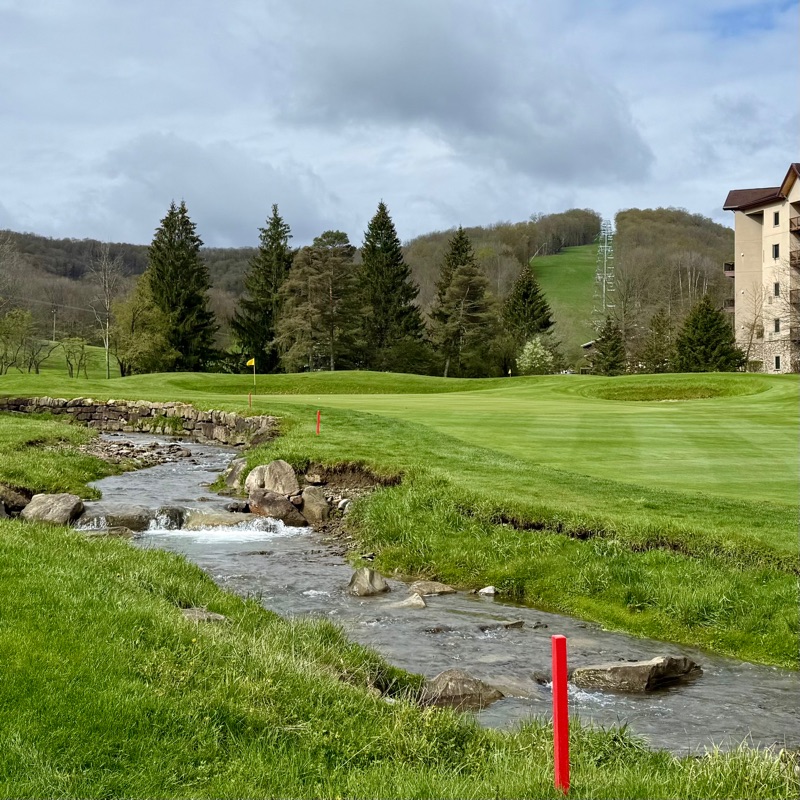
(The 348/337 yard par four second doglegs right around a group of bunkers before playing across wetlands to a built up green. There are huge nets up at this corner to prevent balls from damaging someone’s vehicle…
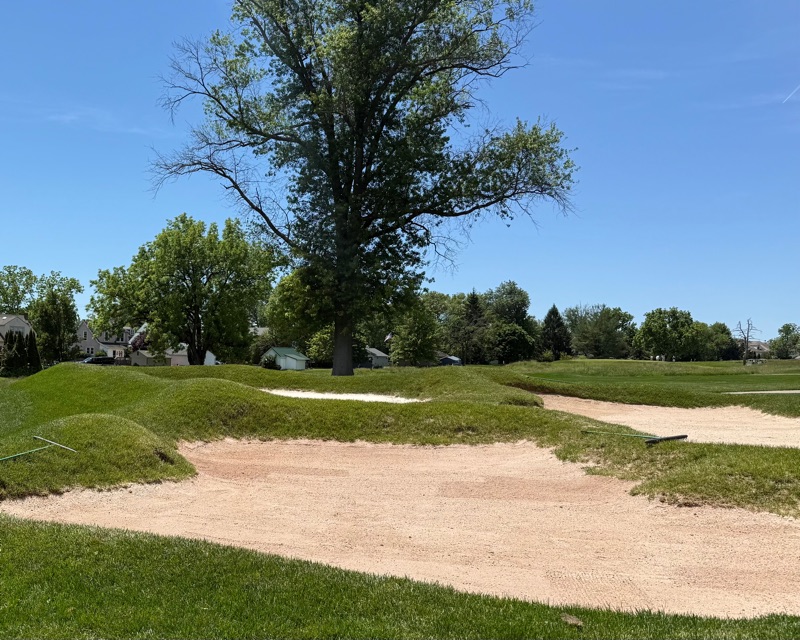
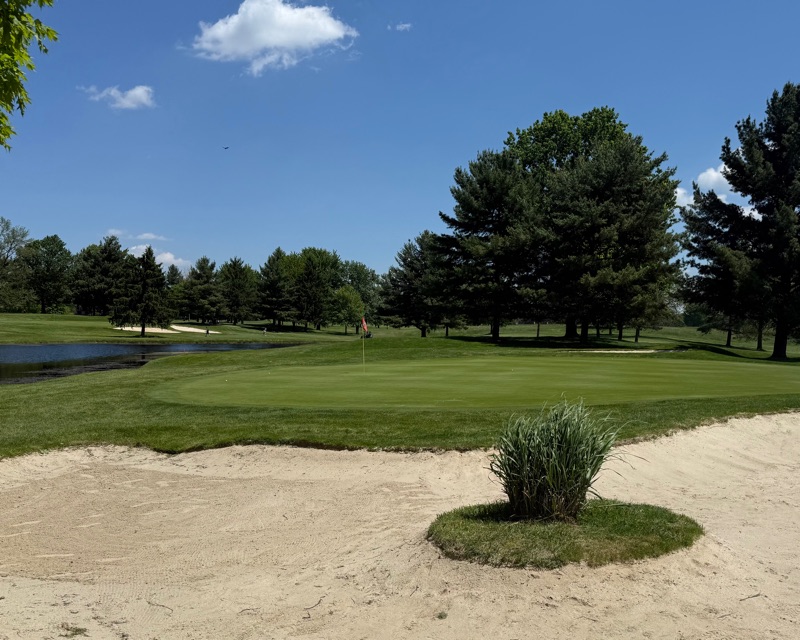
…this photo shows the nest bunkers that Prichard reintroduced to the course. Note the mounding that outlines each one. They’re really cool hazard.)
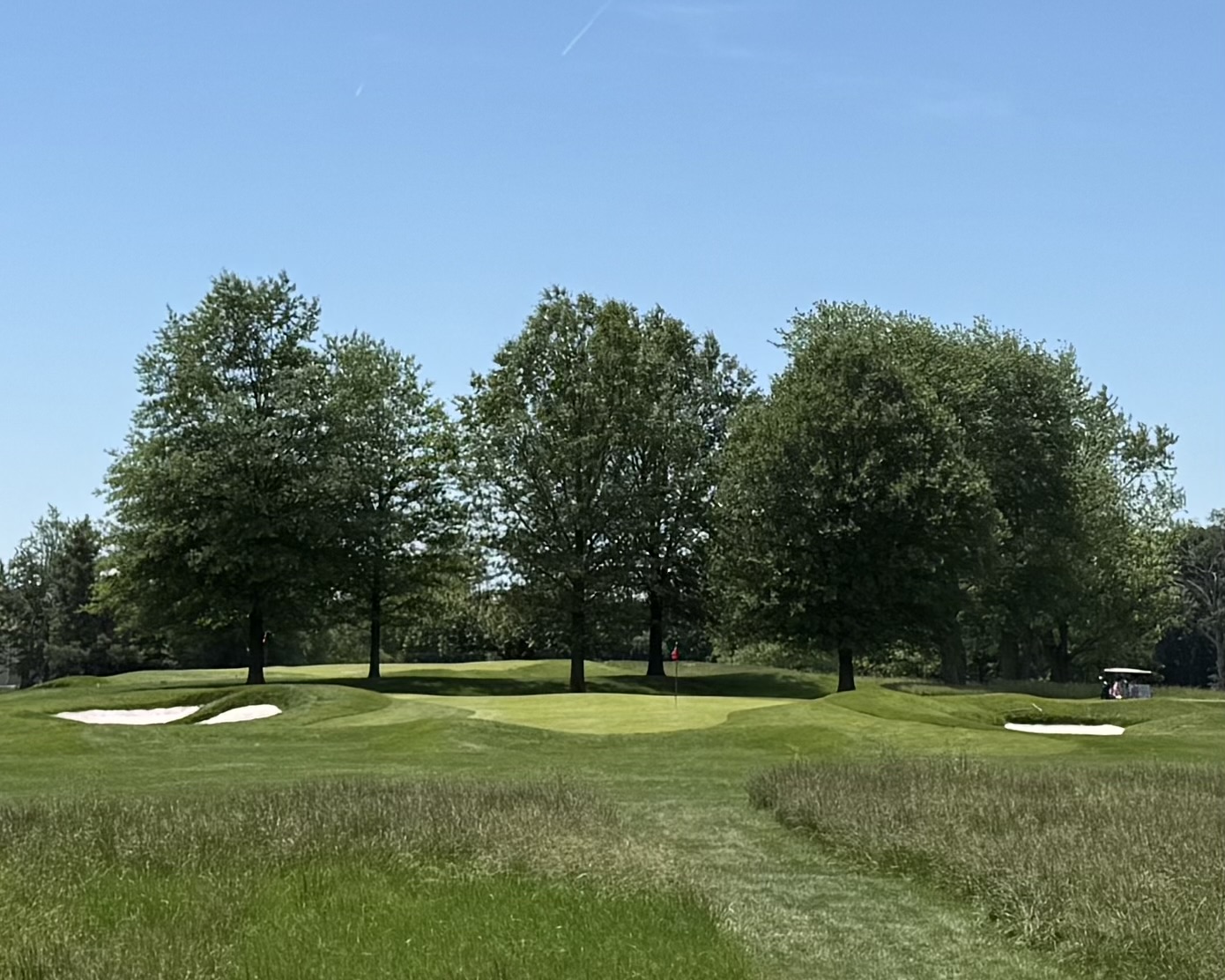
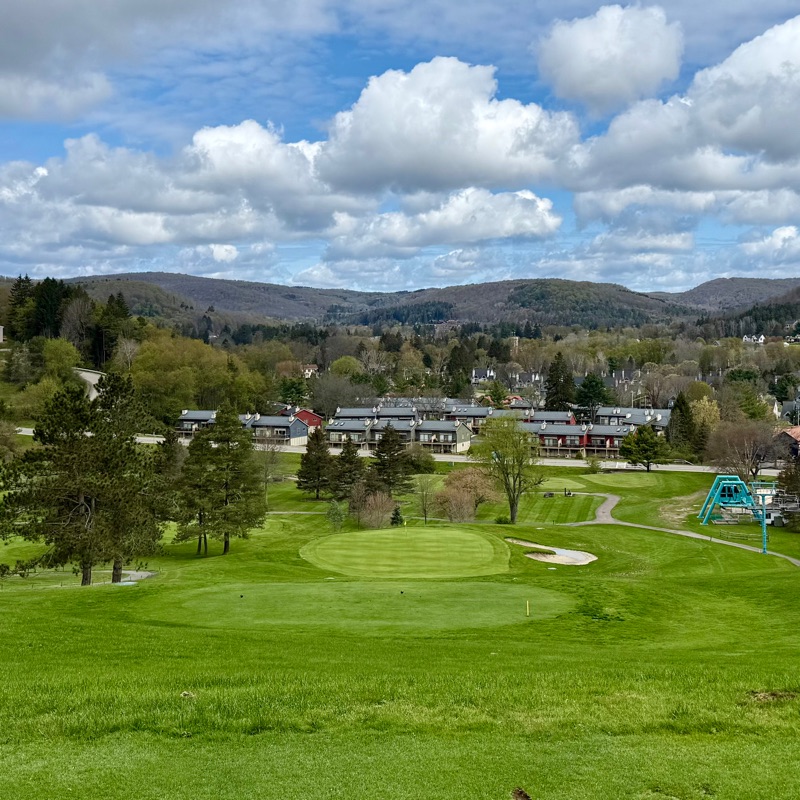
(The 135/120 yard par three fourth has a tiny green squeezed between two bunkers. Note how you can use the backside of each trap to kick the ball towards the flag. My ball did exactly that finishing five feet from the hole.)
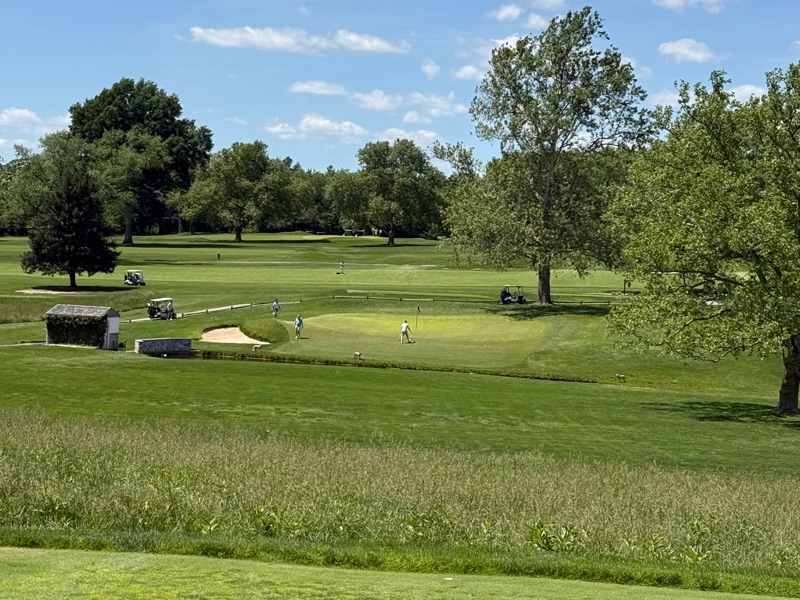
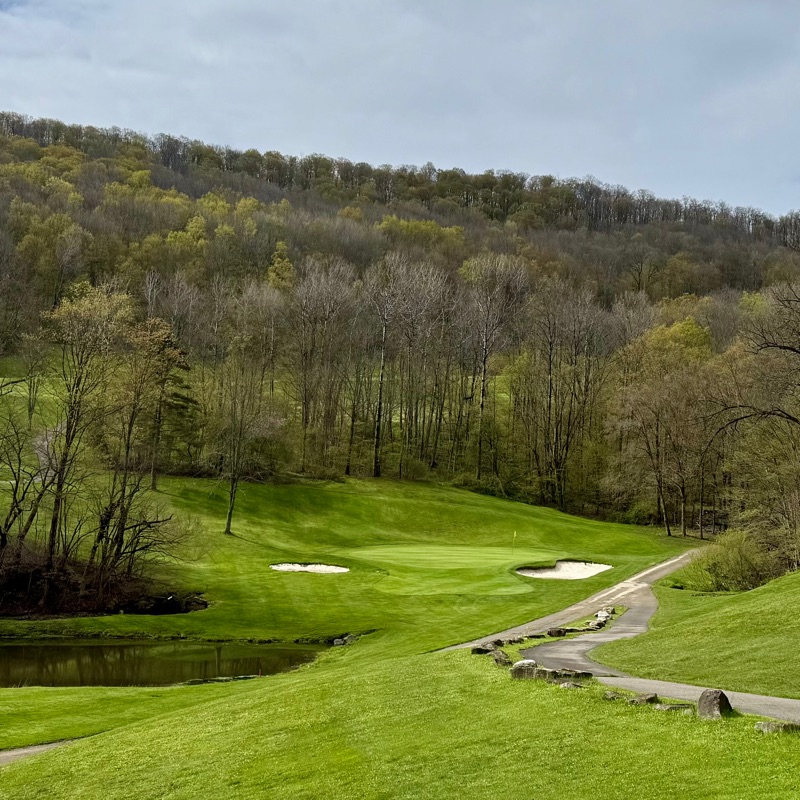
(The 195/178 yard par three eighth is a dangerous downhill shot that must carry the false front, otherwise it will retreat backwards into the hazard. Most balls invariably find the rear portion of the green where the crashing slopes demand a soft touch.)
A good set of greens is what makes Jeffersonville stand out. My favorites are 3,4,8,12,16,18. These six holes have a low profile green set at ground level with a few mounds outlining the high points. You can hit so many different shots into each one. The other greens all require more of an aerial shot. The eleventh stands on its own, placed on the highest spot on the property. A flat area short right allows the ball to bounce in, but the further left you go, the more you have to carry it to the pin.
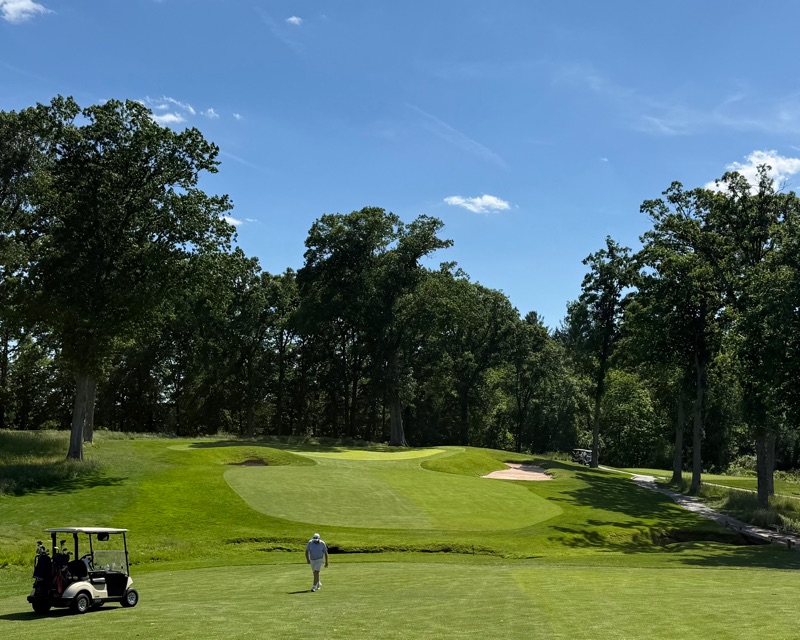
(The 430/408 yard par four thirteenth is most people’s favorite hole as it features a beautiful green set above a shallow valley. The putting surface slopes quickly from back to front while extending further left than you think. It’s the third longest par four on the course.)
Jeffersonville recently held the GAP (Golf Association of Philadelphia) Mid-Am championship. It’s the first time in the association’s 100+ year history that a public course has held one of its majors. This fact is an indicator, in my opinion, that Jeffersonville has been christened the best public course in the Philadelphia area. (I would not be surprised if Cobb’s Creek becomes the second public course to hold one of their majors when its renovation is done) The Jeff, which it is affectionately called, is the type of place, affordable, interesting, well kept, that every city deserves. I can see why the regulars are so proud of it. I give it a 5 (good)(worth driving an hour to play).
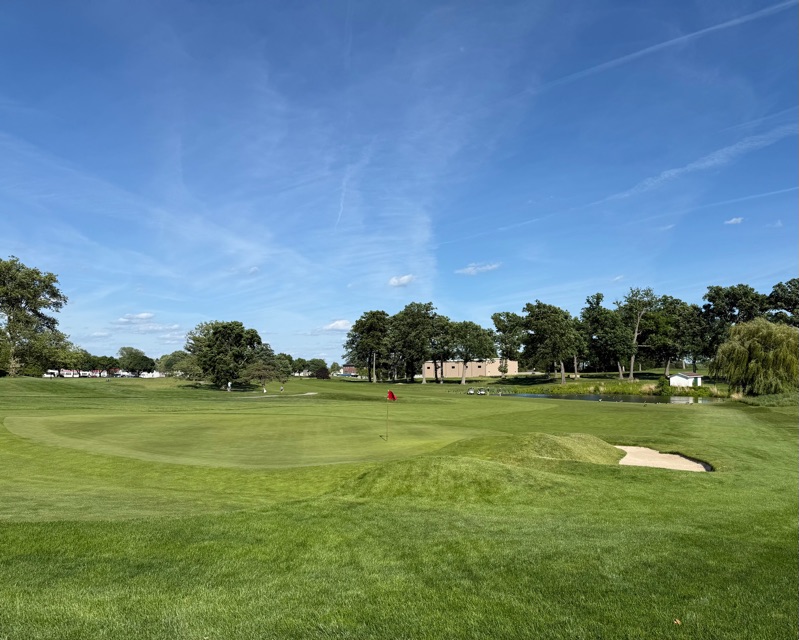
(The 545/516 yard par five eighteenth is a double dogleg bending left off the tee and then back to the right the last 120 yards.For long hitters, it’s a great chance to finish on a high note, but this green has the most slope of any on the course. It slopes hard from back right to front left. I reckon it only has three to four legitimate pin positions mostly sliding along the left side. When the pin is front right, five becomes a great score.)
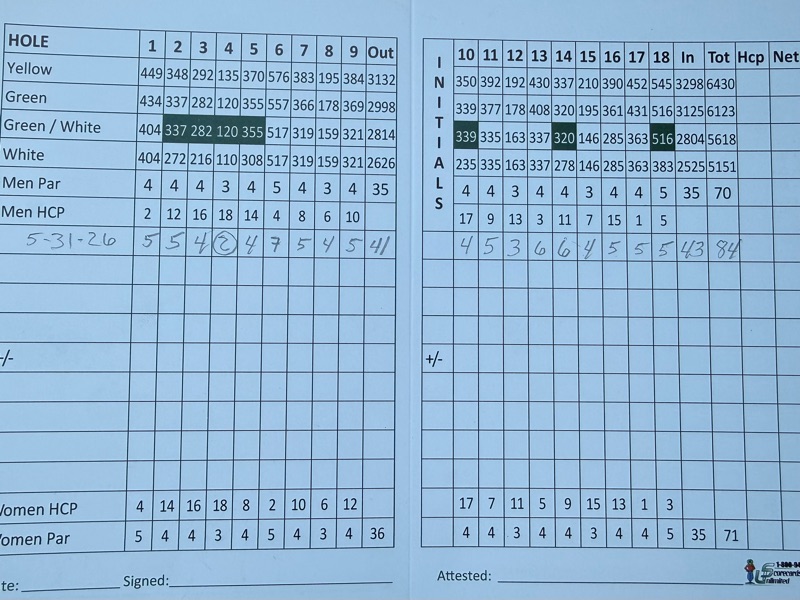
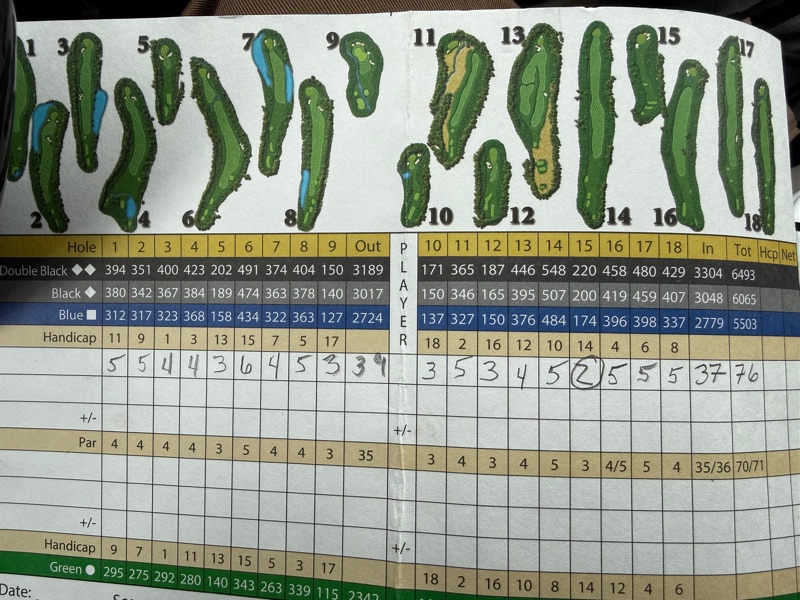
(We played the green tees at 6,123 yards par 70. After getting up at 3:30am and driving seven hours, I felt my 84 was a decent score. I hit the ball very well the first five holes but some loose swings unraveled my game starting with a poor drive on the sixth. Surprisingly, I had the only birdie in my foursome. Two of the guys hit it far and hit a lot of wedges and short irons but couldn’t convert. It was challenging getting the ball close to the flag. The cost was $100 but I paid a little extra for a third party to secure a tee time.)
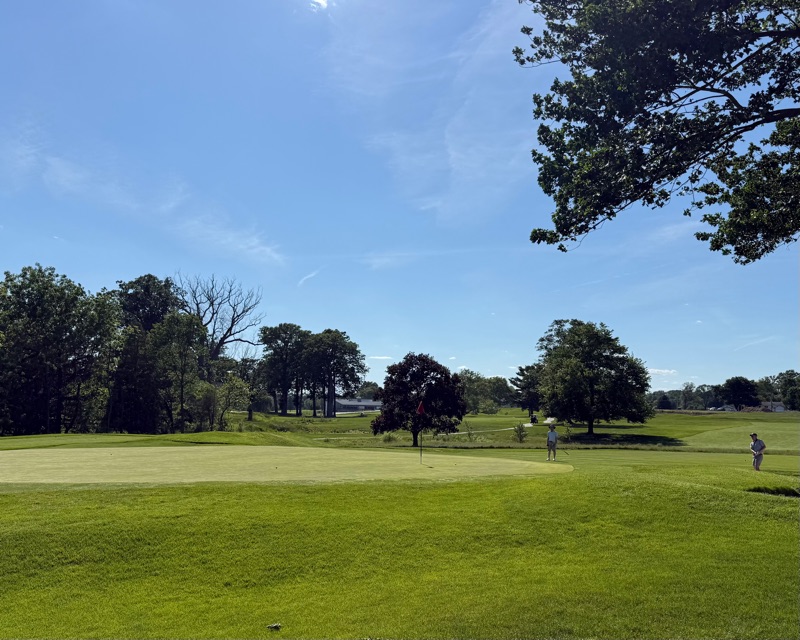
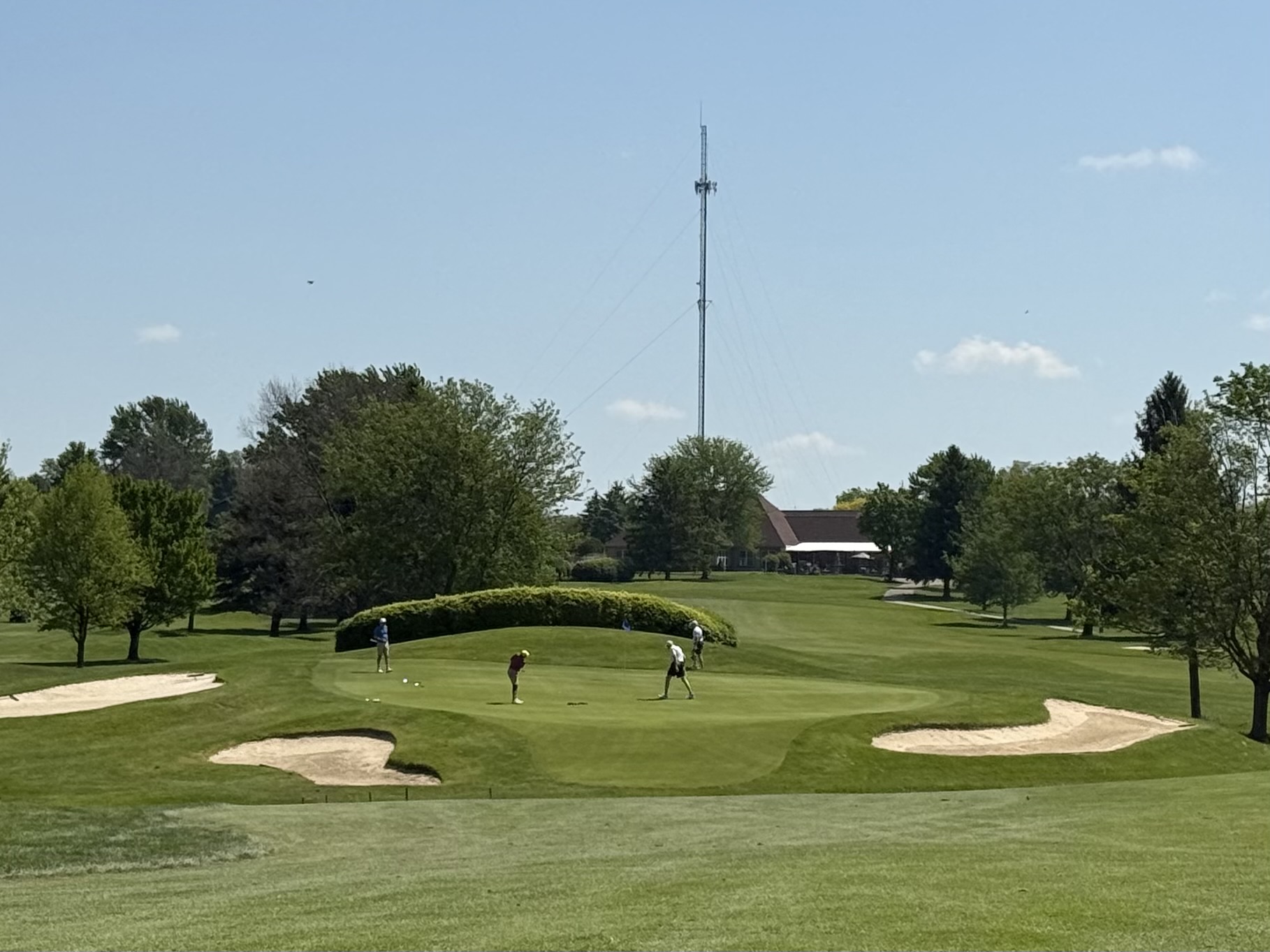
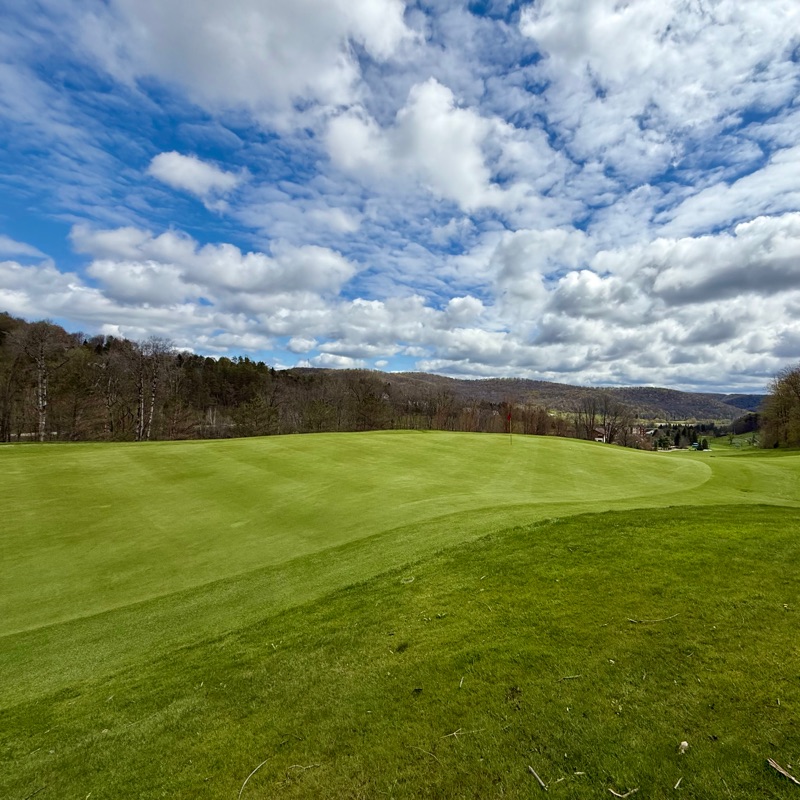
(This is the view of the seventeenth green. The card says it’s the longest par four on the course, but like the opening hole, the long hitter can cut off the dogleg and hit a much shorter approach.)
Blog 505