Monday, September 14, 2026

Pitch Shots - Lake Placid

There are so many great things to do in Lake Placid starting with kayaking Mirror Lake, or driving up Whiteface Mountain, or enjoying the Olympic Village. Golf may seem like an afterthought but there’s 81 holes here. It’s enough to be an underrated golf trip. These are my observations and opinions.

Lake Placid Club - Mountain Course

Lake Placid Club was established in 1895 by Melvin Dewey (Dewey Decimal System fame). It focused mainly on skiing and ice skating in the winter; hiking, fishing, and swimming in the summer. The club introduced golf in 1909 when Seymour Dunn designed the Links course. It added a second track in 1910 with Alex Findlay’s Mountain course and his subsequent executive length Pristine 9. Alister MacKenzie renovated the Mountain in 1931 when Rt 86 was converted from a horse trail to a road. The good doctor had to tinker with the routing and change some of the Par 3s into par 4s and vice versa. It has its own “amen corner” beginning at ten (631 yard par five), eleven (601 yard par five) and twelve (280 yard par three). For purists, it is a true authentic experience with no irrigation except for the greens. Combined with the Links, it’s a darn good 36 holes of golf.
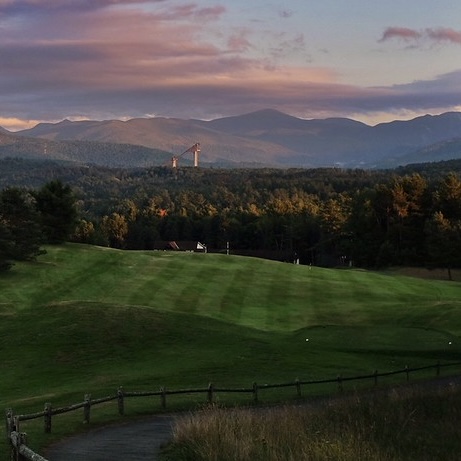
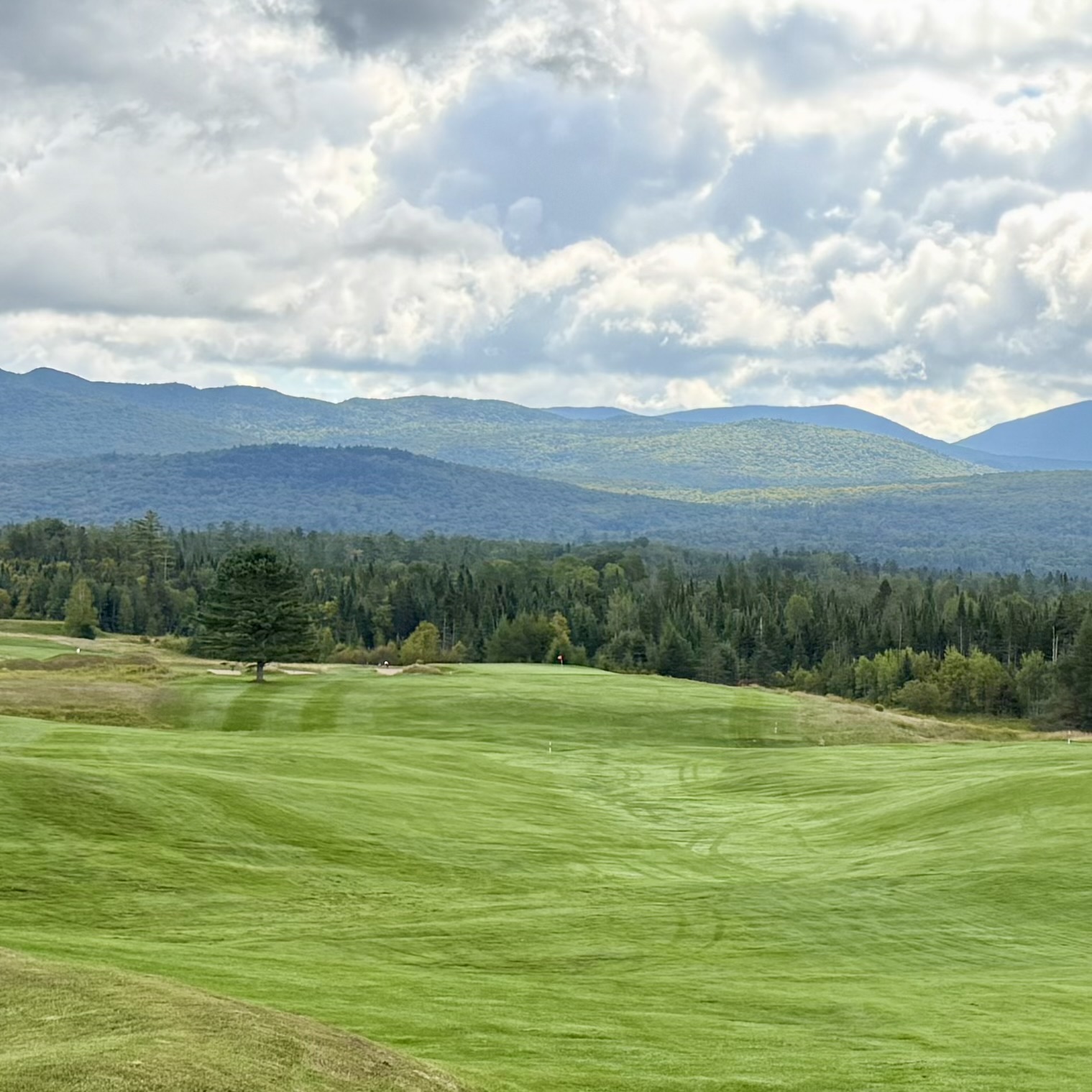
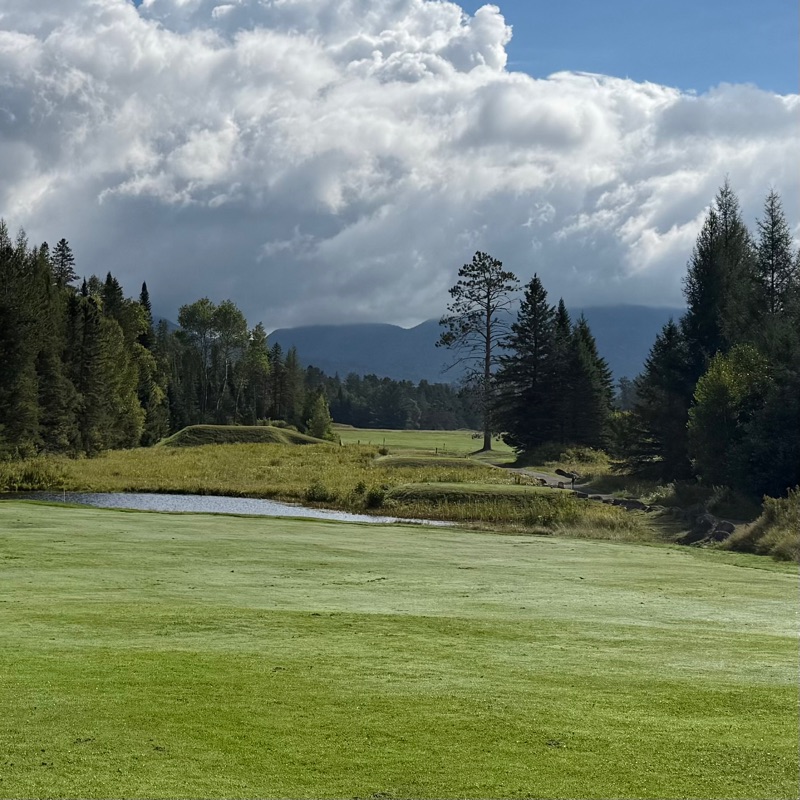
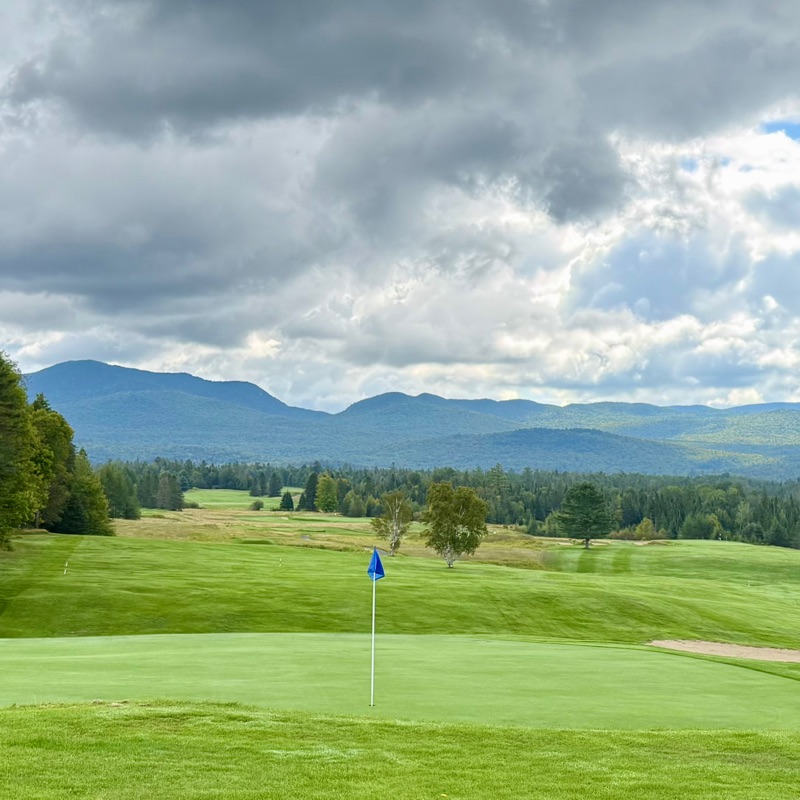
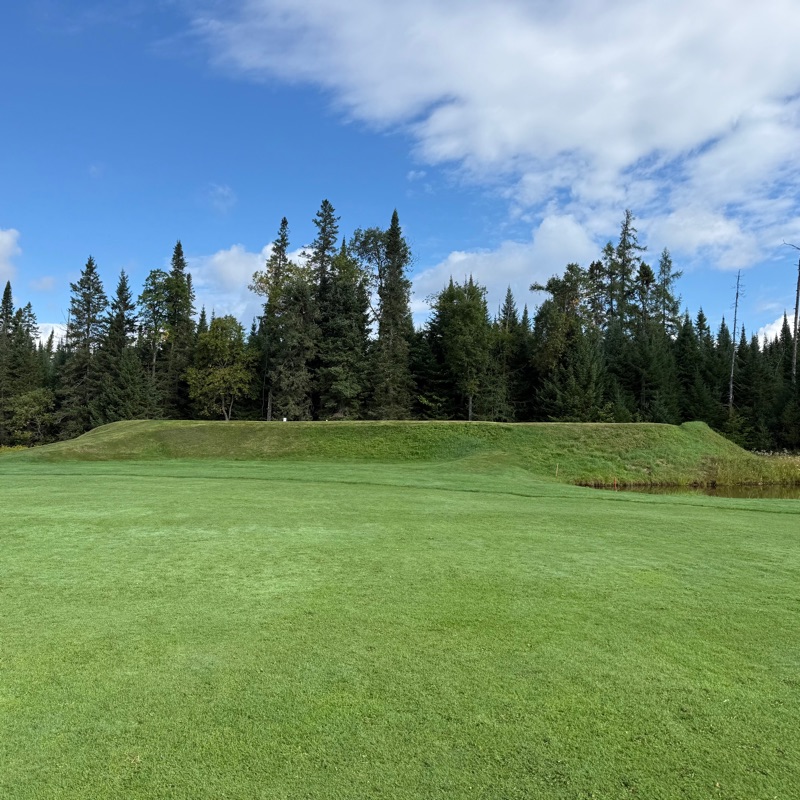
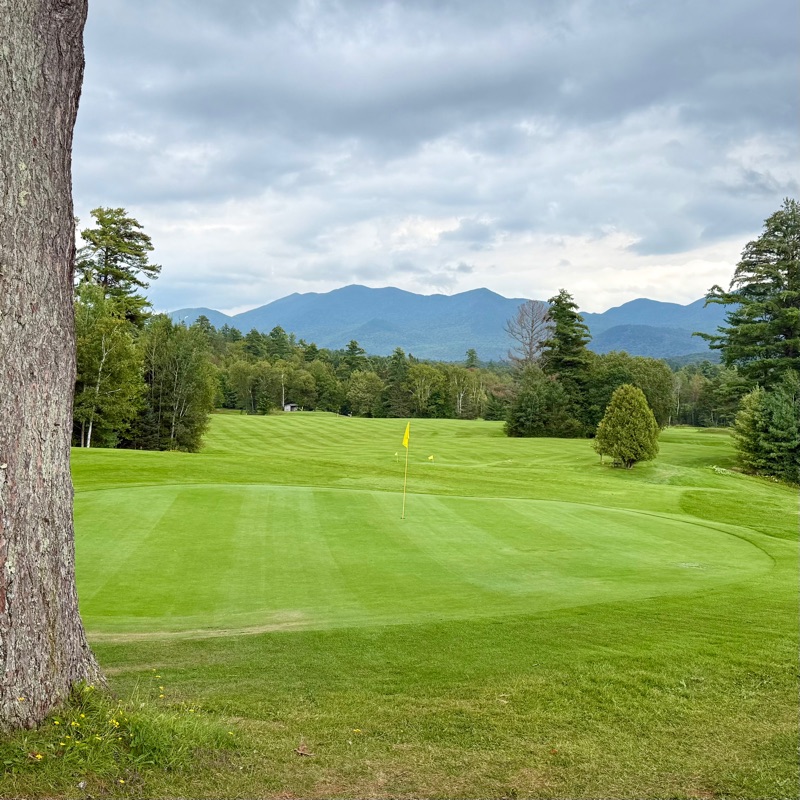
(The Mountain may have one of the most picturesque opening tee shots in golf.)

Whiteface Club

Whiteface Club sits on Lake Placid and has transitioned from a lodge to a series of vacation homes and condos. Their golf course was designed in 1898 by John Van Kleek. His ability to rout eighteen holes over rugged terrain is well known as most of his work is found in the northeast. As I was driving in, much of the course could be seen from the entrance road. It looked tight to me with heavy woods lining both sides of the fairway. It looked to be in great shape. The clubhouse had that Adirondack rustic feel to it. I’m sure it’s the star of the club.
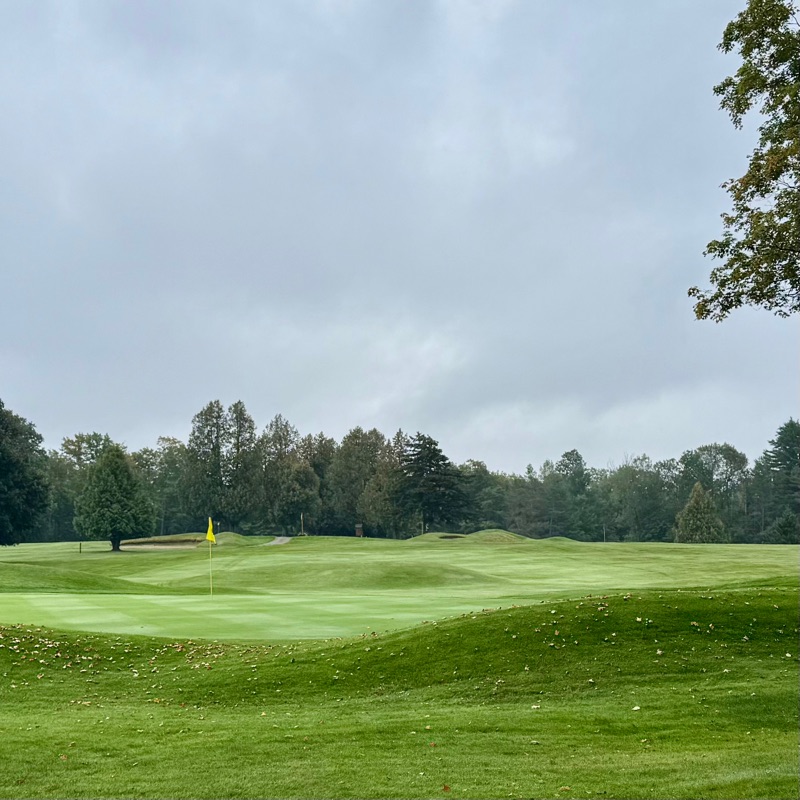
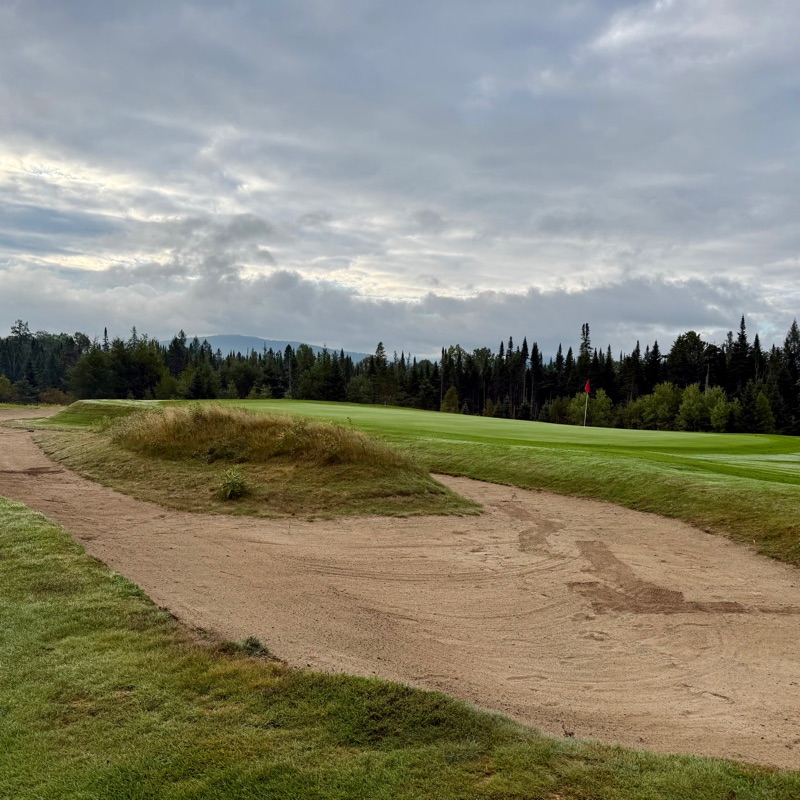
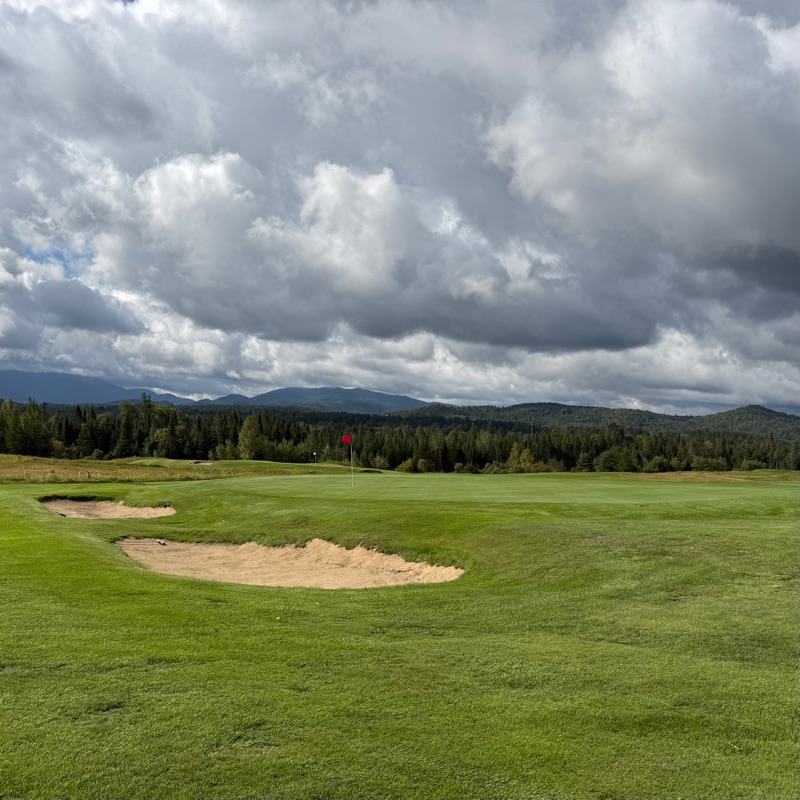
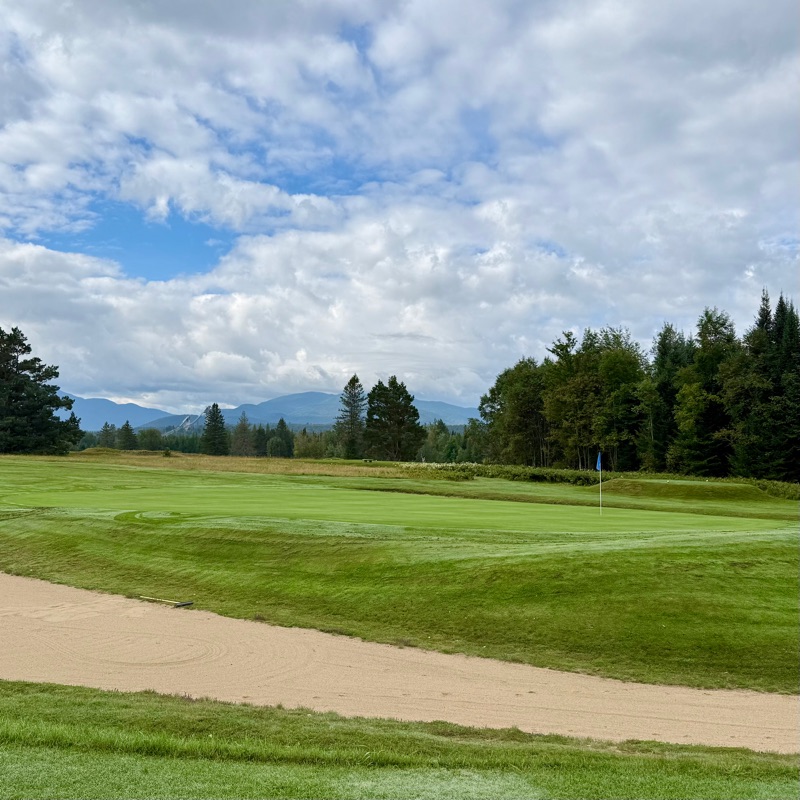
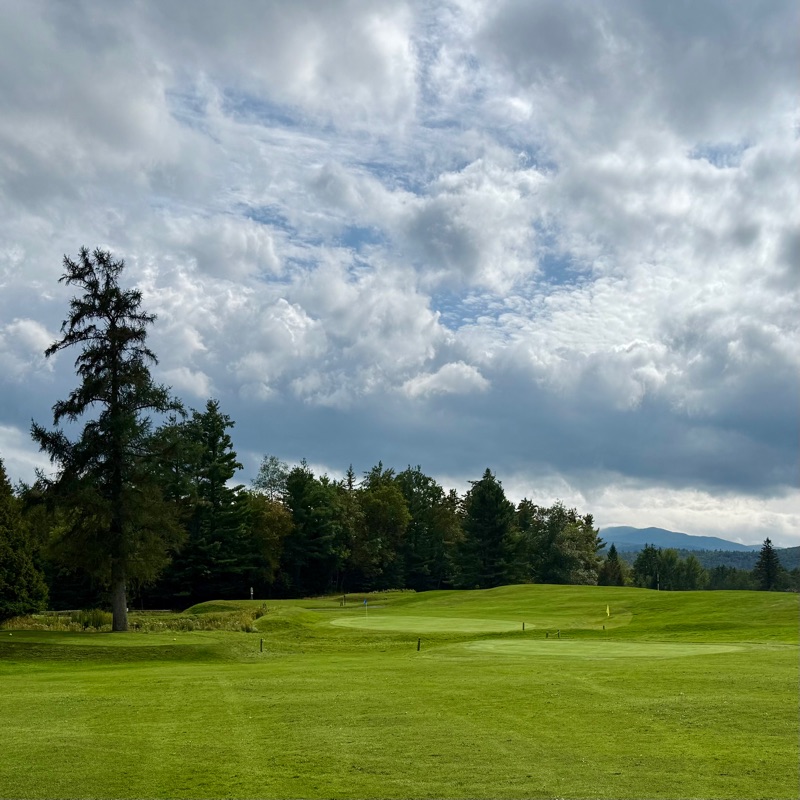
(Mounding with deep bunkers within gives Whiteface it’s classic look.)
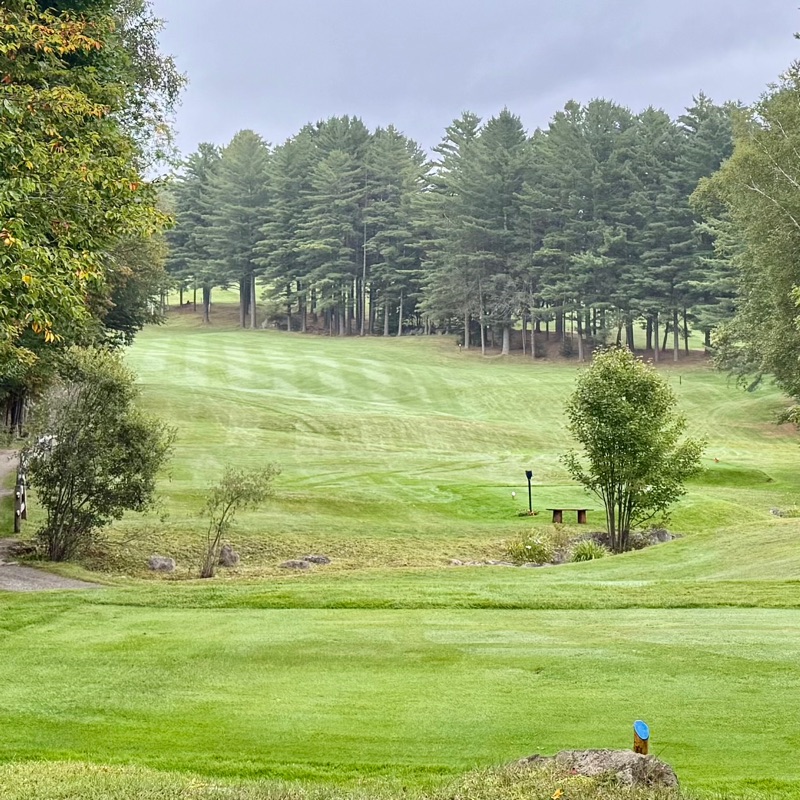
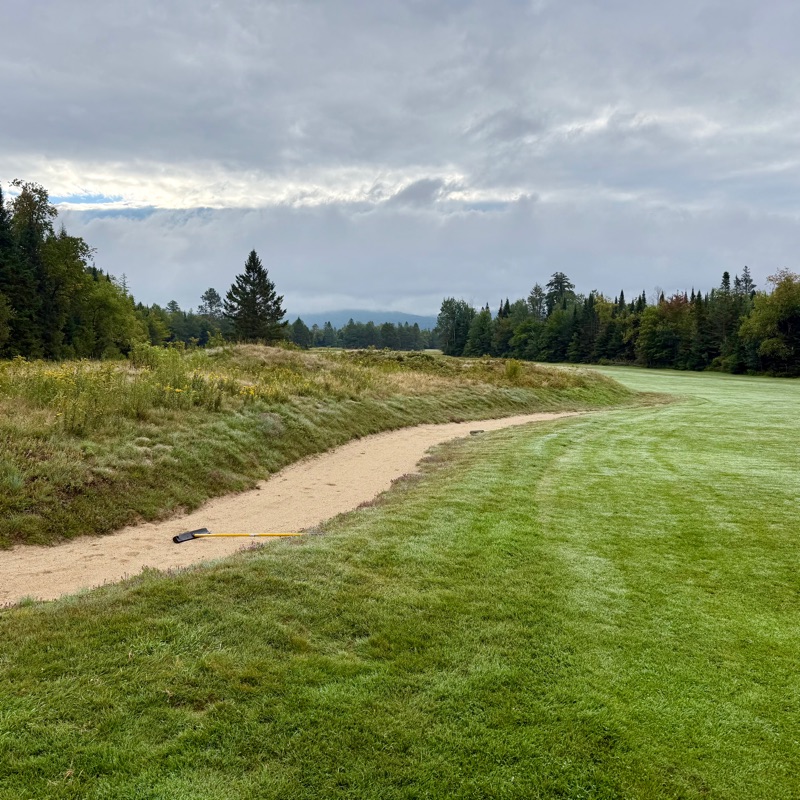
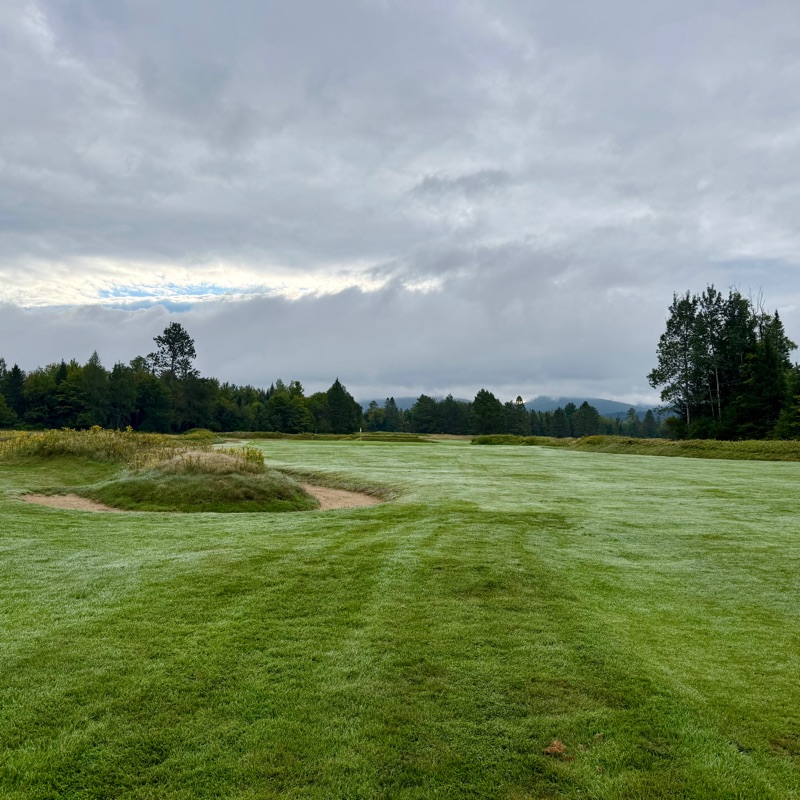
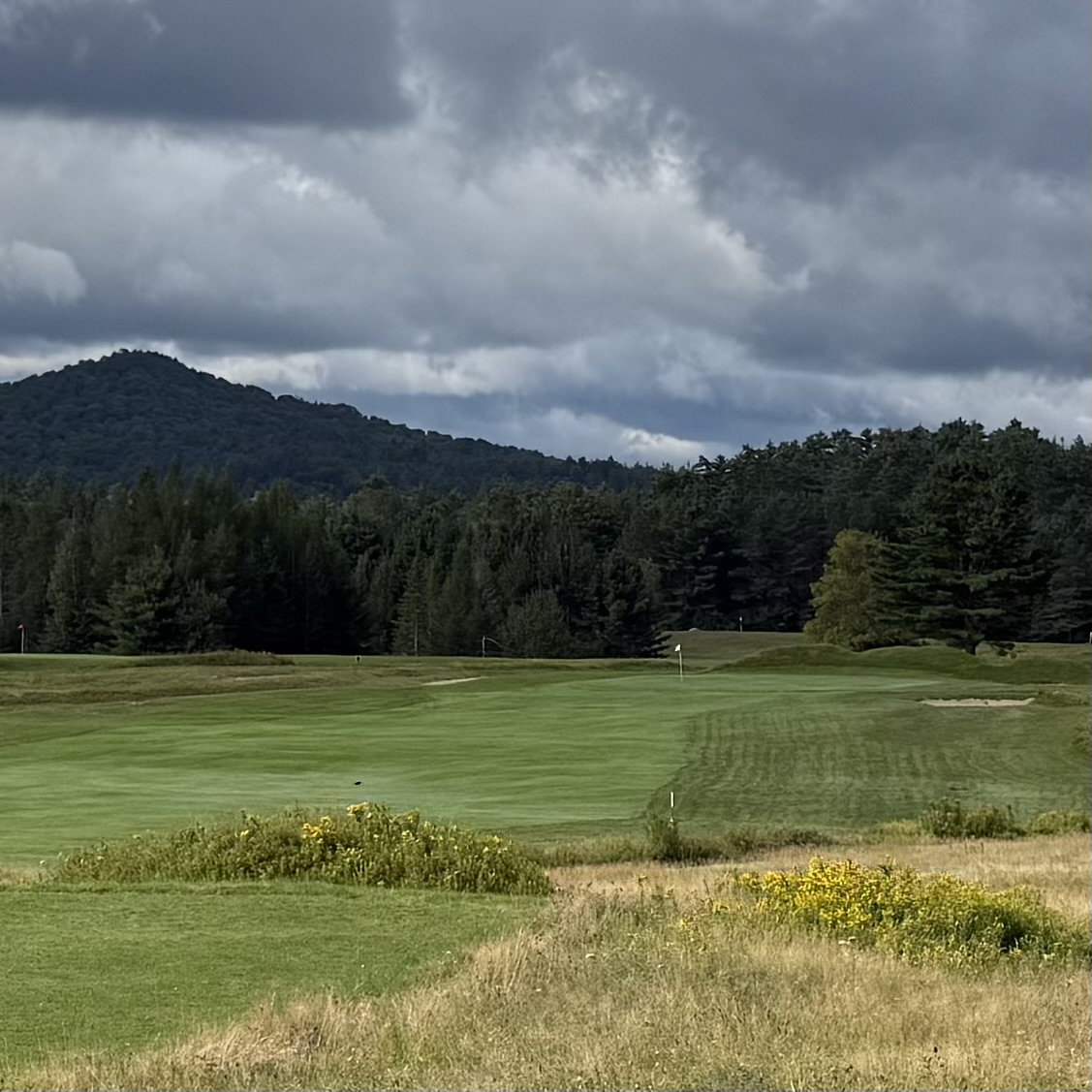
(The picture flattens the rolling terrain that is characteristic of Whiteface. Still it’s a nice indication of what you’ll face.)

Craig Wood Golf Course

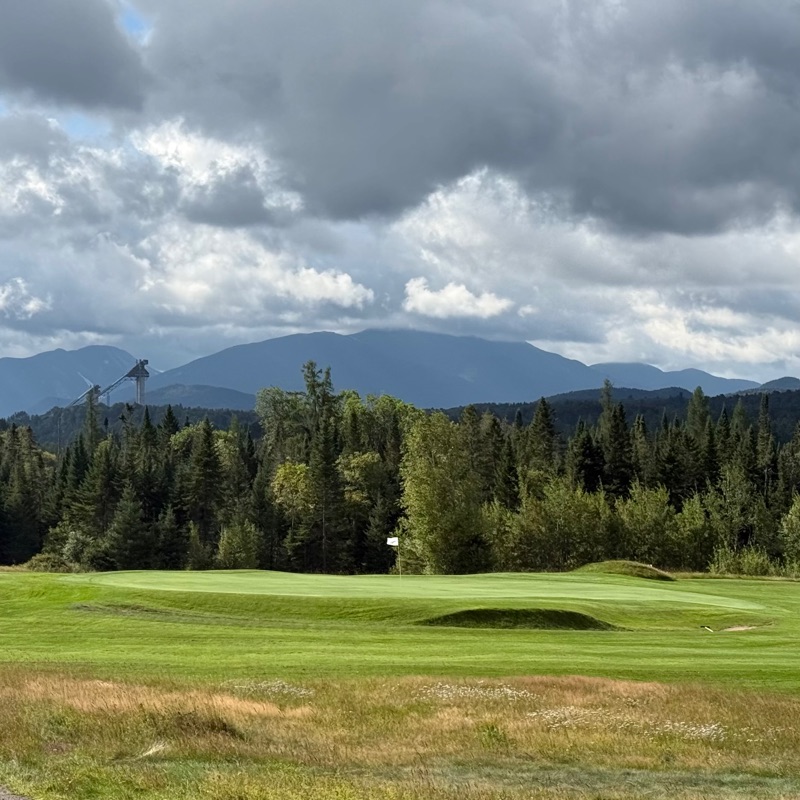
This was the course I wish I had a chance to play. It sits on an open rolling piece of property with a great view of the mountains. It was designed by Seymour Dunn in 1926. Unlike the LPC Links course, the bunkering is more traditional. They were large and flanged out. The concave greens encouraged running shots to work off the slopes. The course is named after local golf legend Craig Wood who won the 1941 Masters and 1941 U.S. Open.
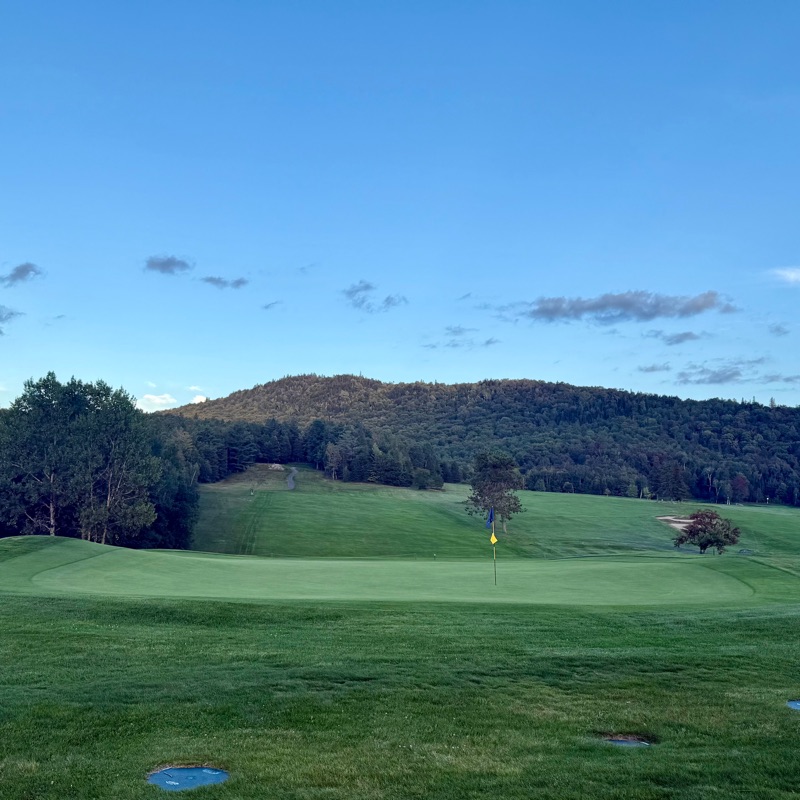
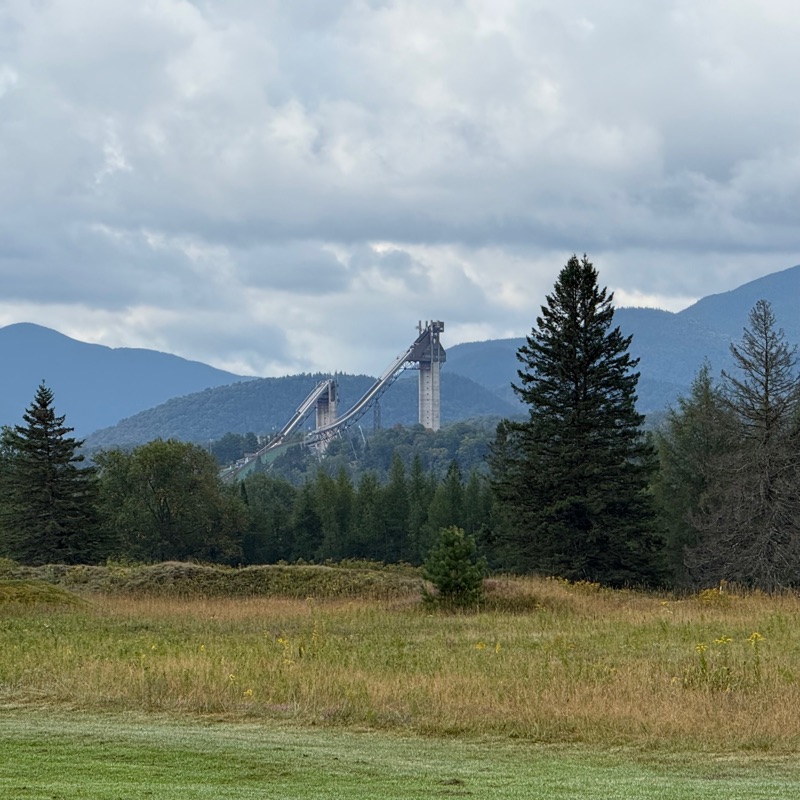
(I like the playing corridors and the long views across the property.)
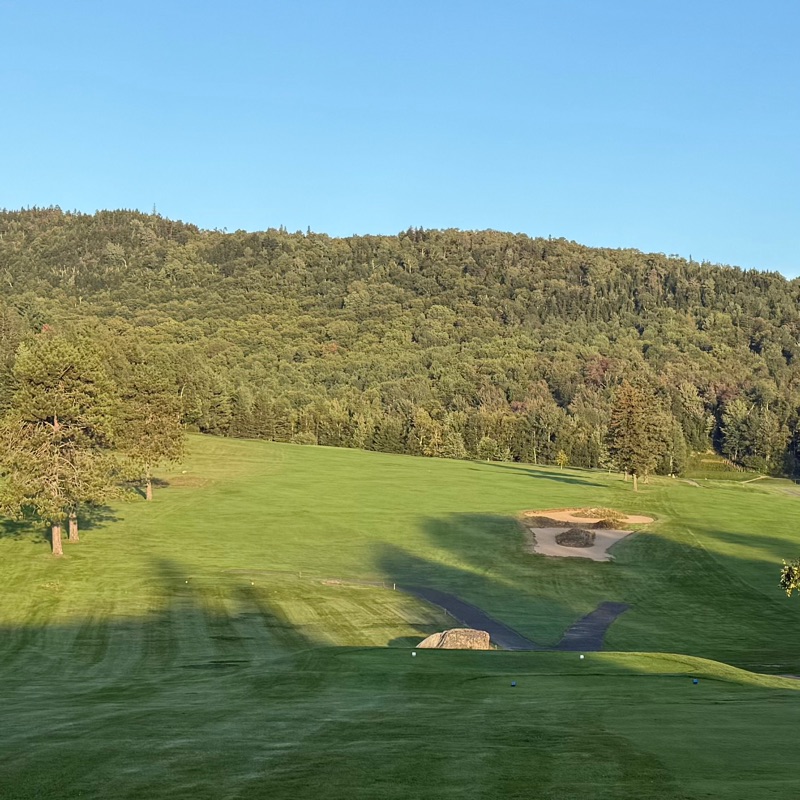
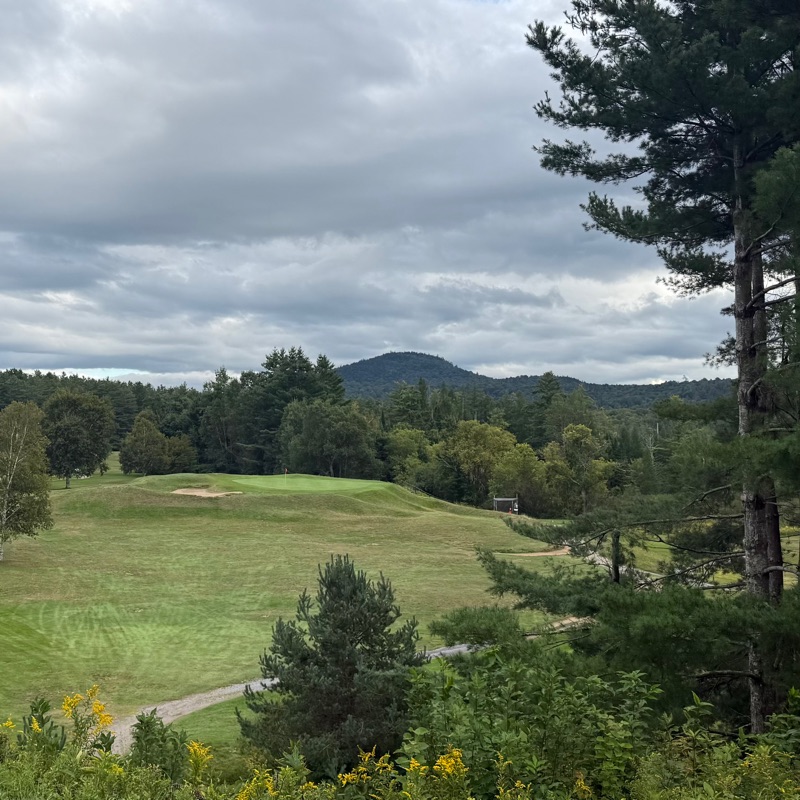
(Notice how the tee boxes are pushed up and flattened out. The fairway bunkers have a cop in them but has a manicured clean look.)
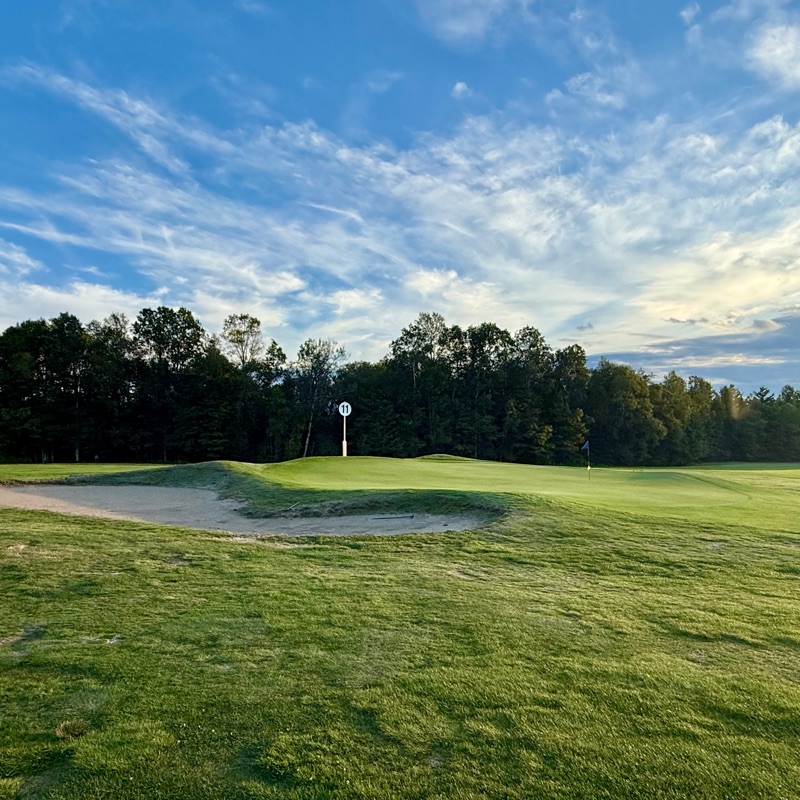
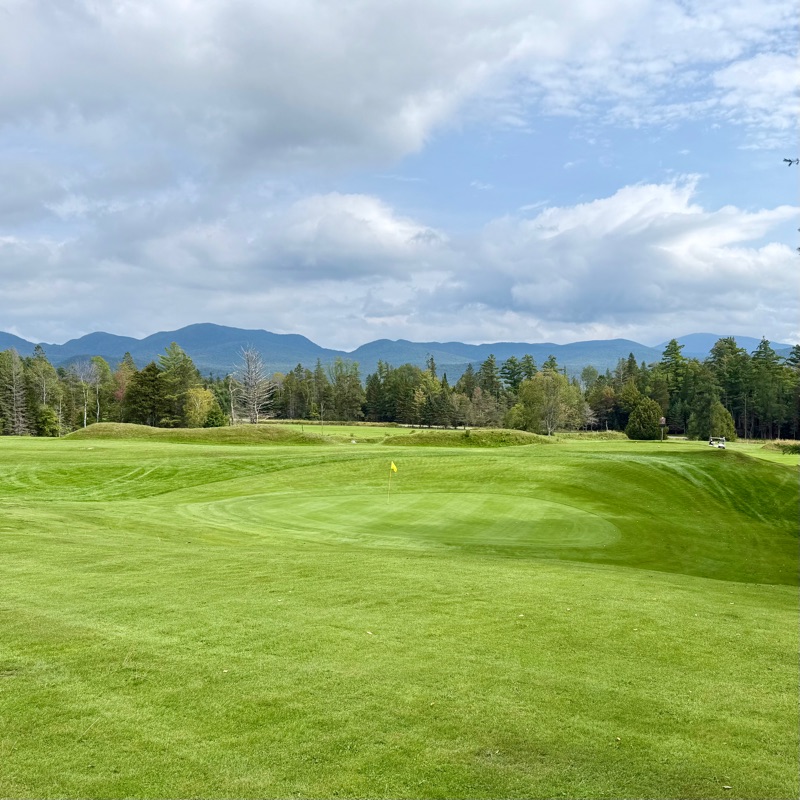
(This low profile green looks wonderful. I love the aiming sign with the hole number on it.)

Tuesday, September 8, 2026

Lake Placid Club - Links Course (Lake Placid, NY)

I believe architects should take a subdued approach when building in a spectacular setting. Let the player breathe in the beauty and tranquility of being outdoors. In a game that allows participation far into our advanced years, the calm that arises from making an athletic move is best appreciated when the surroundings are the main character.

(The 466/416 yard opening hole is a pause and reflect moment as you take in the grand view of the Adirondack mountain range. The hole’s length, creasing fairway, and treacherous green begin the round with an emphatic thump…

…guarding the left side is this doozy of a bunker. The island of grass and wildflowers will gobble up any ball that runs too far. One should take note as there will be more villainous bunkers than this.)

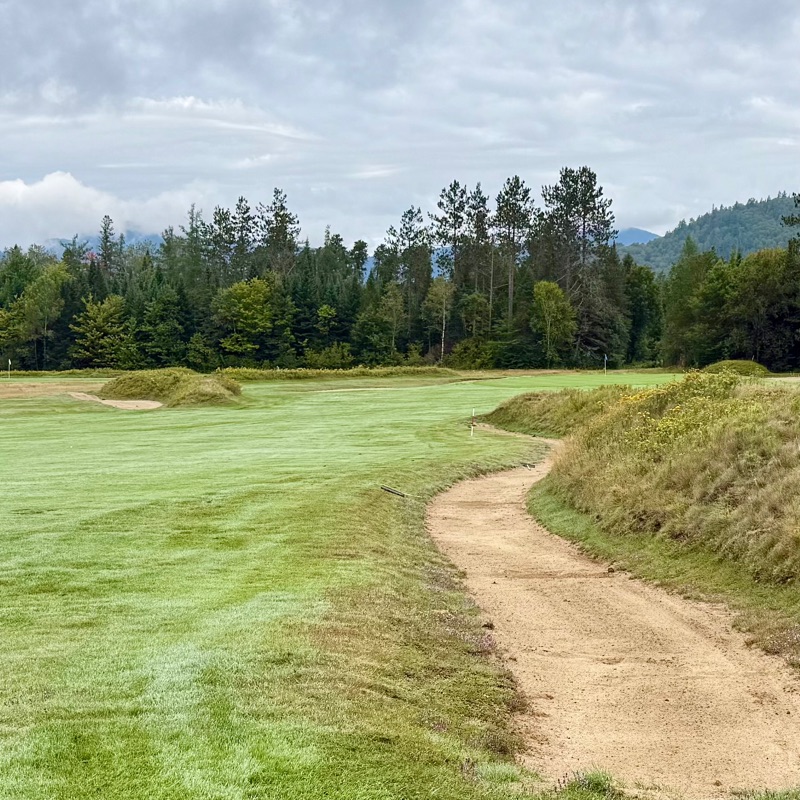
Seymour Dunn designed the Links course in 1909. It was one of his first attempts in the United States and shows off an architectural style that is not common. While routing the course using a horse and plow, he stacked the rocks in large piles and covered them in dirt. A narrow strip of sand circles them. Long grass, wildflowers, and thyme all grow on these huge dirt rock piles making them a unique and scintillating hazard. The random lie and stance of the player makes for a wild experience. On some holes, both sides of the fairway have them guarding the green almost like bumper rails at a bowling alley.

(This is the feared cop bunker with its serpentine shape weaving in and out. Note how quickly the fairway extends out to the sand. I reckon they can cut it straight to the hazard…

…this is the 581/526 yard par five fifth. Note the green straight ahead with the cop bunkers on both sides of the fairway and even behind the green. The shepherd’s crook feature on the left can wreak havoc with a wild assortment of recovery shots.)

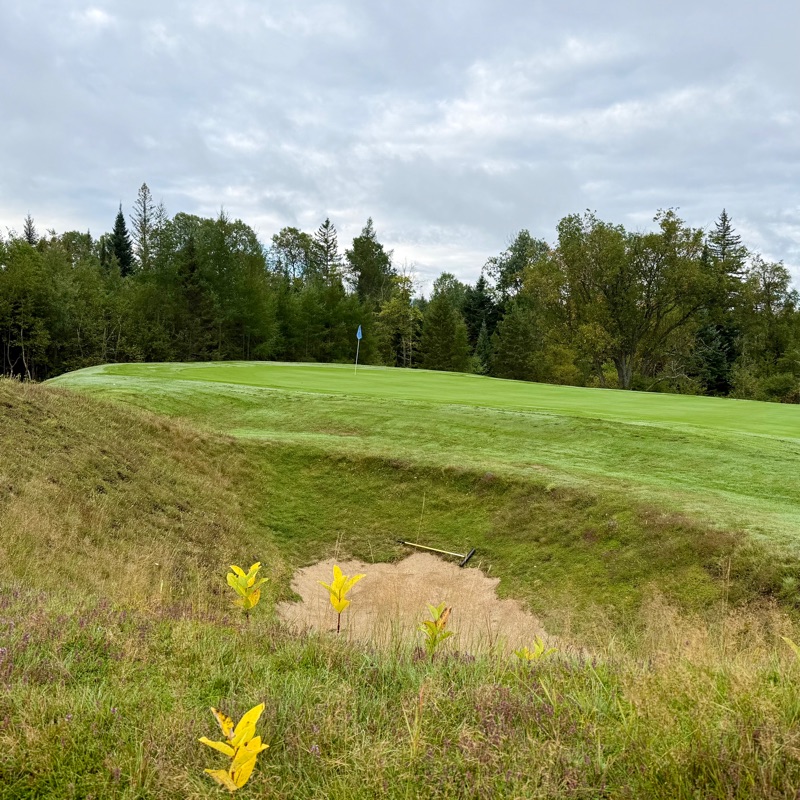
(The 459/407 yard par four sixth has a Lawsonia like green with a distinct falloff to the right. Note the chocolate drops on the left and the depth of the pot bunker with the maintenance worker in it…

…this deep little trap is surrounded by rough and capable of producing some gnarly predicaments. A four will be a good score.)

Seymour Dunn remained in Lake Placid for a number of years as the golf pro and also established himself as a club maker. His 1922 book Golf Fundamentals: Orthodoxy of Style was a historic instruction book that influenced golf greats such as Walter Hagen, Gene Sarazen, and Ben Hogan. To say he was knowledgeable about every facet of golf would be an understatement. This leads me to believe the Links course exhibits all the qualities he believed to be great.

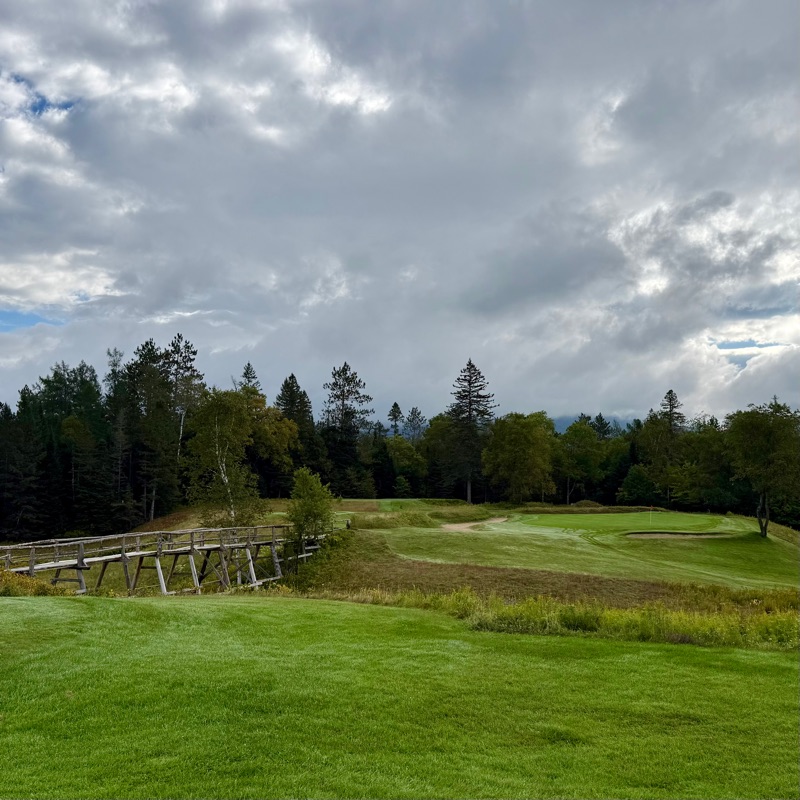
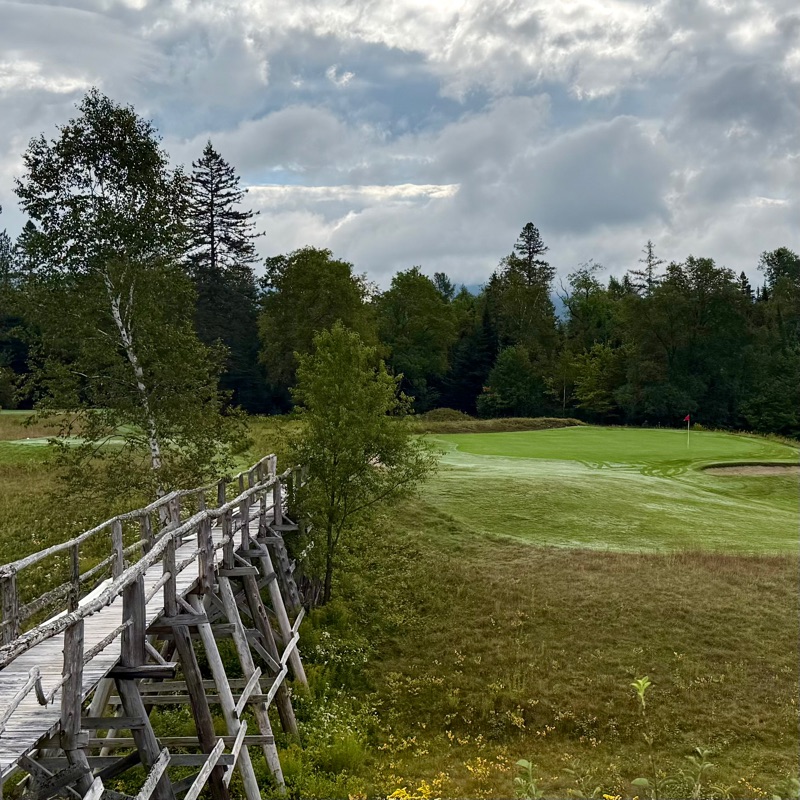
(The 183/152 yard par three eleventh is all carry across a valley to a green that slopes to front right corner. A cop bunker left and hillside right demand a well executed shot. A wooden walking bridge makes this their signature photo.)

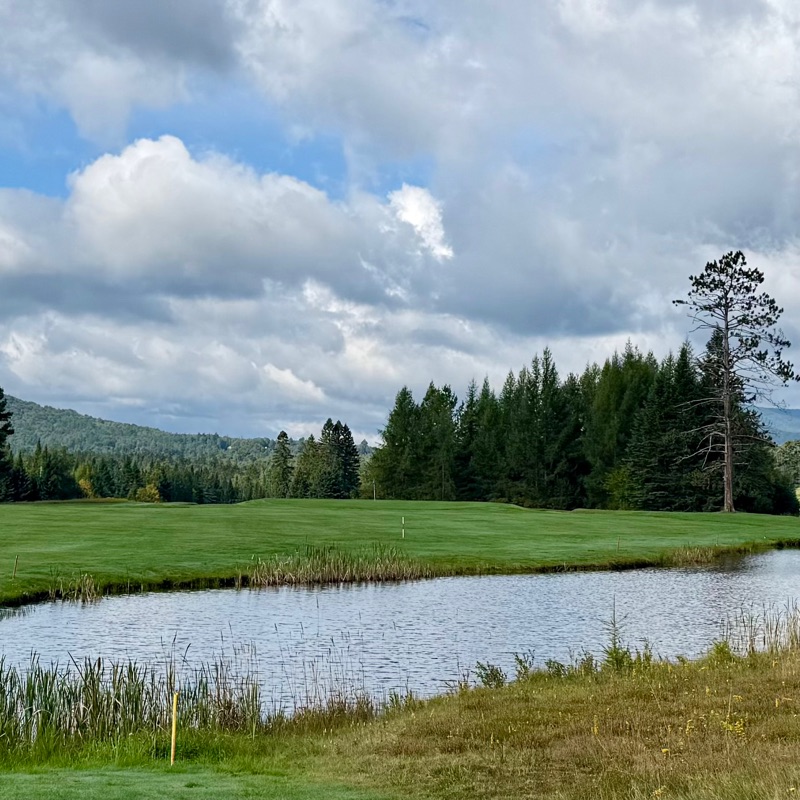
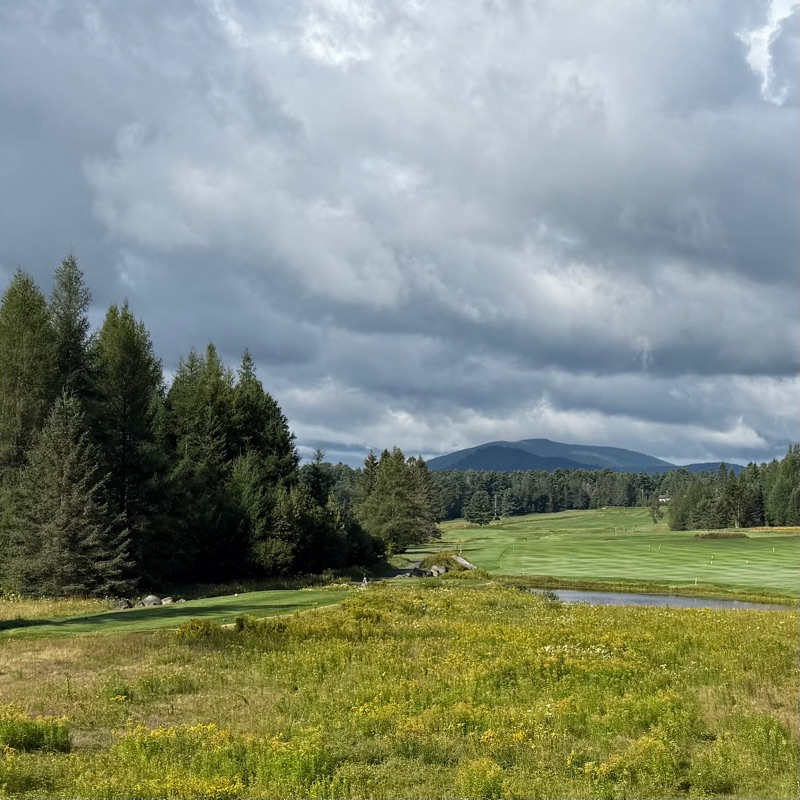
(This is one of the few water hazards on the course as it protects the second shot on the 618/556 yard par five fifteenth. It takes three quality shots to reach this in regulation.)

(This view looking back at the tee boxes of the 380/346 yard par four sixteenth shows off the texture and beauty of Adirondack landscape…

…while just a short iron approach, the green is well bunkered in front and has a prominent right to left slope. Any ball above the cup is very fast and three putting is a real concern.)

The 6-10 stretch is the meat of the routing as you tackle four long par fours with a short par three at nine. Six has a cool boxcar looking green with a deep bunker guarding the left; Seven has cop bunkers on both sides of the fairway. Their serpentine nature tends to block out the green unless you’re in the center of the fairway; Eight is a faint dogleg right with a copse of trees emphasizing the turn. It was here where I noticed the 30’ story towers used for ski jumping; Ten is the longest par four on the course and features a blind drive over a slight rise. More cop bunkers squeeze the approach making this play like a par five.

The five par threes are an eclectic group. Most will remember the second and picturesque eleventh but the other three are less memorable. Nine is the shortest and gives one a little breather while playing the 6-10 holes. The par fives are lengthy and require three well struck shots.

(The 361/235 yard par four seventeenth is your best chance to secure a birdie, or an eagle. The difference between the tips and the next tee is a realistic barometer of what is a driveable par four for pros and amateurs.)

The Links is a true yesteryear course that provides a unique experience here in the States. Seymour Dunn hailed from North Berwick, Scotland and brought old world design to upstate New York. Architecture aficionados would do well to put this on their list of places to see. I give it a 7 (great)(worth driving 3-4 hours to visit).

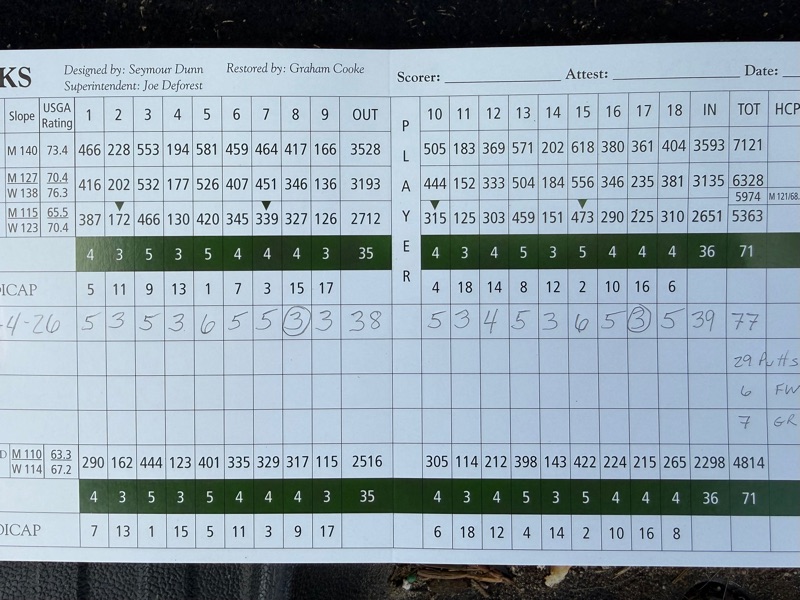
(I played the 6,328 yard tees. I had a very good round bolstered by two birdies and playing the five par threes in even par. That’s seven 3s on the card! Besides the birdies, I bogeyed all the other par fours except twelve. Thankfully the wind was calm 7 am. The cost was $109.)

(The 404/381 yard par four eighteenth plays uphill to a green perched above a shallow valley. Beautiful land movement! Beautiful views! One great day of golf!)

Blog 525

Here’s a few other photos.

Sunday, September 6, 2026

Saranac Lake Golf Club (Ray Brook, NY)


“Imperfect golfers welcome. You’ll be in good company.”

Saranac Lake is a relaxing club that doesn’t take itself seriously. It has decent greens but the rest of it is in rough shape. When camaraderie and a good walk is your main goal, conditioning is of secondary importance. Don’t take that as a knock on the design, Alex Findlay put together a good one.

(The 457 yard par five first hole has a terrific green complex. It’s pushed up with bunkers cut into the base on the sides. It demands absolute precision to hold with a long shot. I love the width and openness.)

The Adirondacks is dotted by a series of old courses designed by some of the earliest pioneers in the game. As the railroads made their way up here and the wealthy followed to escape the city. Saranac Lake was designed in 1919 long after several clubs had been established. Alex Findlay himself did the Mountain course and the Pristine 9 for Lake Placid Club nine years earlier. This particular project was supposed to be eighteen holes, nine on the south side of Rt 86 and nine on the north side. The north holes never came to be.

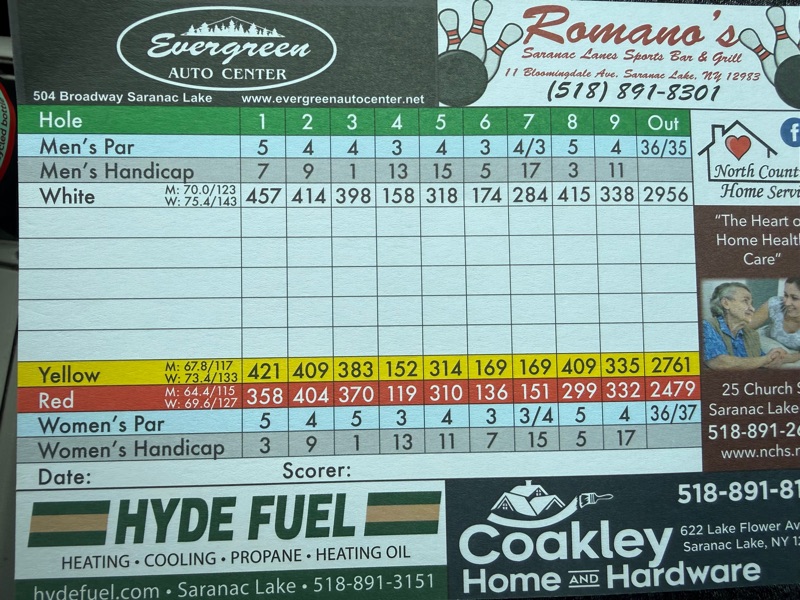
(The 284/169 yard seventh plays as a short par four or mid length par three. It is my understanding that this section floods or doesn’t drain well so the front tee is used in these situations.)

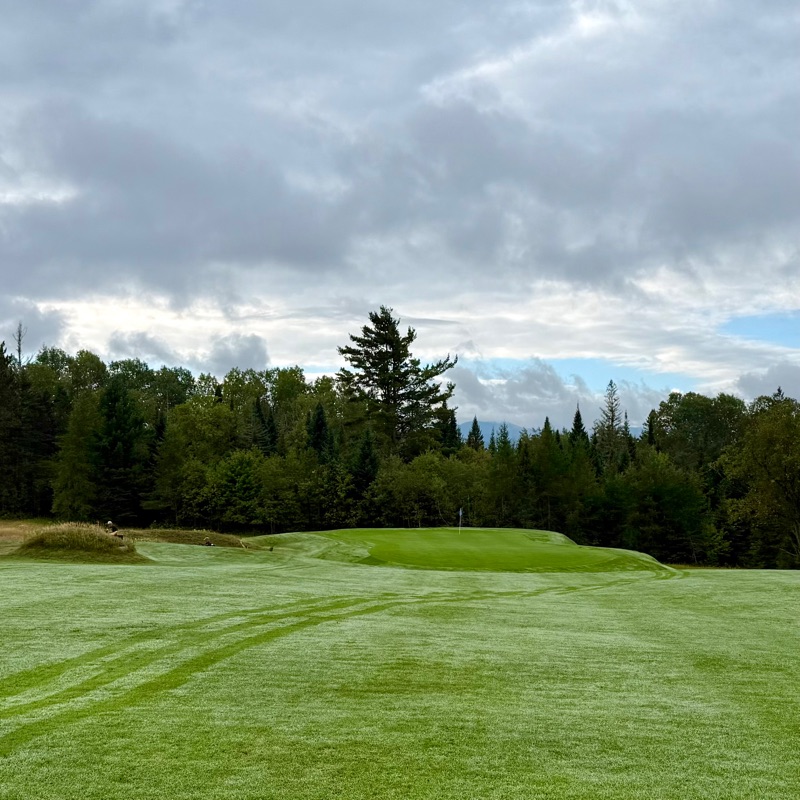
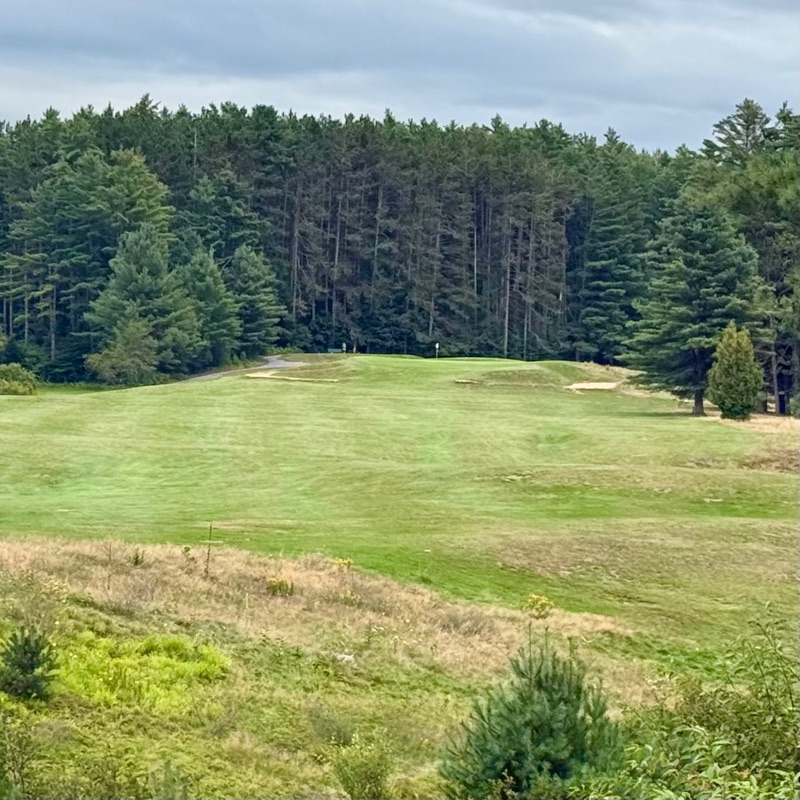
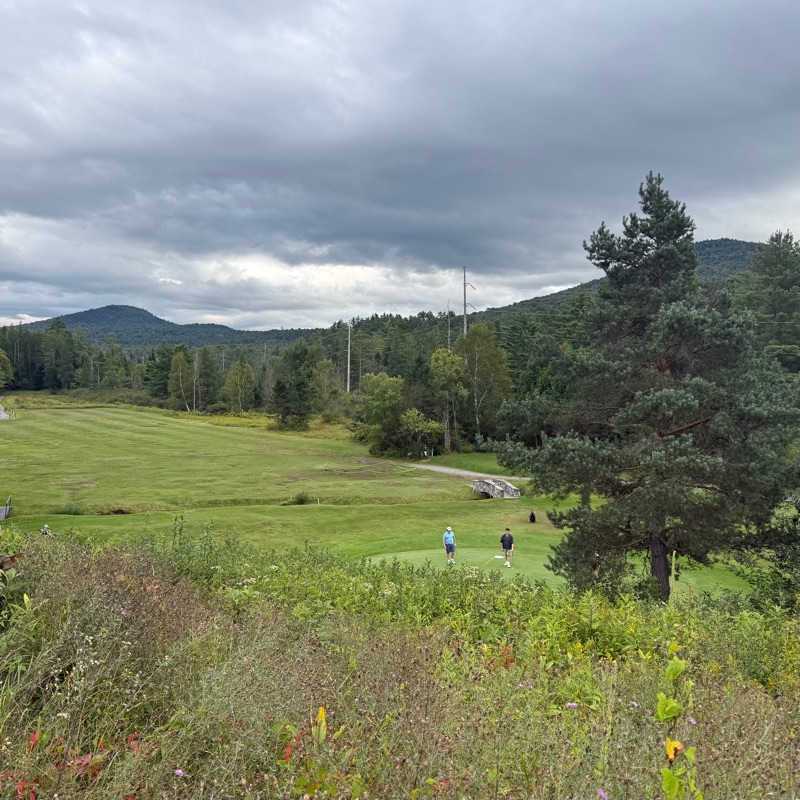
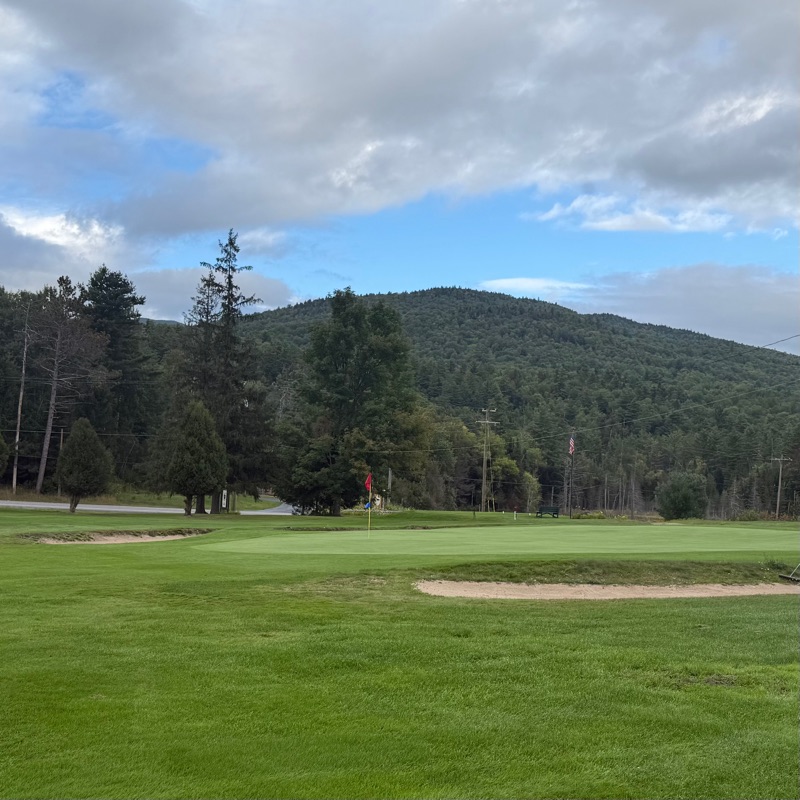
It was a bit of luck that I actually stopped by. I wasn’t aware the course was a few miles from my hotel and that Rt 86 was the main road into Lake Placid. Any intention I had to play was thwarted by a high school tournament in progress, but it did allow me to walk several holes and watch them play. The tee for the sixth is basically in the car park. It’s a fantastic par three across a valley to a fortress green (opening photo). Curiosity piqued, attention grabbed! The first hole looked just as good. I was impressed by the width and the lack of trees everywhere. The par five eighth is a smidge over 400 yards but plays uphill to a rounded, sloping fairway with the green at the crest. For these young boys, it was just a mid iron second shot, but controlling that hanging lie from hooking OB caused a wild assortment of swings. The ninth was anticlimactic. A bland straightaway hole with a sloped green to negotiate.

(The front pin is probably the toughest location on this sloped green. Almost all the putts were coming from above the hole. It’s a 338 yard par four.)

Saranac Lake is a footnote to a few historical markers. Scott North was the first golf professional in 1921. Craig Wood worked for a short time here too. Wood is best known for winning the 1941 Masters and 1941 U.S. Open. He was also the first player to lose every major in a playoff (joined later by Greg Norman). Hike Tyrell became the second golf professional in 1926 and stayed for 58 years before retiring in 1984. He worked with Ben Hogan at Saranac Lake in the summer of 1939. Yes this isn’t my normal write up but a nine hole course like this with all the history and interesting architecture deserves recognition. I give Saranac Lake a 3 (average)(worth driving 15-30 minutes to play).

(This is my fifth Alex Findlay course. His style is very much in tune with how I view architecture. He takes natural features and produces good golf shots. It’s simple but entertaining. He did a lot of work in the Philadelphia area during the time Philadelphia School of Design was emerging. They are direct opposite of each other. One distinctly focuses in on developing strong players while the other promotes the game getting stronger.)

Blog 524

Thursday, September 3, 2026

Lake Placid Club - Pristine 9 (Lake Placid, NY)


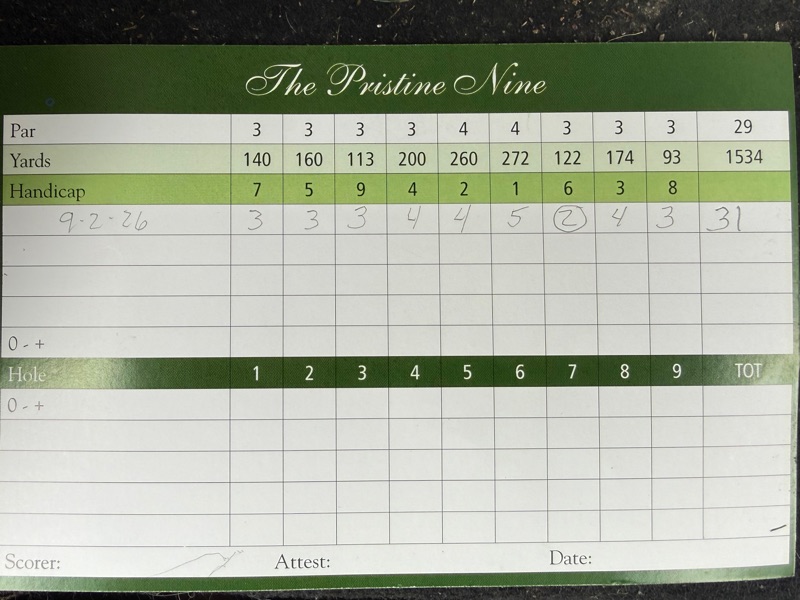
The Pristine 9 is a fun par three course with great mountain views all around. It was designed in 1910 by Alex Findlay the same year he was doing the Mountain course. Technically, it’s executive length since five and six are par fours in the 270 range (the big dog can eat a couple times!) but the other seven holes play between 93-200 yards.

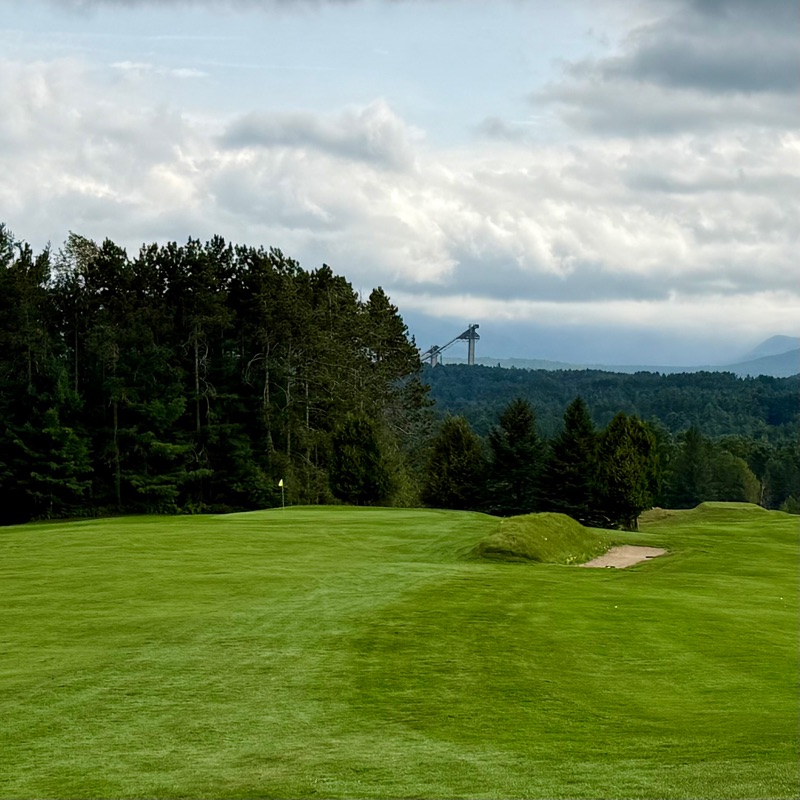
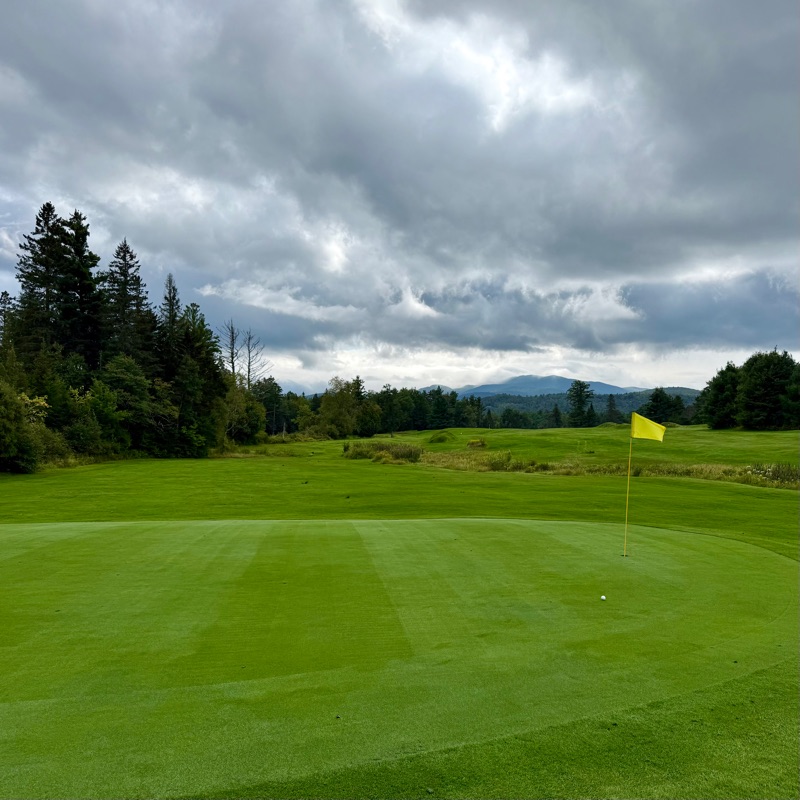
(The 140 yard first hole shares a fairway and sand trap with the finishing hole on the Mountain course. The giant ski jumps in the distance give it a distinct sense of place as Lake Placid was the home of the Winter Olympics in 1932 and 1980.)

(The 113 yard third features a green between two ridges. From the tee, all one sees is the top of the flagstick. Gauging distance is bit nuanced as the ball can take some hard bounces off the front and back slopes.)

(The 262 yard par four fifth is wide open off the tee. The green lies against the slope, pitching to the back left. Judging the bounce and spin separates a three from a four. The green in background is from Mountain course.)

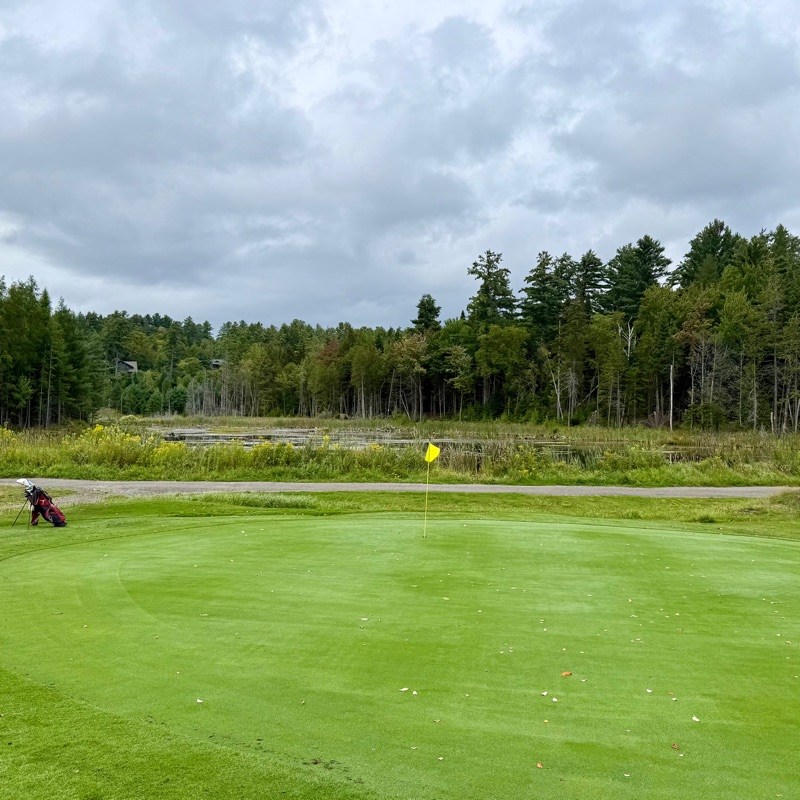
(The 270 yard sixth plays over a diagonal wetland with trees on the right pinching the driving line. Obviously it’s fun giving it a whack, but serious players might cheat down the previous fairway, or layup just over the hazard. Interesting hole.)

The Pristine 9 only has one tee marker on every hole so everyone regardless of gender or age plays from the same spot. Findlay placed the greens in variety of locations. A few highlights are the dell green on number three; the up n over green on the long fourth; the punchbowl green on eight; and the benched green on nine. The entire round can be played under 90 minutes. This means it’s accessible before work, during lunch, or after work.

(The 122 yard eighth has a small pond well short of the green. There’s no awkward ridges so good chance to get close. I hit it within 4’ for birdie.)

It seems like every big name upscale destination is adding a short course to their repertoire, but many of them are the pitch n putt variety. Pristine 9 has some real bangers that require long irons or hybrids. It’s definitely worth enjoying if you’re visiting Lake Placid.

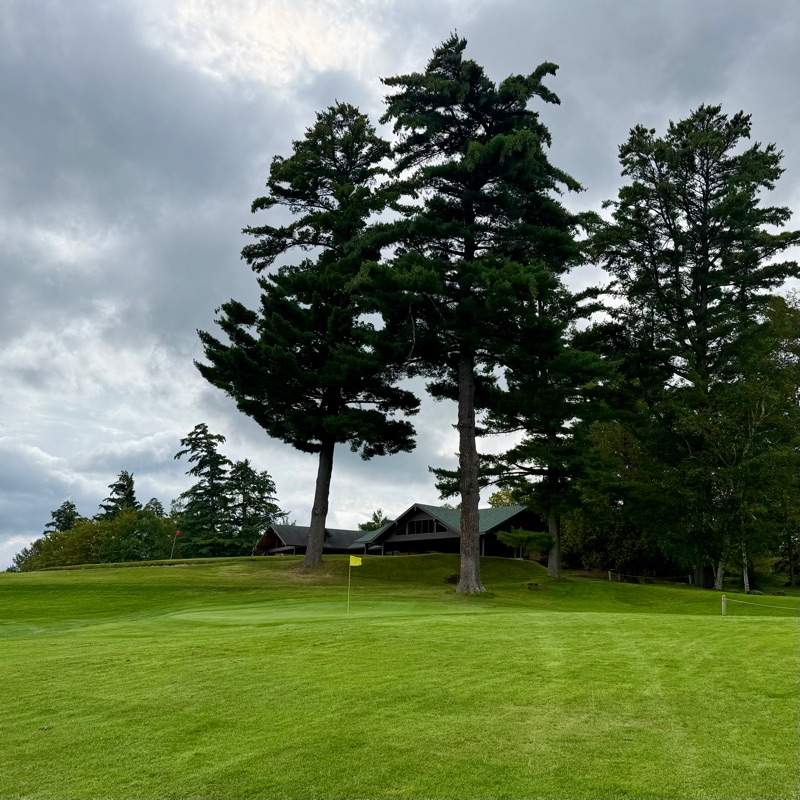
(The 93 yard finishing hole is uphill below the clubhouse and eighteen green on the Mountain. It’s the shortest hole on Pristine. I tried to spin it off the back slope but my ball didn’t come back as much as I wanted. My comebacker was 10’!)

(I bogeyed three holes, two of them being the long par threes, and I hit the wrong line on the par four with the wetlands. 4 GIRs, 1 birdie.)

Blog 523