Sunday, September 6, 2026
Saranac Lake Golf Club (Ray Brook, NY)


“Imperfect golfers welcome. You’ll be in good company.”

Saranac Lake is a relaxing club that doesn’t take itself seriously. It has decent greens but the rest of it is in rough shape. When camaraderie and a good walk is your main goal, conditioning is of secondary importance. Don’t take that as a knock on the design, Alex Findlay put together a good one.

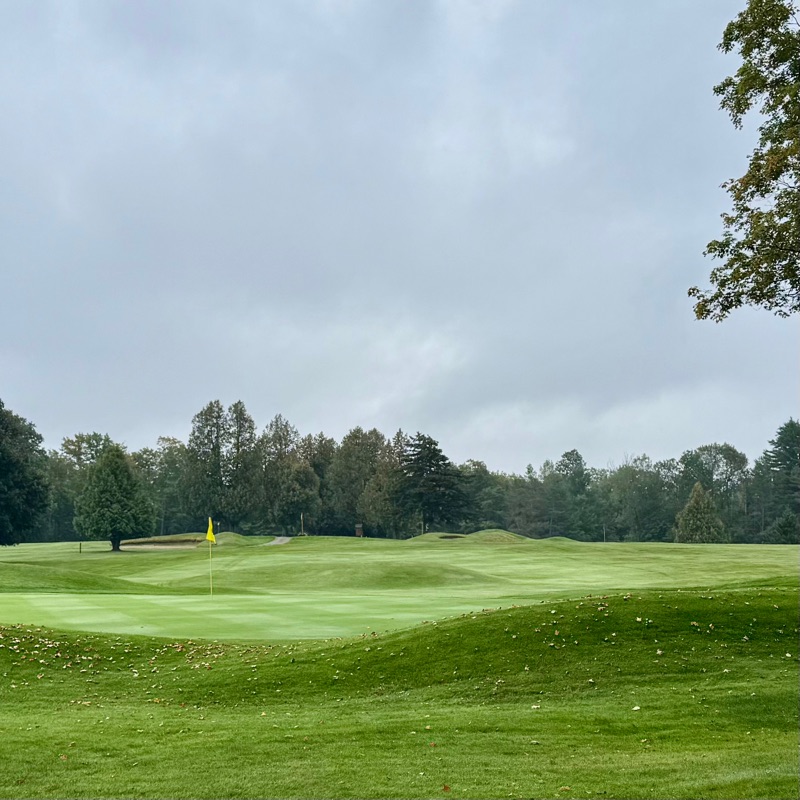
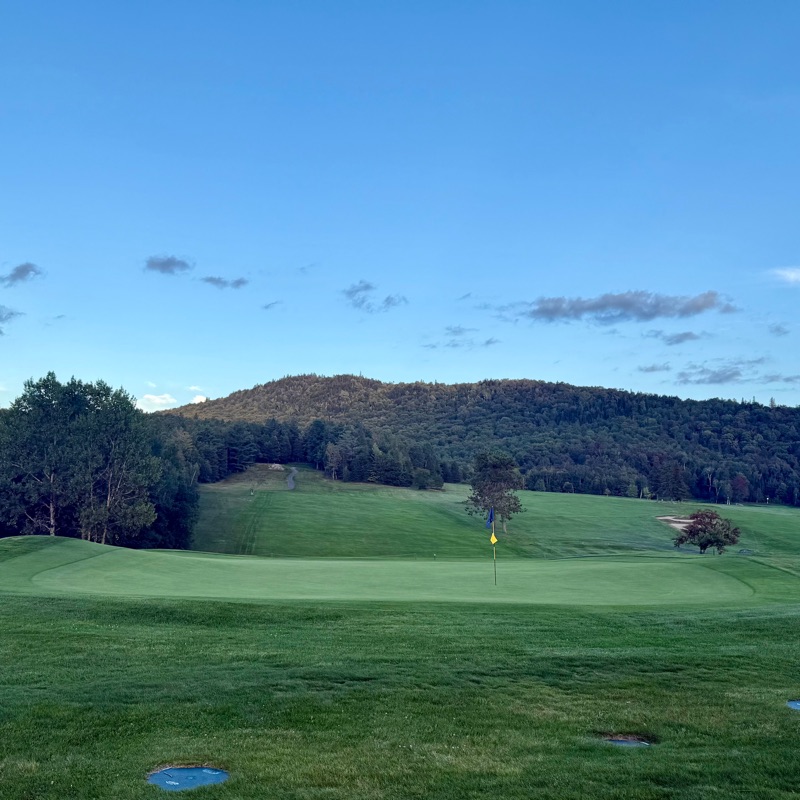
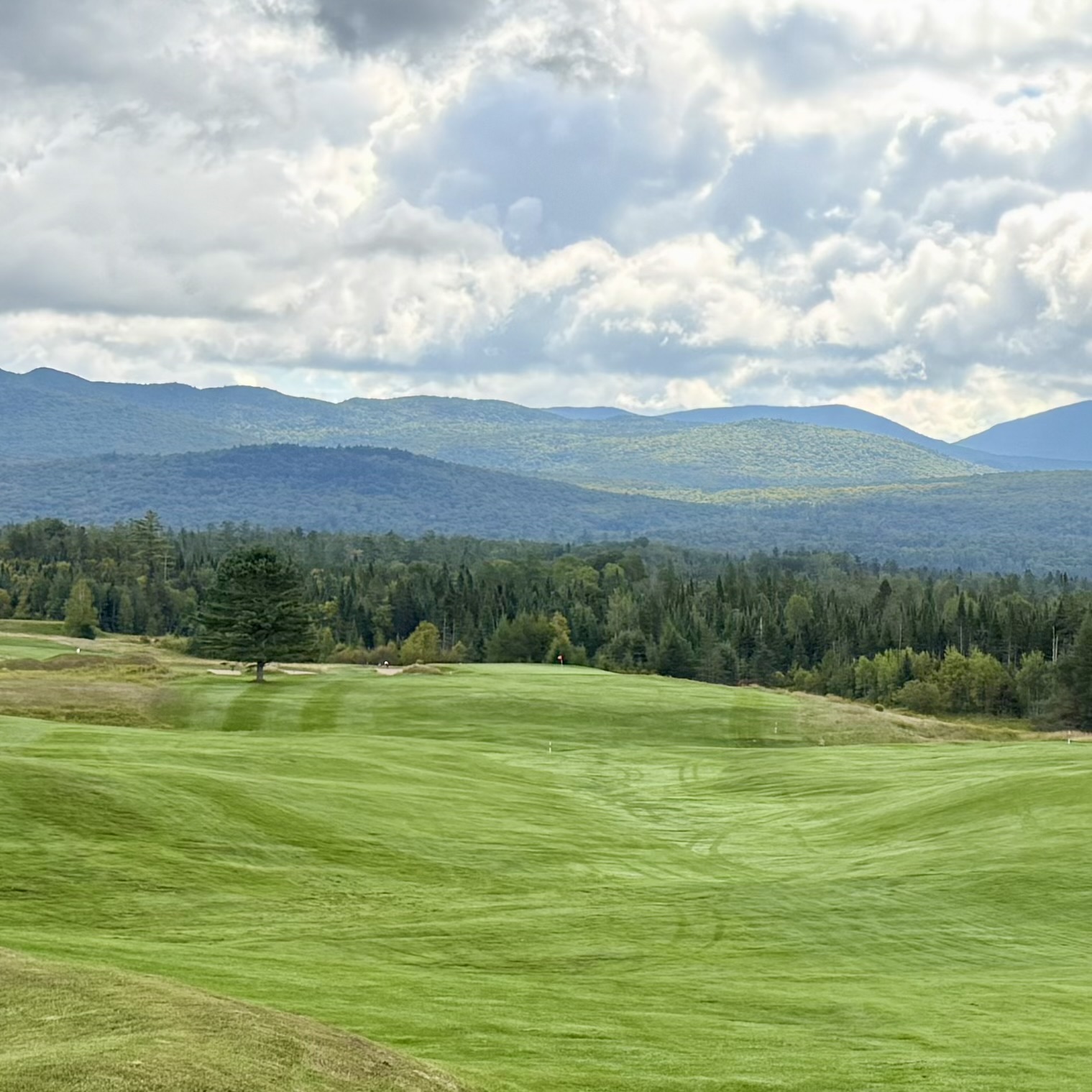
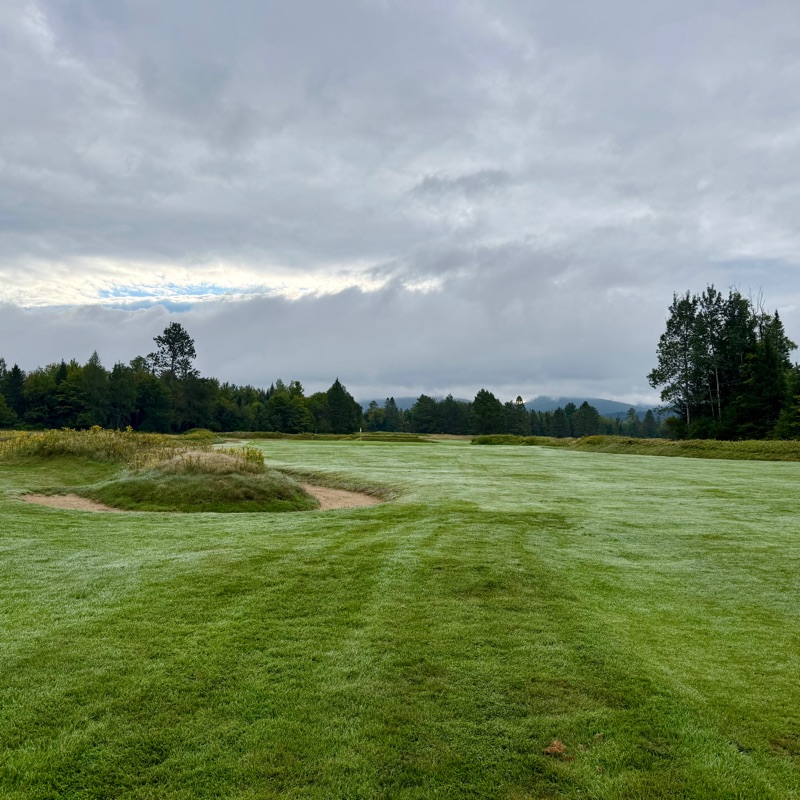
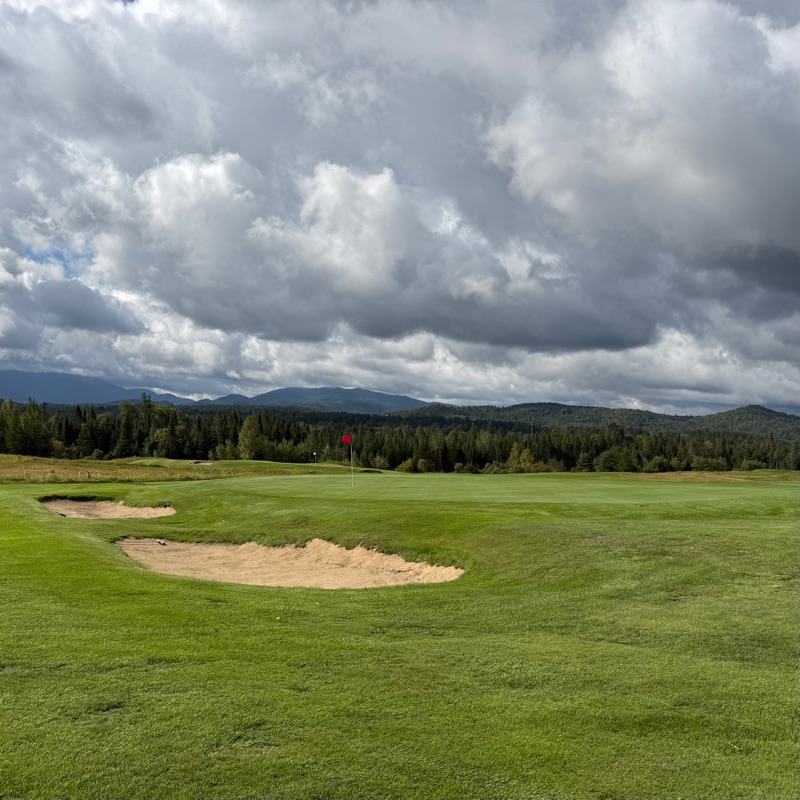
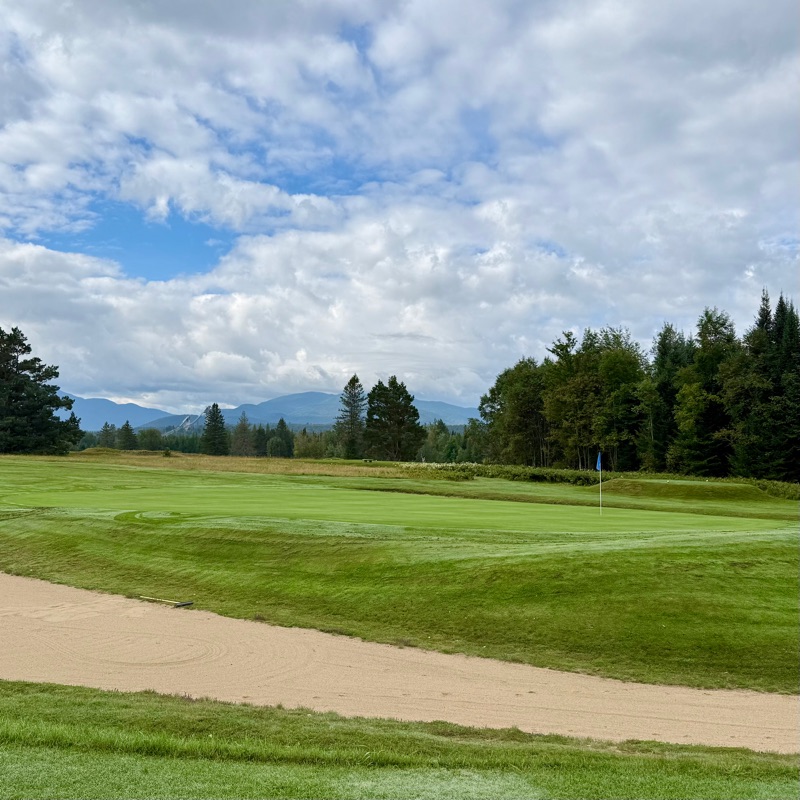
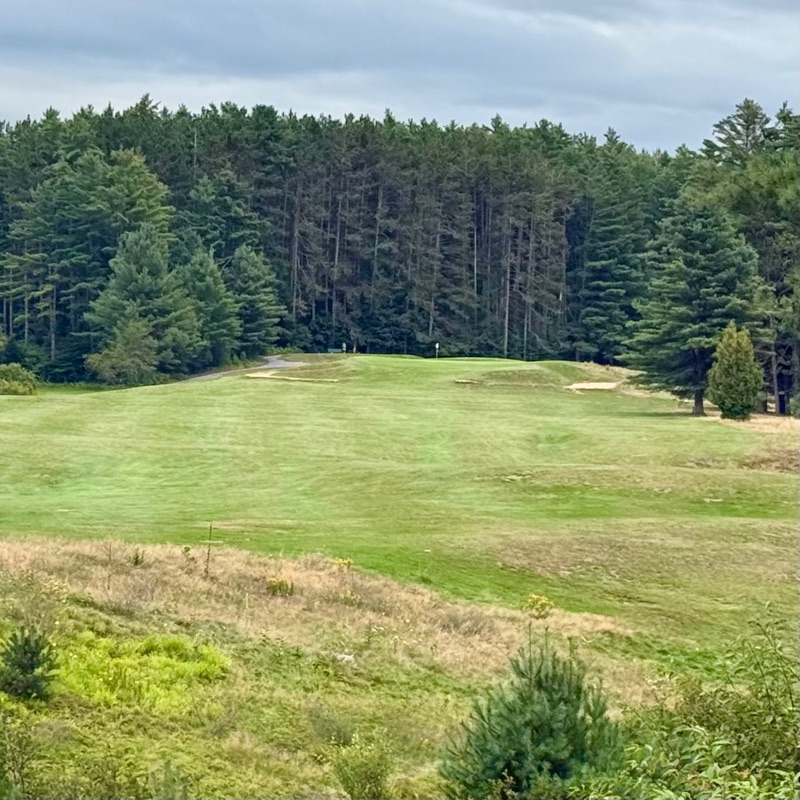
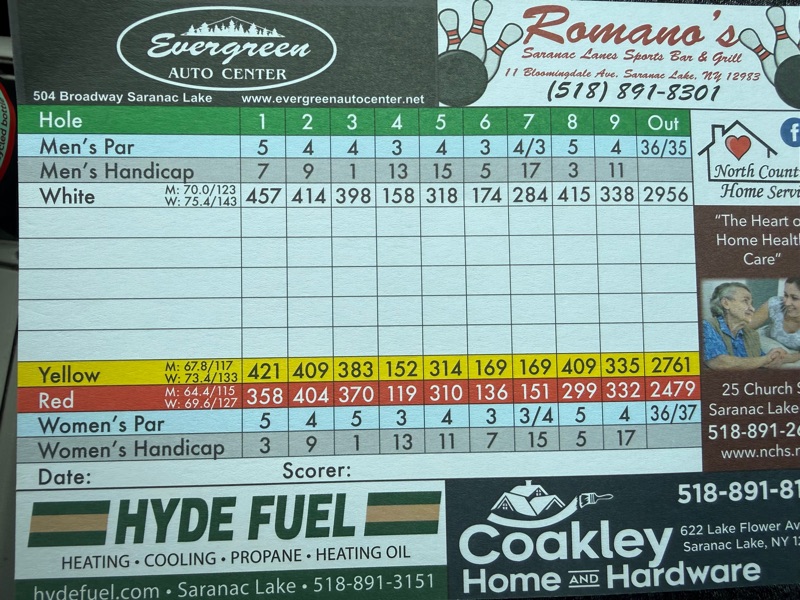
(The 457 yard par five first hole has a terrific green complex. It’s pushed up with bunkers cut into the base on the sides. It demands absolute precision to hold with a long shot. I love the width and openness.)

The Adirondacks is dotted by a series of old courses designed by some of the earliest pioneers in the game. As the railroads made their way up here and the wealthy followed to escape the city. Saranac Lake was designed in 1919 long after several clubs had been established. Alex Findlay himself did the Mountain course and the Pristine 9 for Lake Placid Club nine years earlier. This particular project was supposed to be eighteen holes, nine on the south side of Rt 86 and nine on the north side. The north holes never came to be.
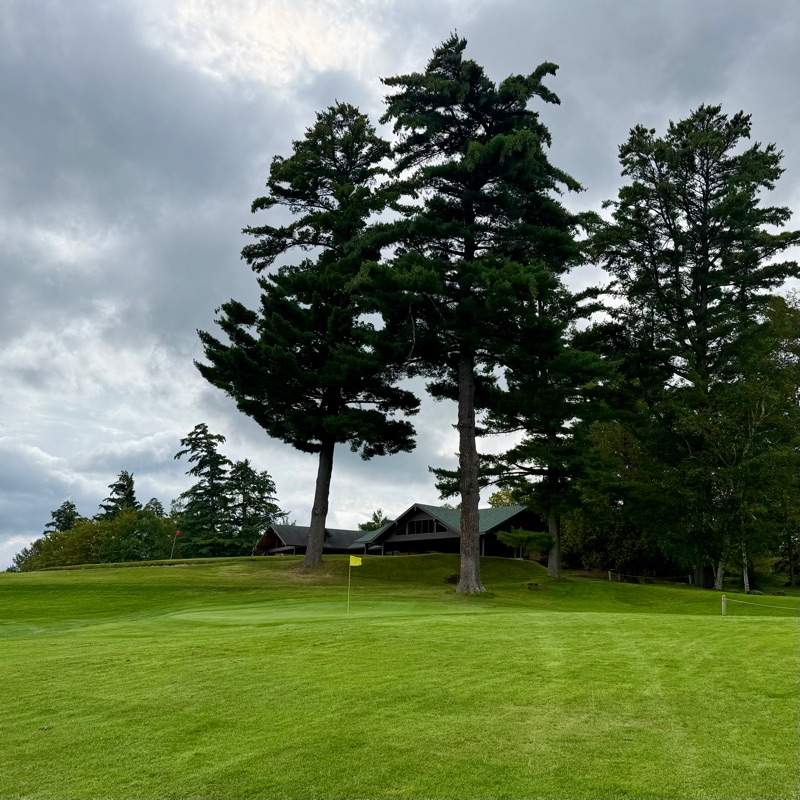
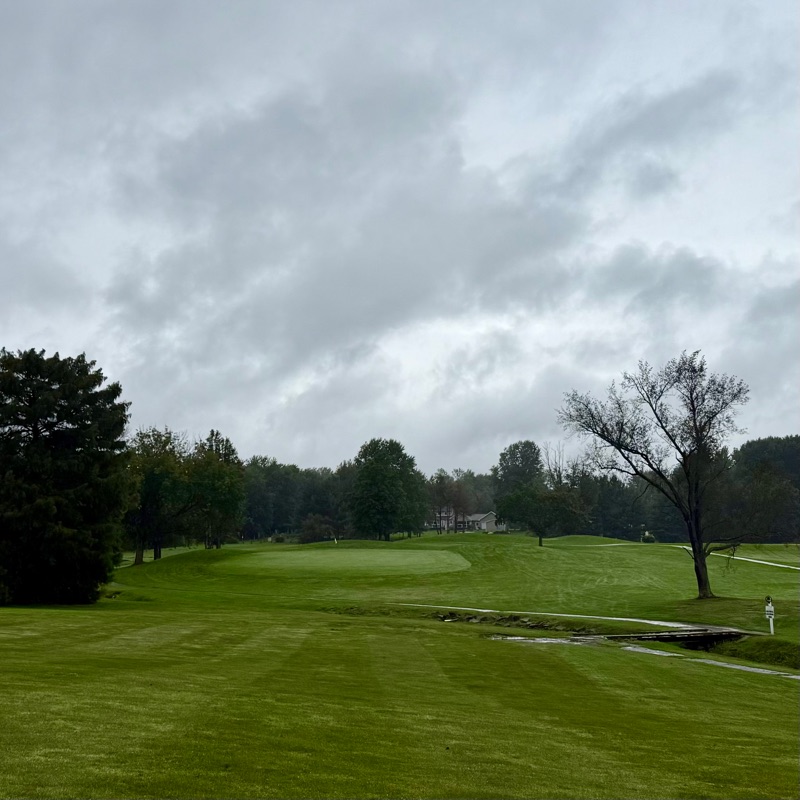
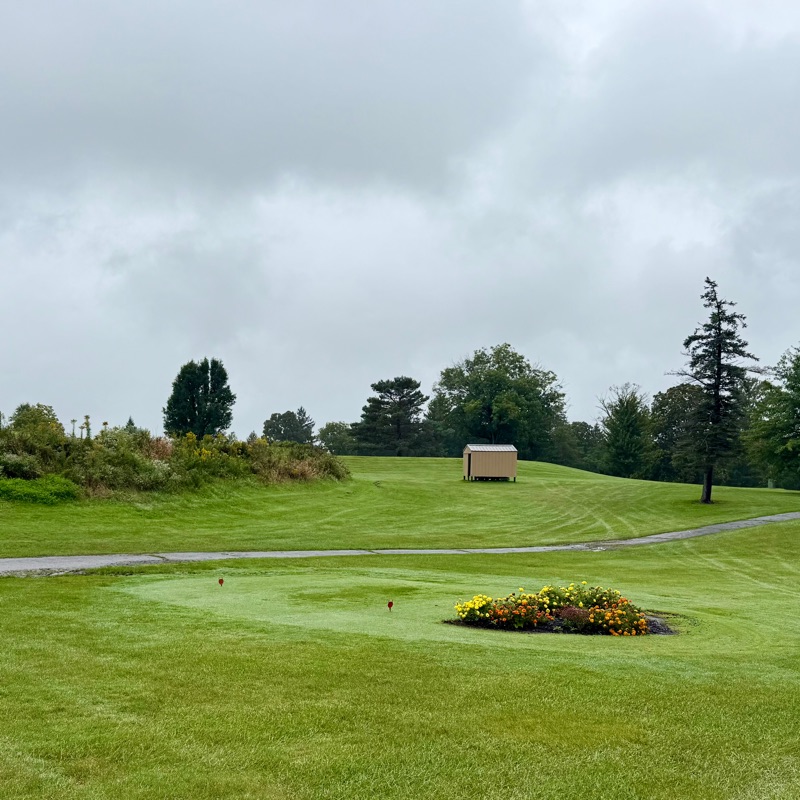
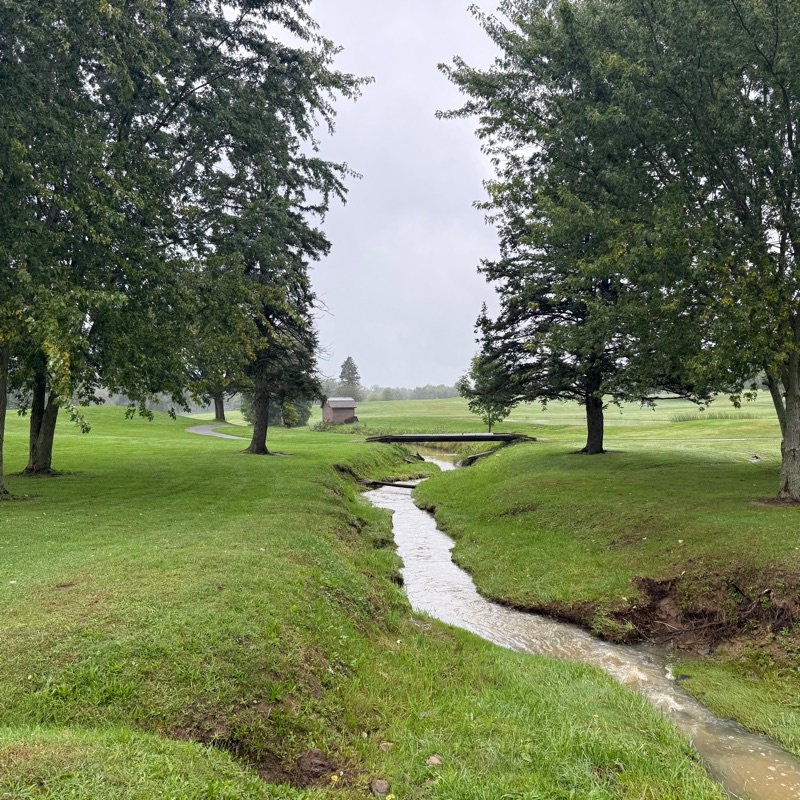
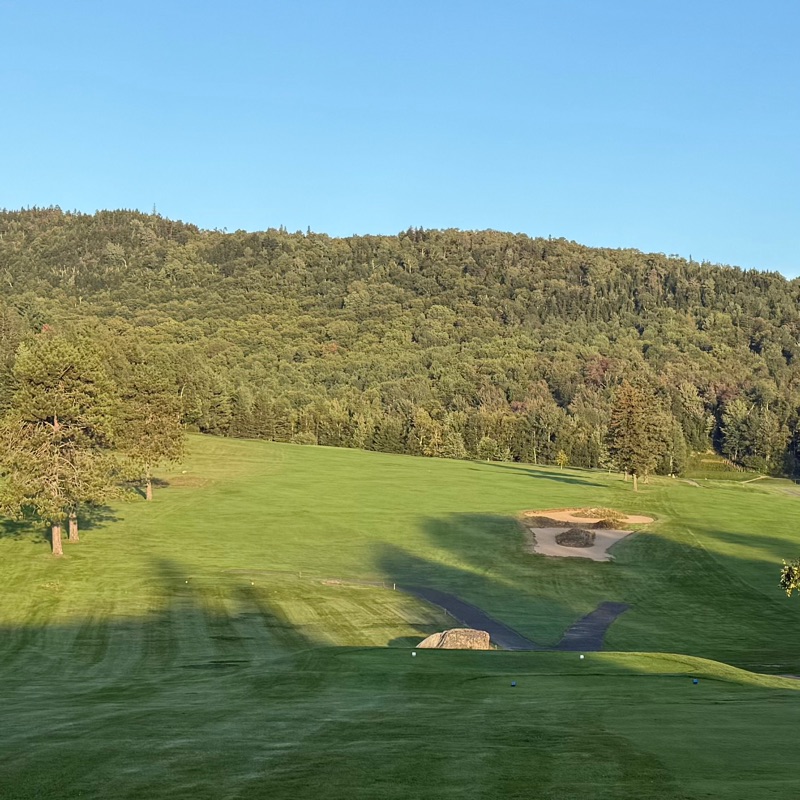
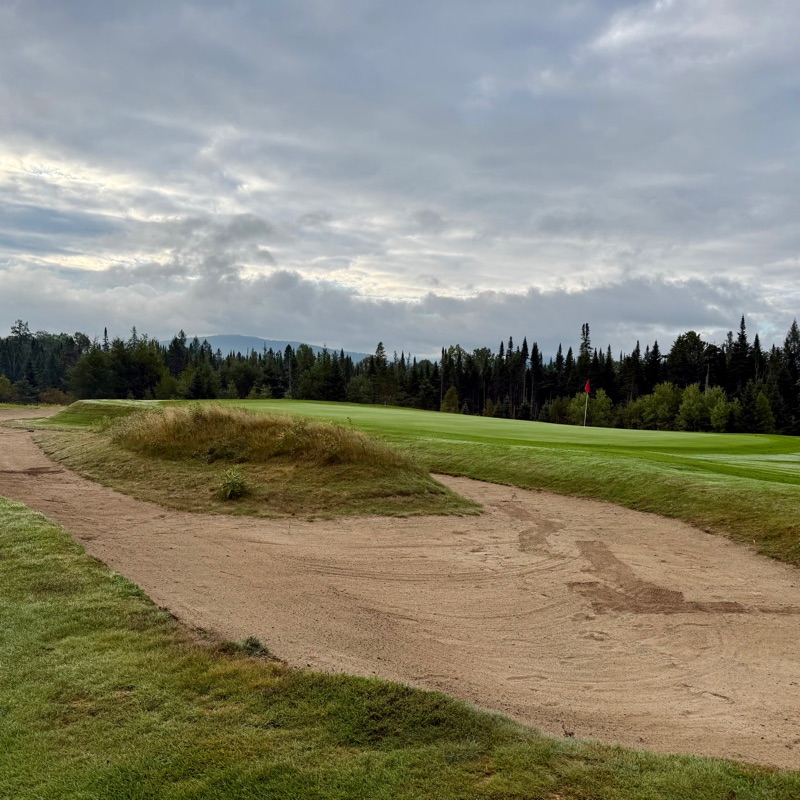
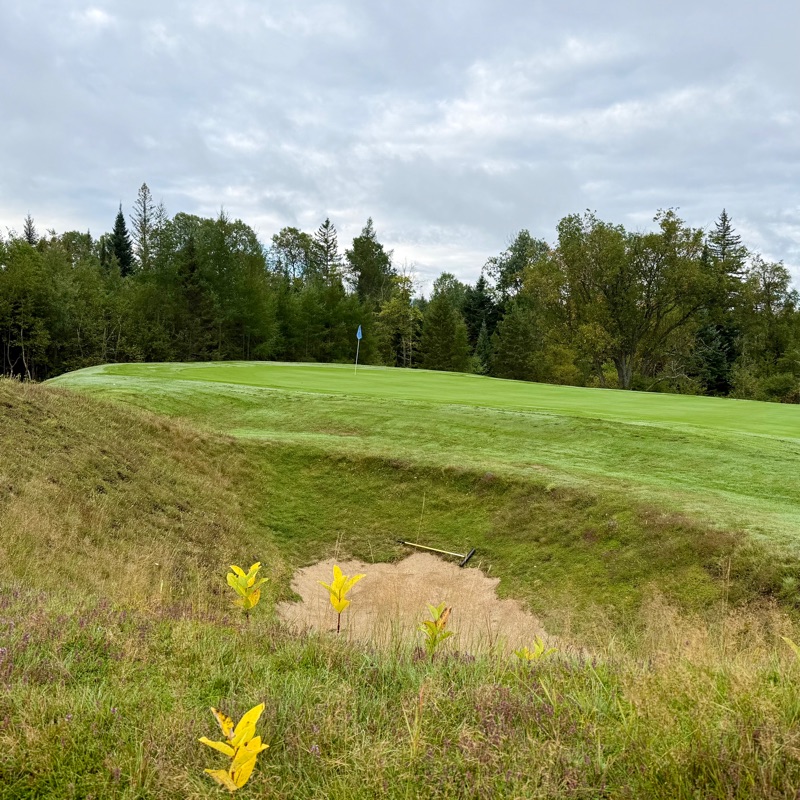
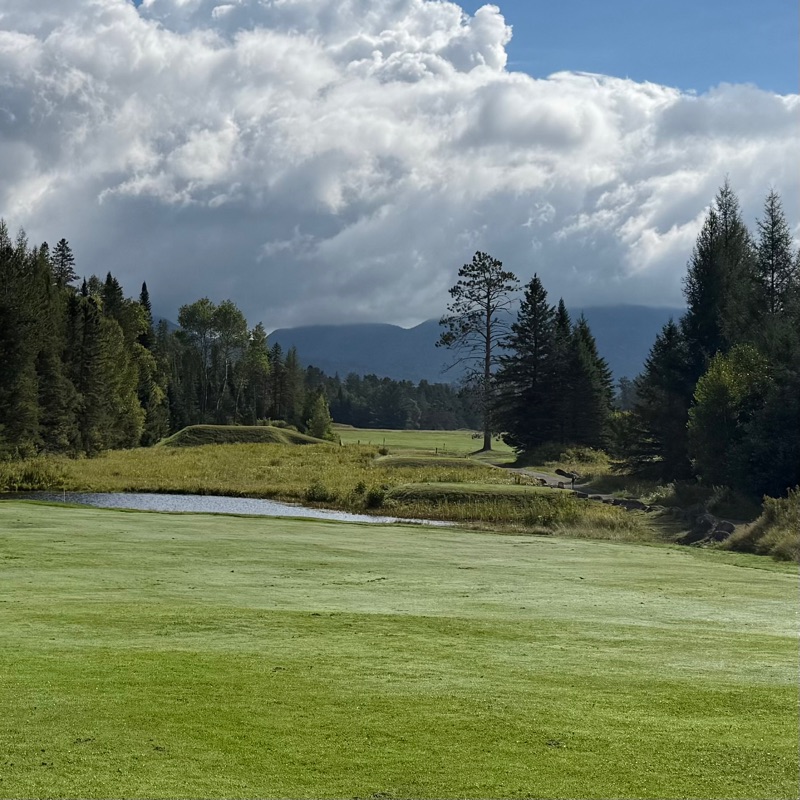
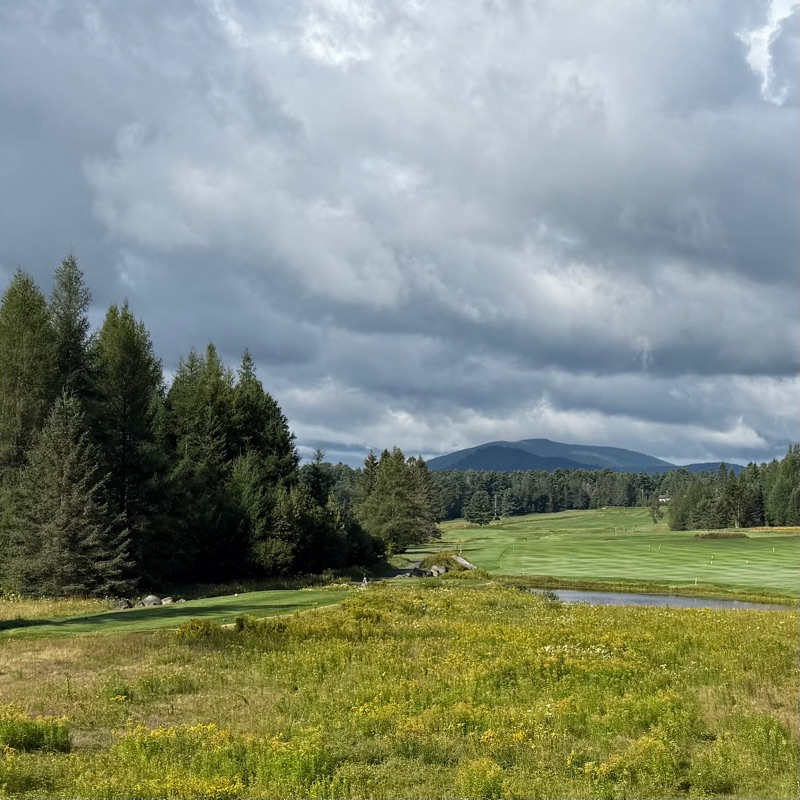
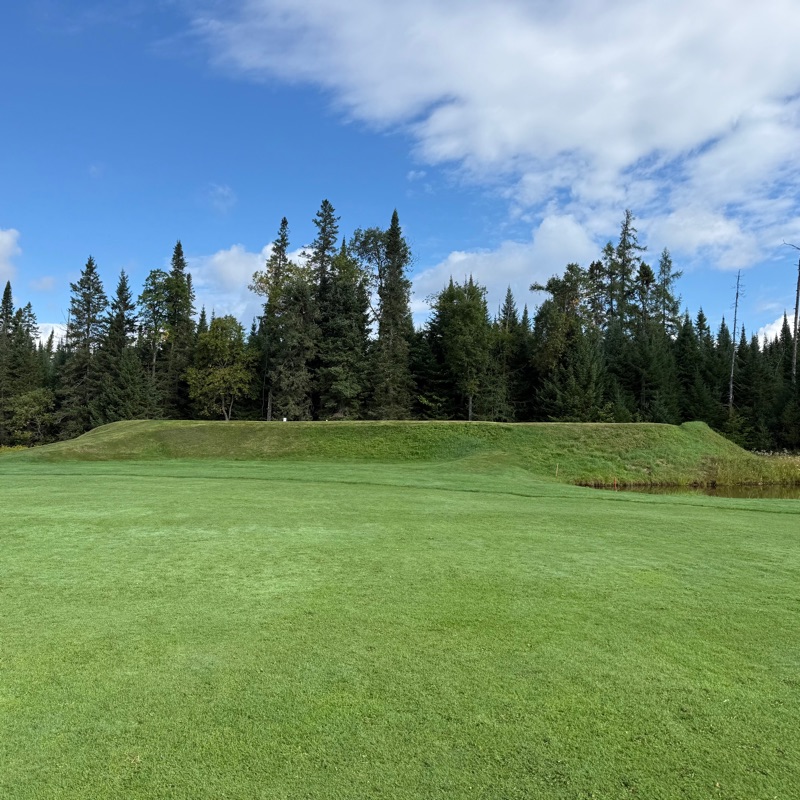
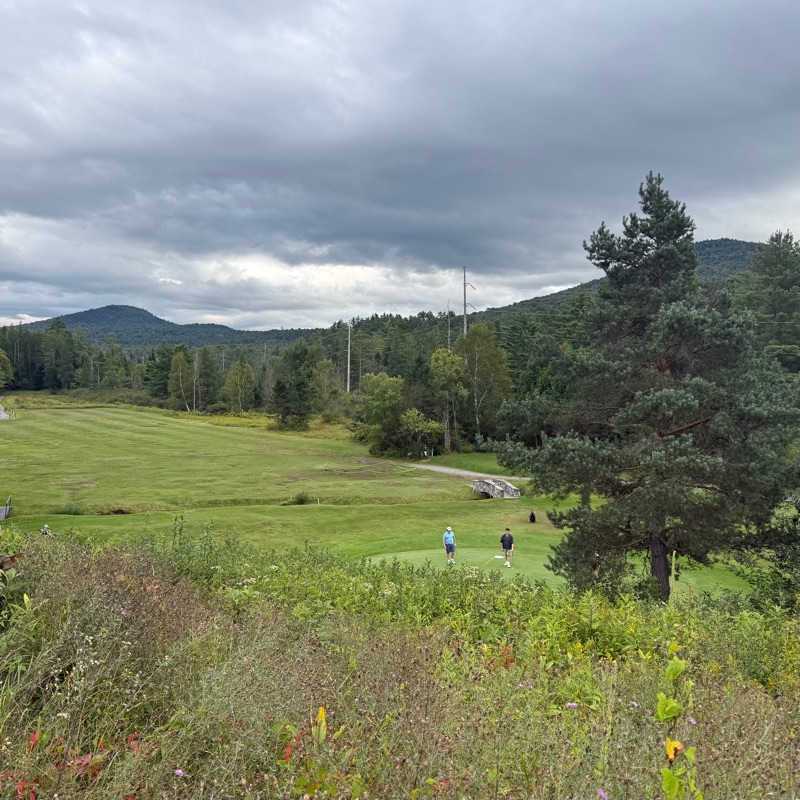
(The 284/169 yard seventh plays as a short par four or mid length par three. It is my understanding that this section floods or doesn’t drain well so the front tee is used in these situations.)

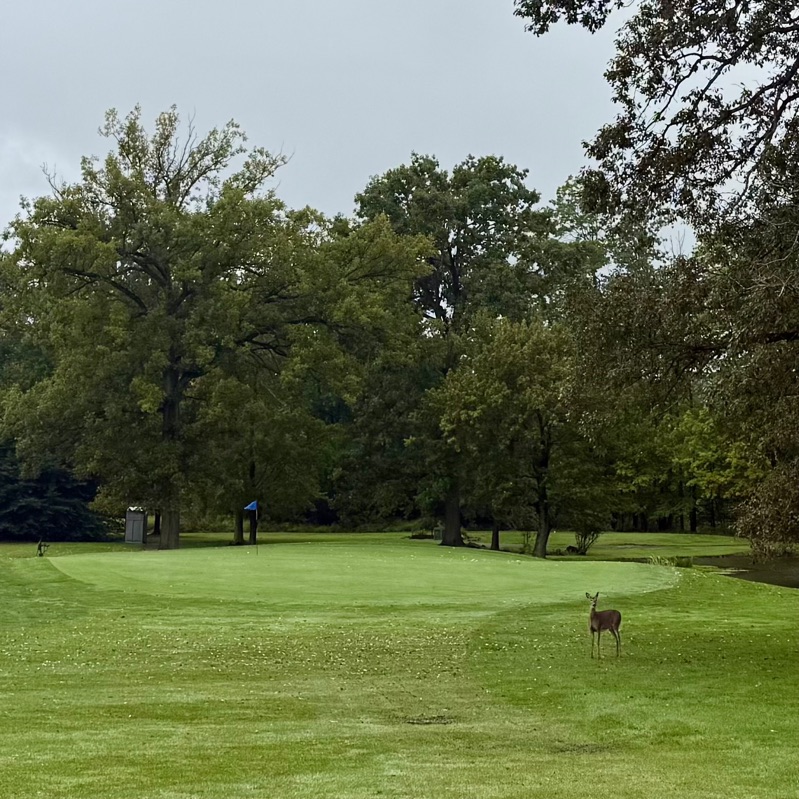
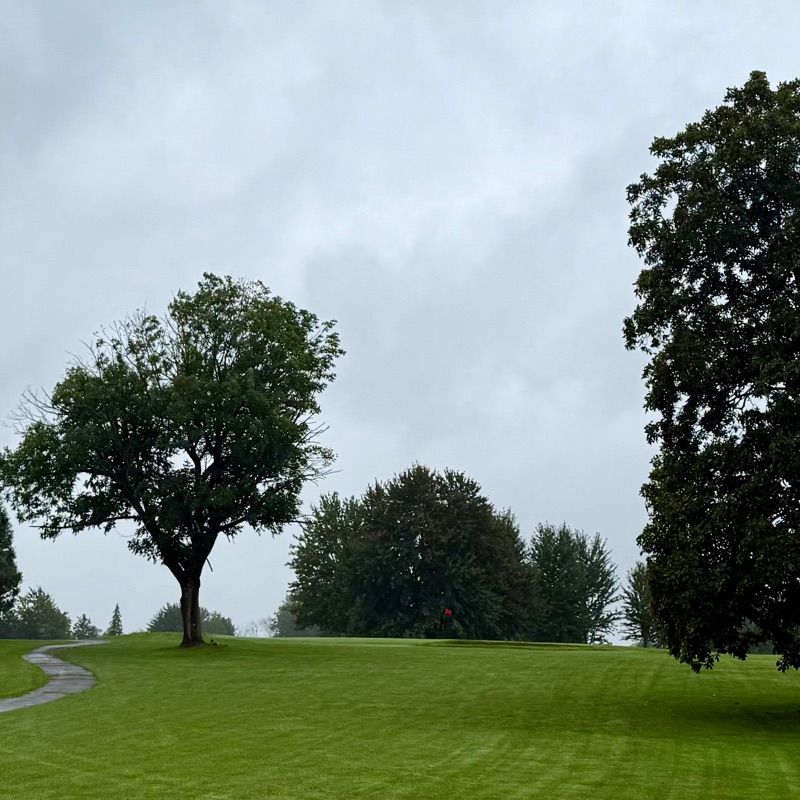
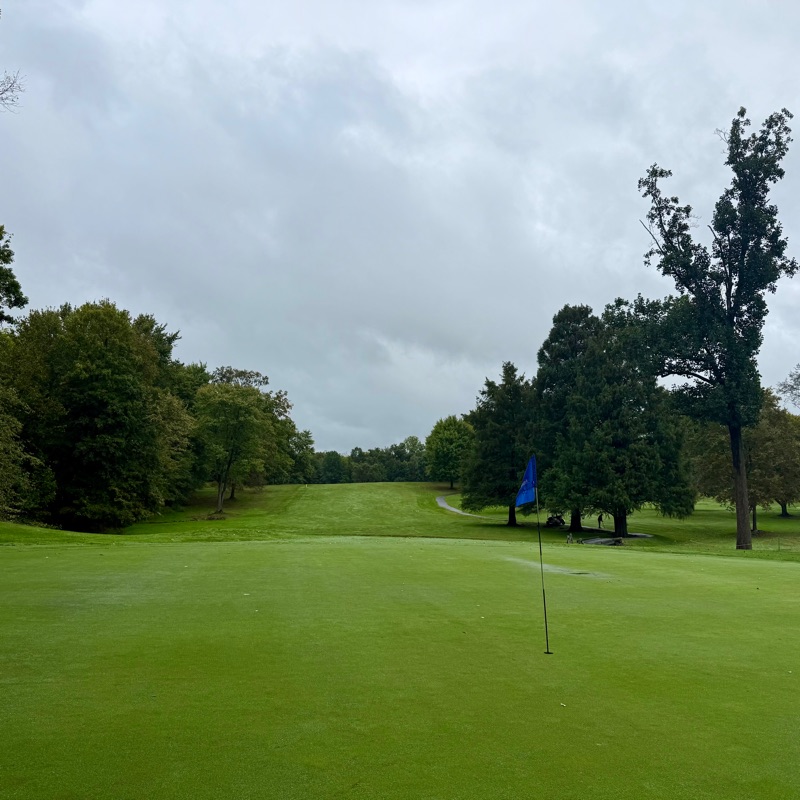
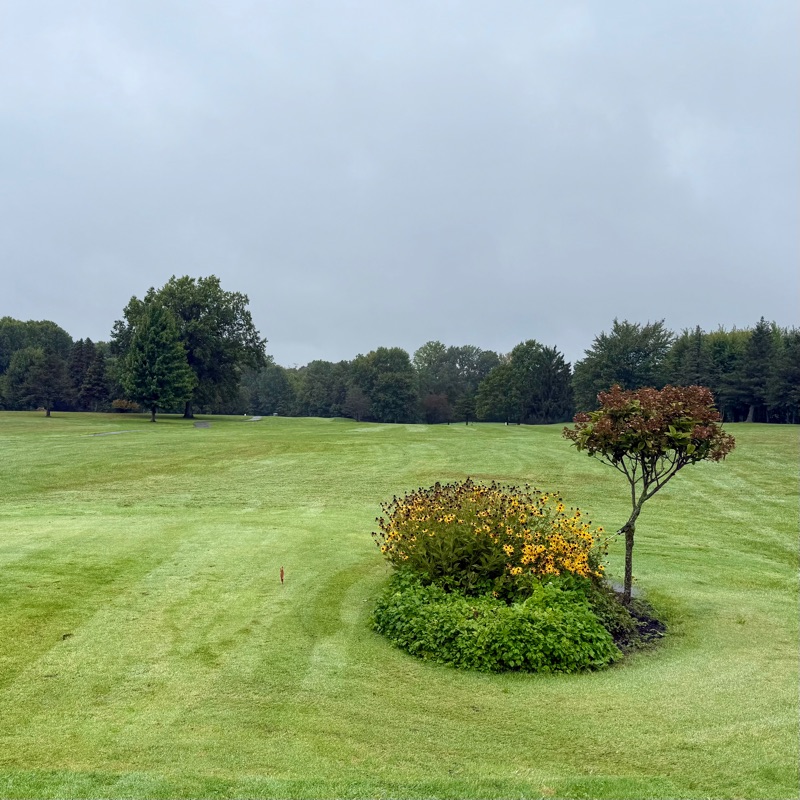
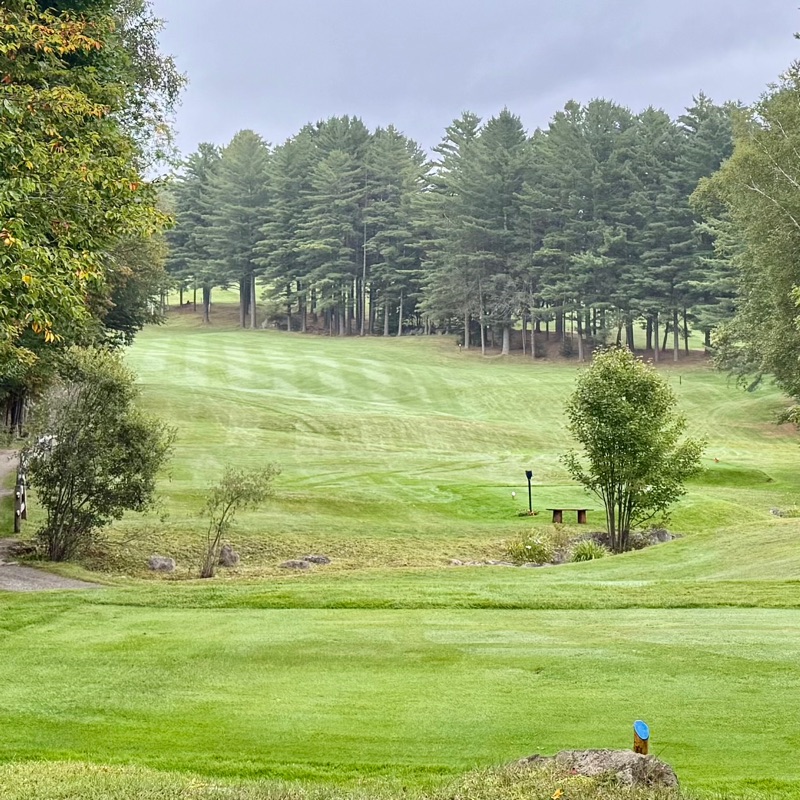
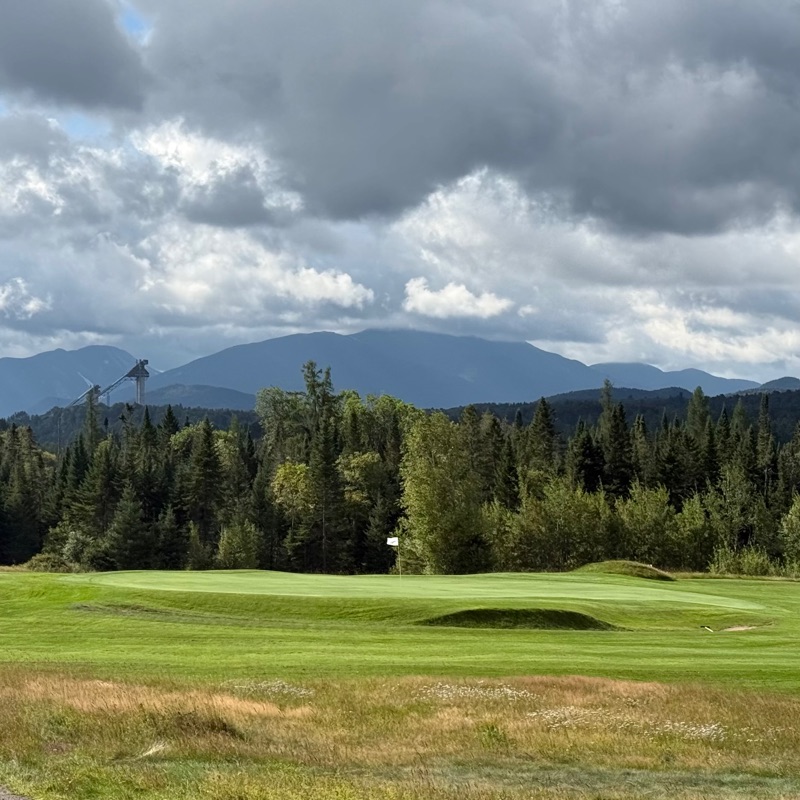
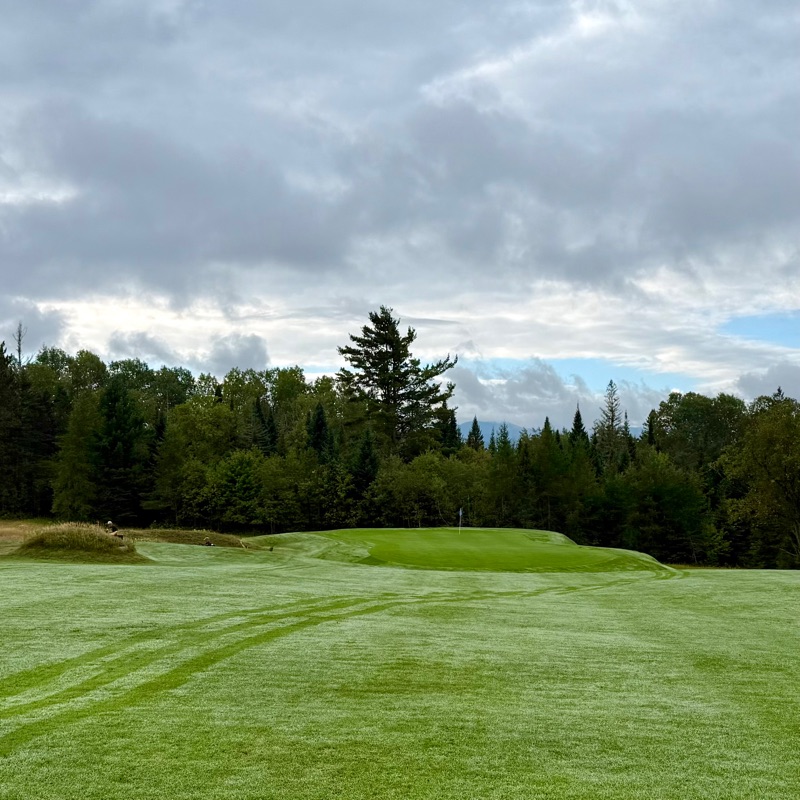
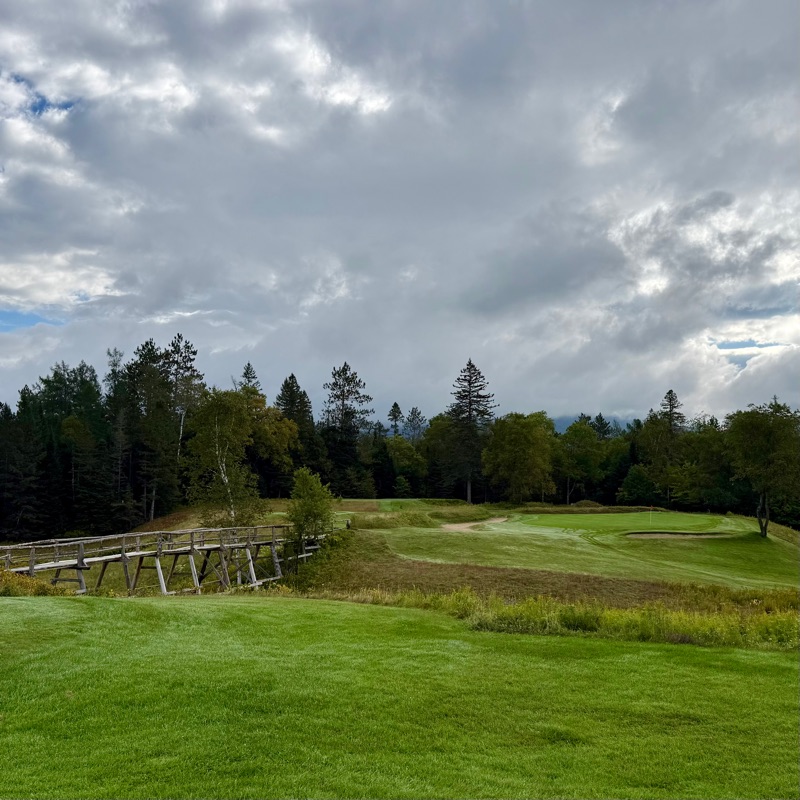
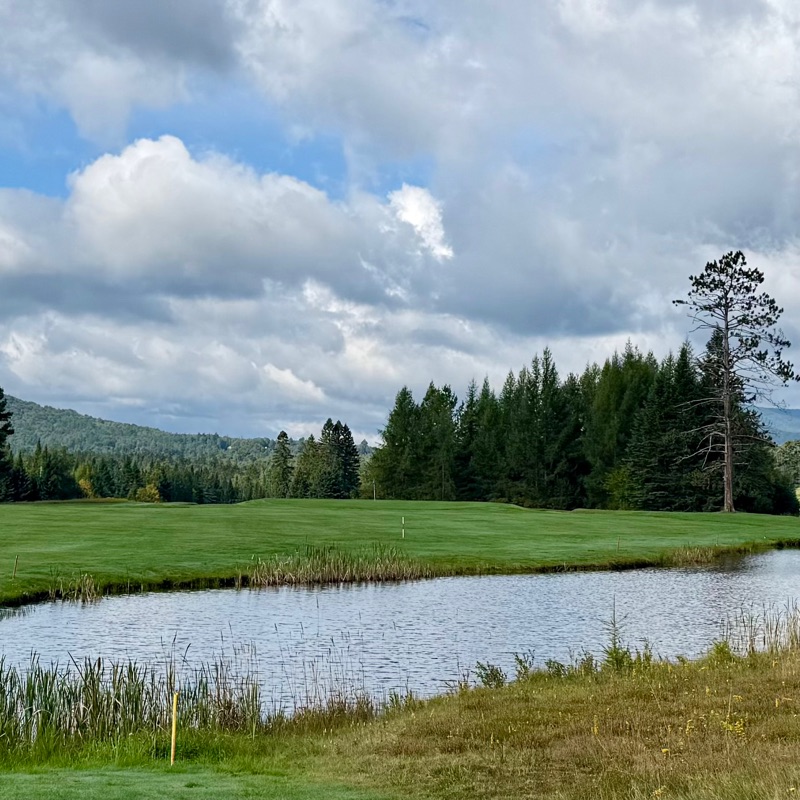
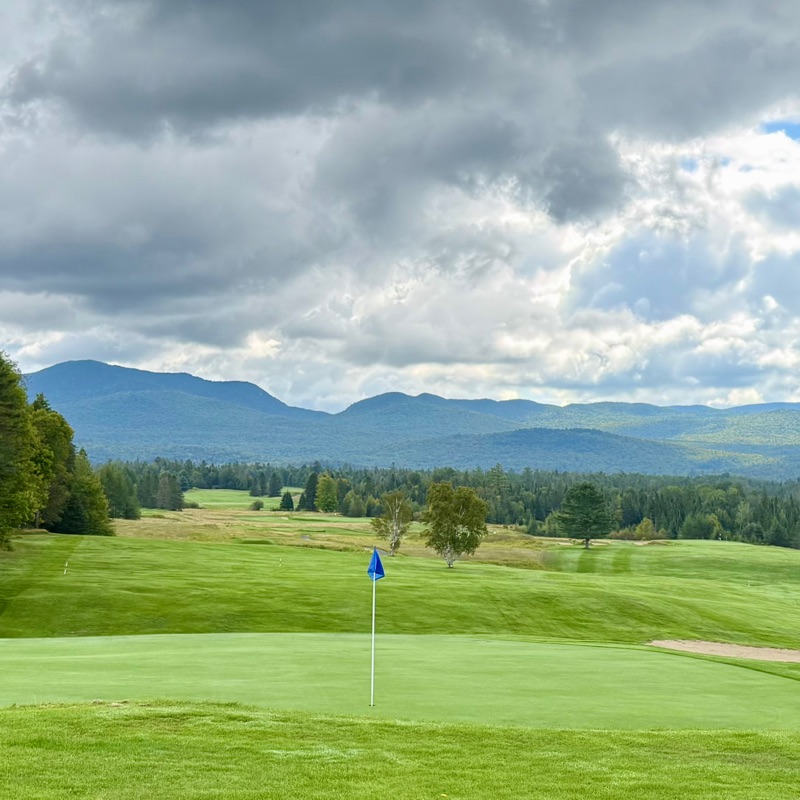
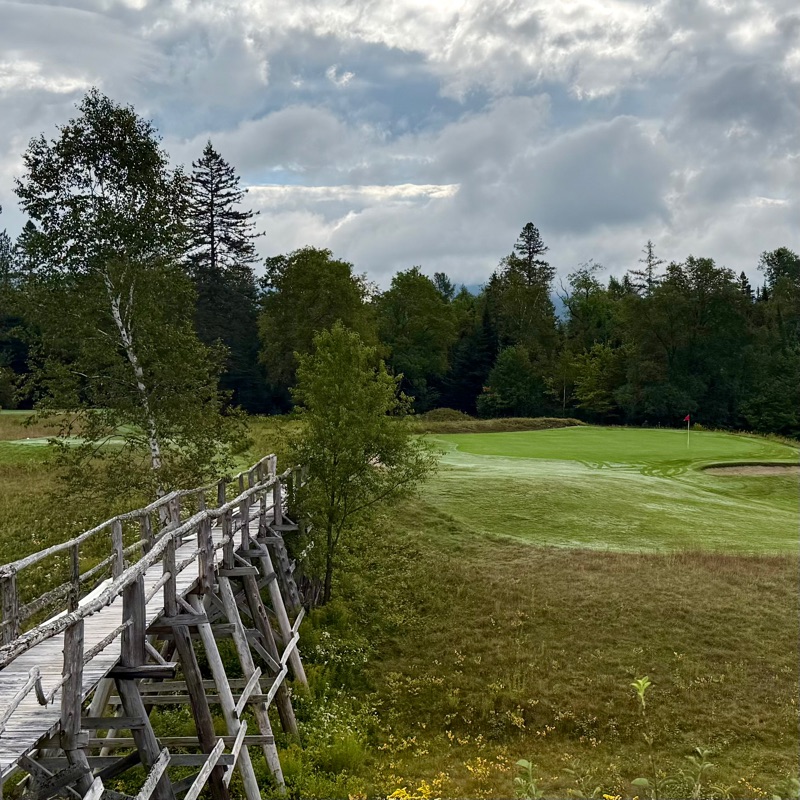
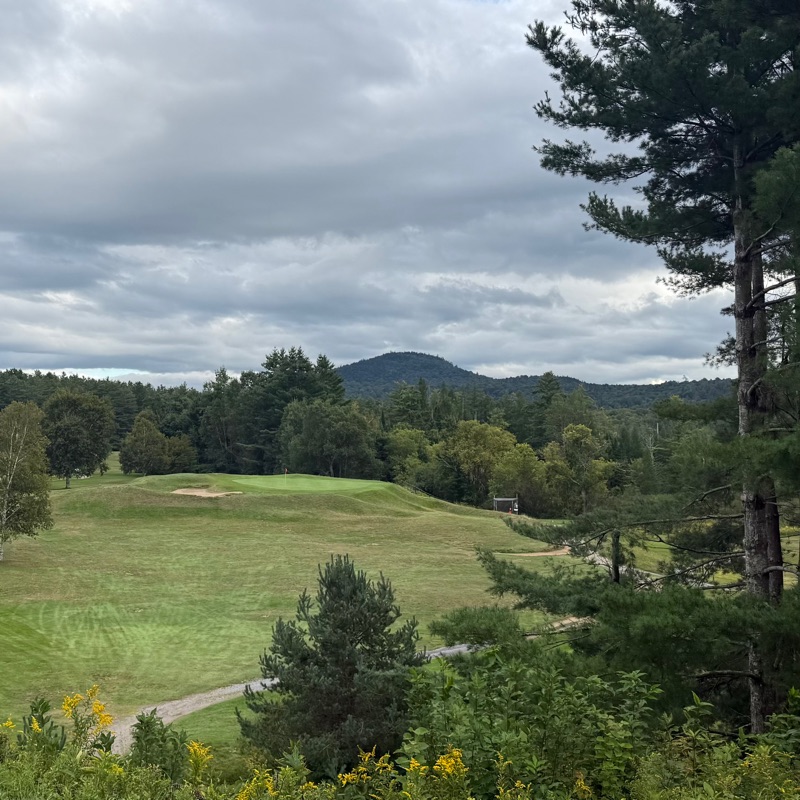
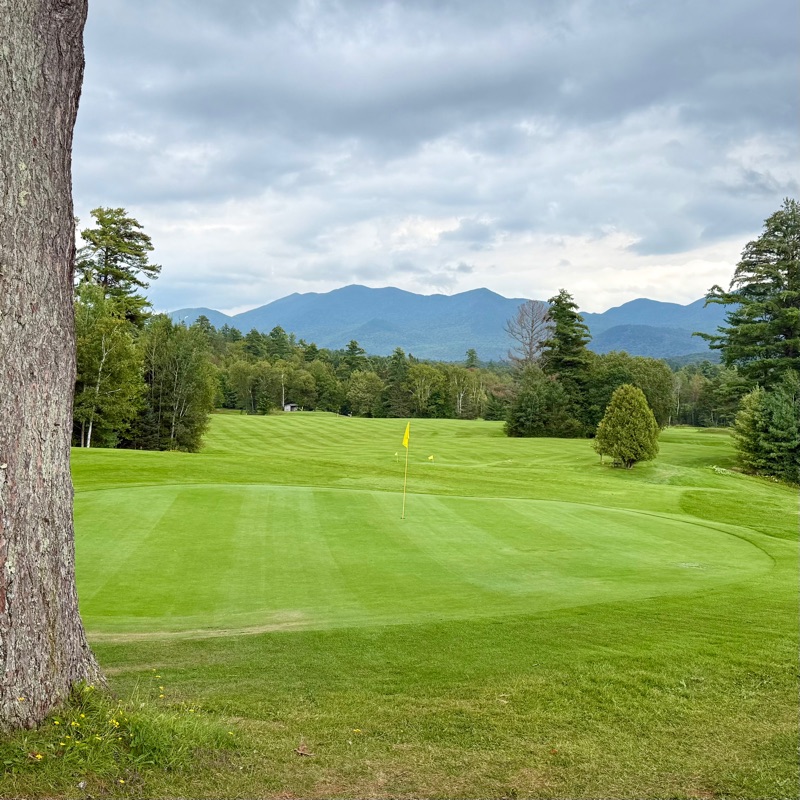
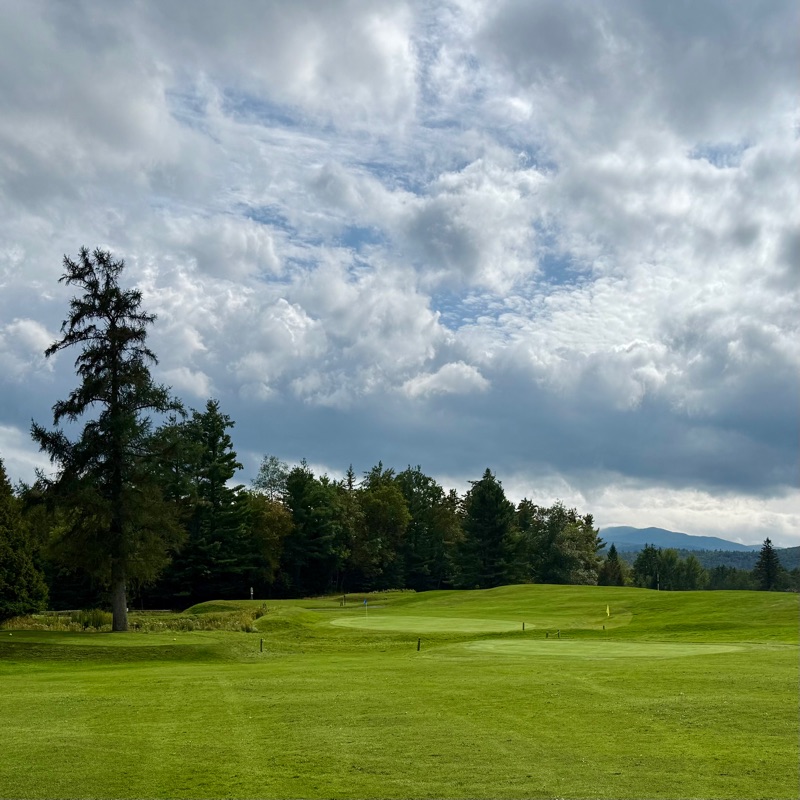
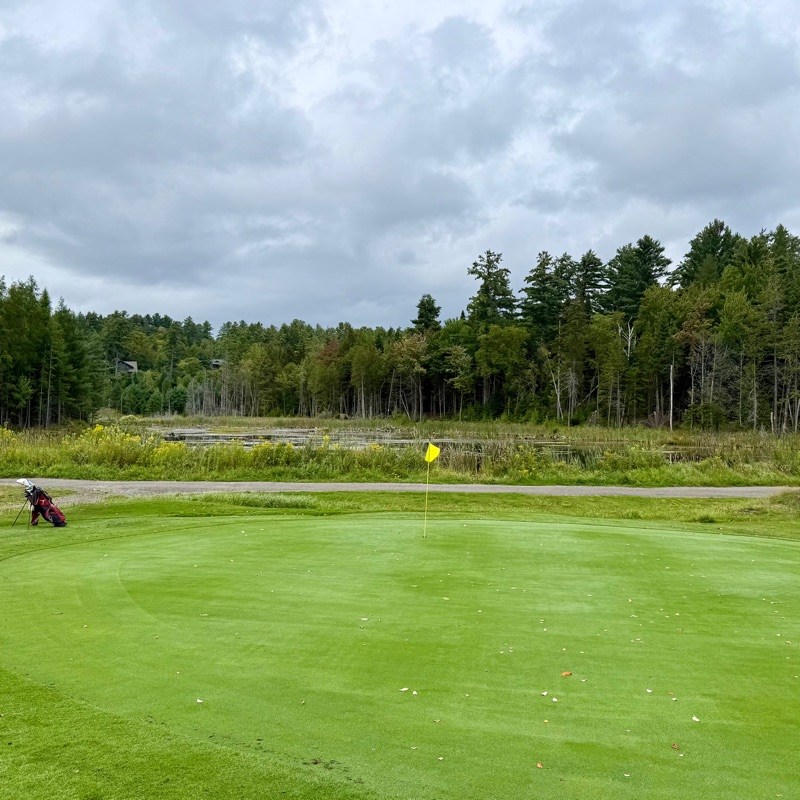
It was a bit of luck that I actually stopped by. I wasn’t aware the course was a few miles from my hotel and that Rt 86 was the main road into Lake Placid. Any intention I had to play was thwarted by a high school tournament in progress, but it did allow me to walk several holes and watch them play. The tee for the sixth is basically in the car park. It’s a fantastic par three across a valley to a fortress green (opening photo). Curiosity piqued, attention grabbed! The first hole looked just as good. I was impressed by the width and the lack of trees everywhere. The par five eighth is a smidge over 400 yards but plays uphill to a rounded, sloping fairway with the green at the crest. For these young boys, it was just a mid iron second shot, but controlling that hanging lie from hooking OB caused a wild assortment of swings. The ninth was anticlimactic. A bland straightaway hole with a sloped green to negotiate.

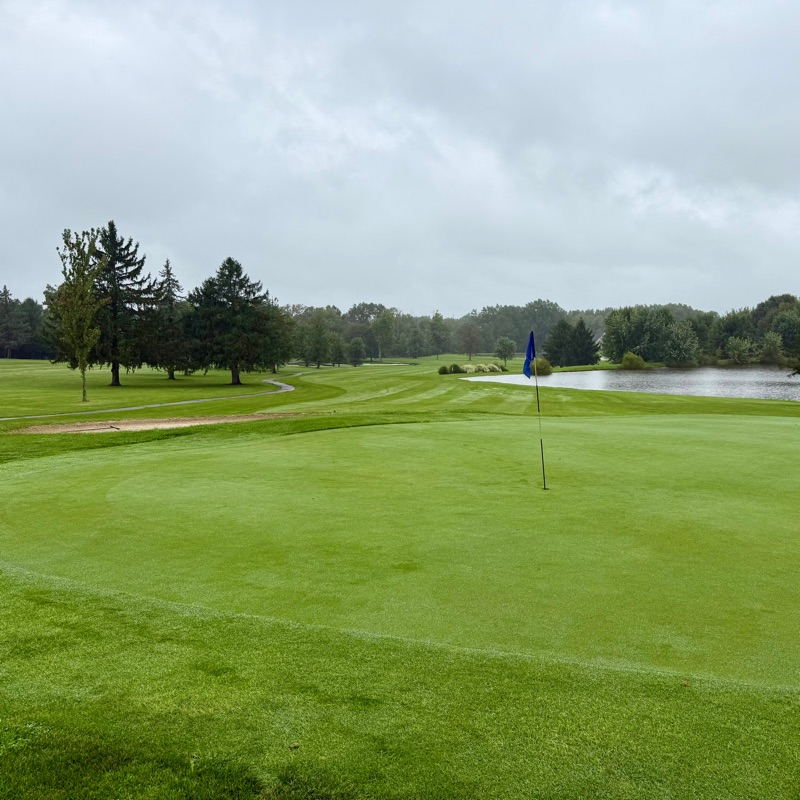
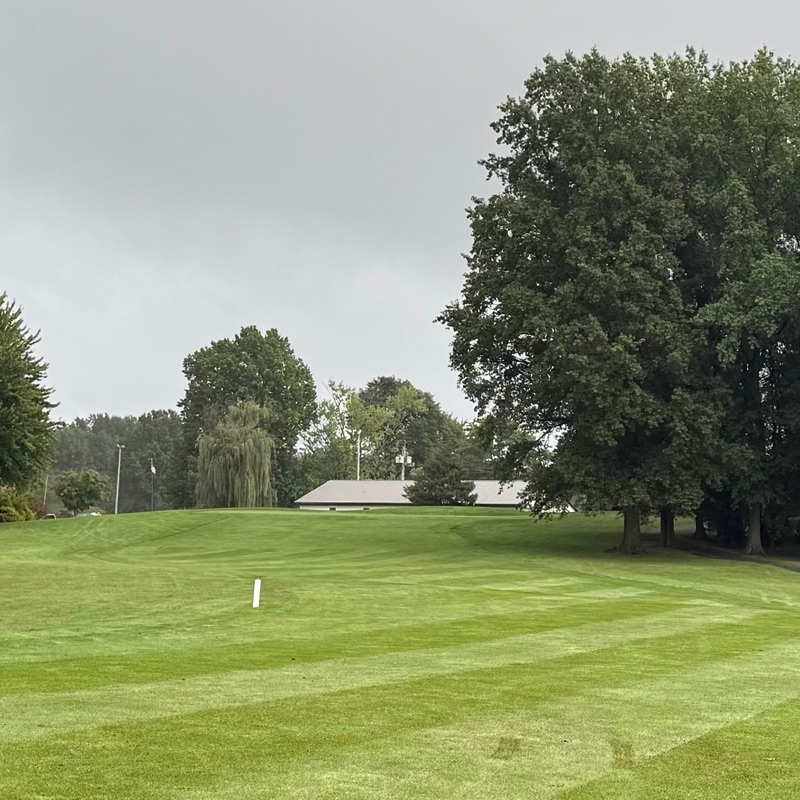
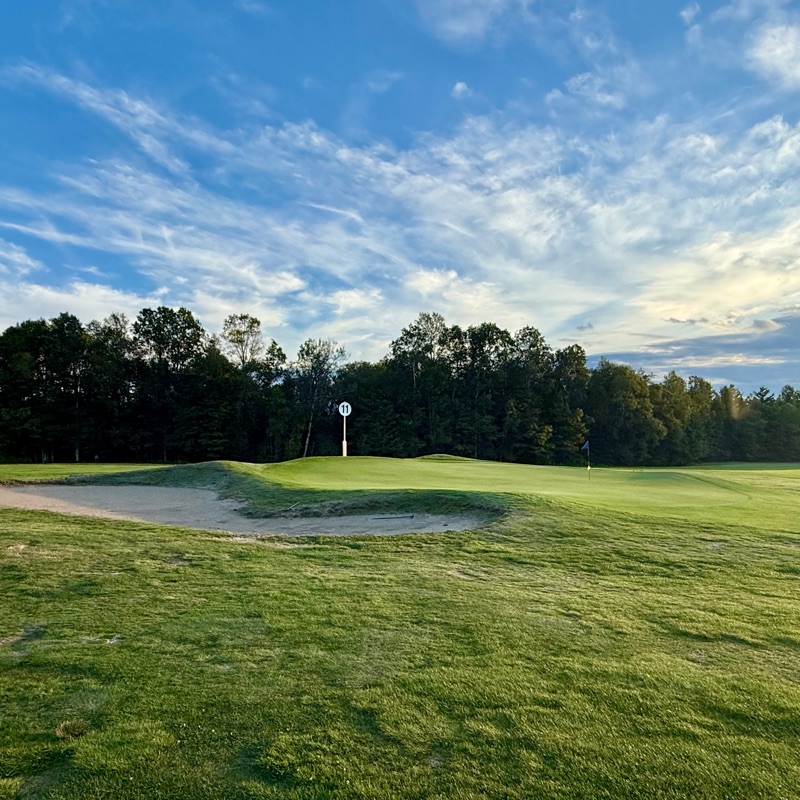
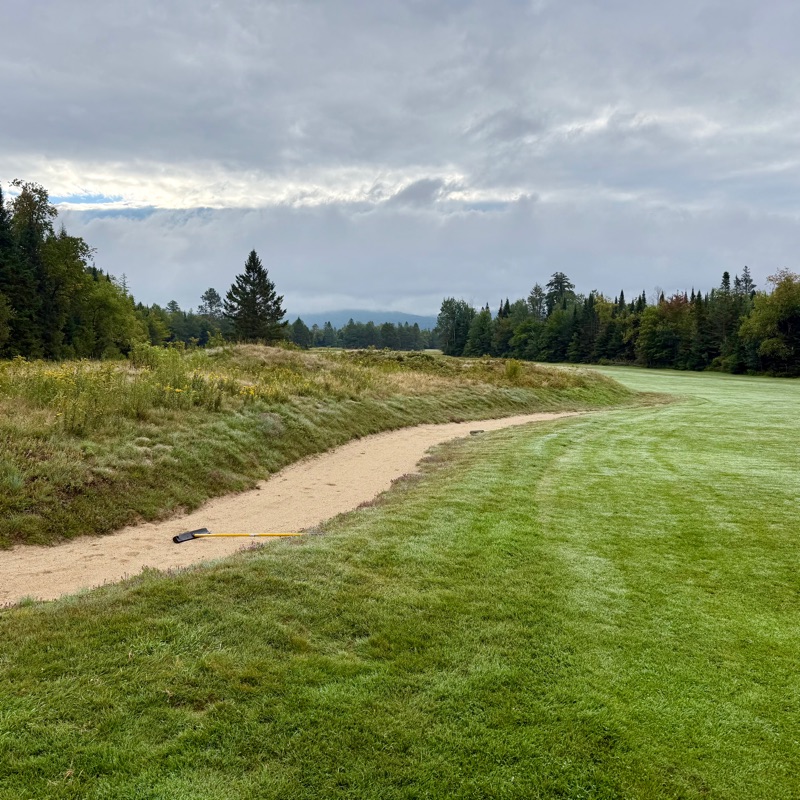
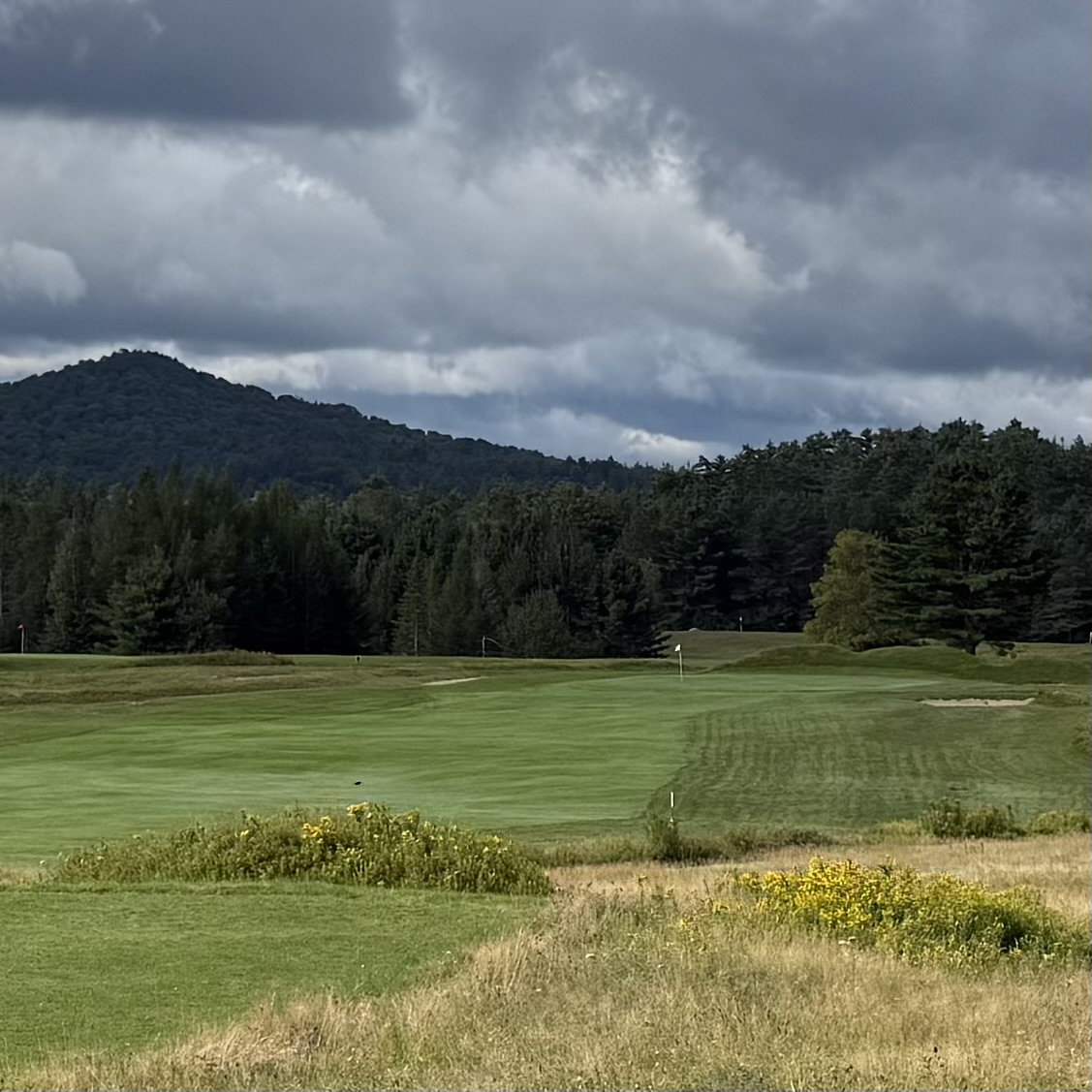
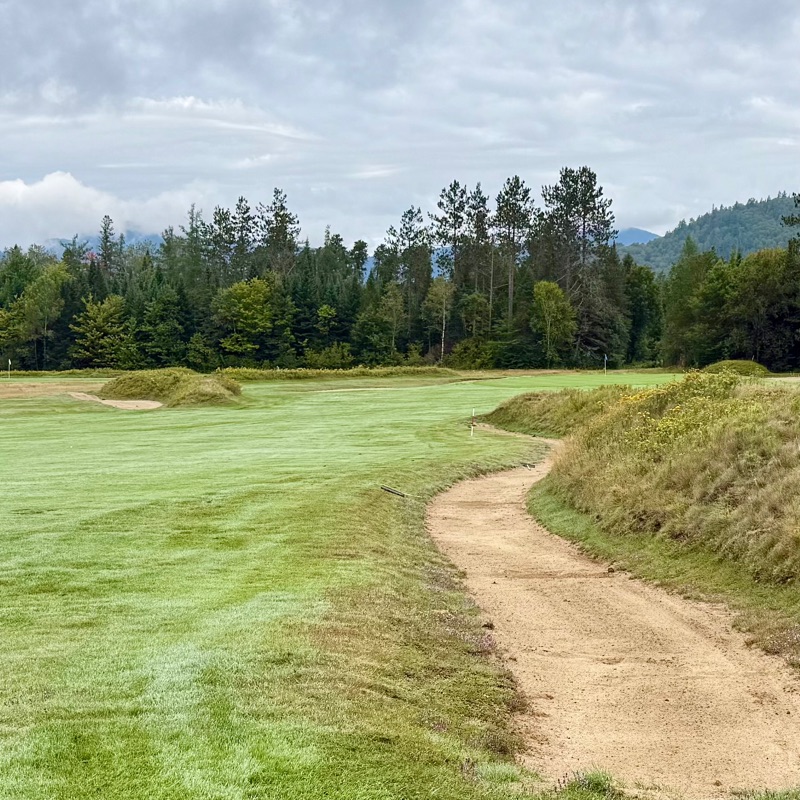
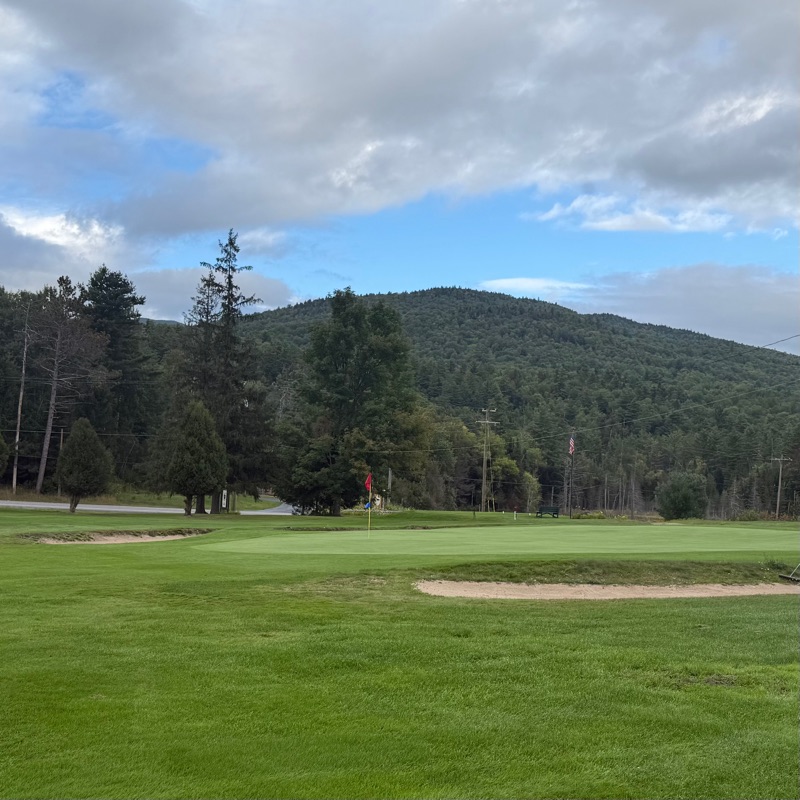
(The front pin is probably the toughest location on this sloped green. Almost all the putts were coming from above the hole. It’s a 338 yard par four.)

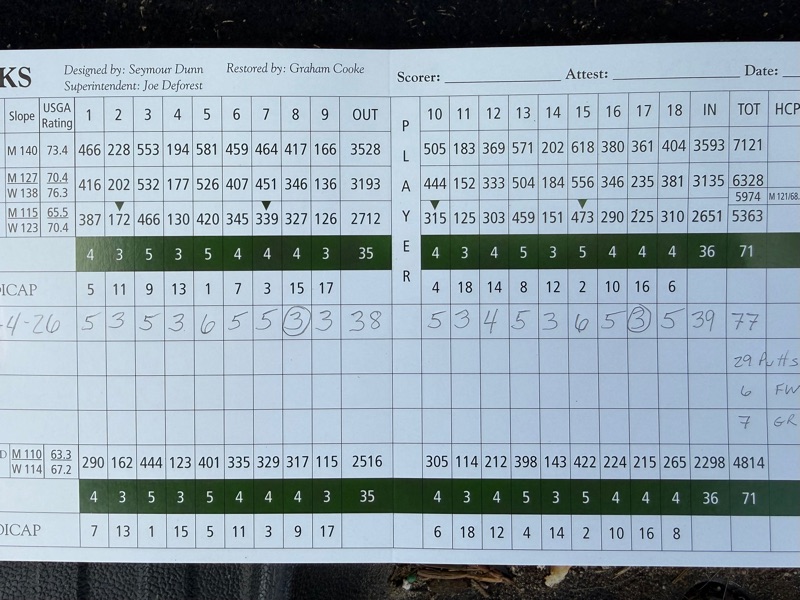
Saranac Lake is a footnote to a few historical markers. Scott North was the first golf professional in 1921. Craig Wood worked for a short time here too. Wood is best known for winning the 1941 Masters and 1941 U.S. Open. He was also the first player to lose every major in a playoff (joined later by Greg Norman). Hike Tyrell became the second golf professional in 1926 and stayed for 58 years before retiring in 1984. He worked with Ben Hogan at Saranac Lake in the summer of 1939. Yes this isn’t my normal write up but a nine hole course like this with all the history and interesting architecture deserves recognition. I give Saranac Lake a 3 (average)(worth driving 15-30 minutes to play).

(This is my fifth Alex Findlay course. His style is very much in tune with how I view architecture. He takes natural features and produces good golf shots. It’s simple but entertaining. He did a lot of work in the Philadelphia area during the time Philadelphia School of Design was emerging. They are direct opposite of each other. One distinctly focuses in on developing strong players while the other promotes the game getting stronger.)

Blog 524

Thursday, September 3, 2026

Lake Placid Club - Pristine 9 (Lake Placid, NY)


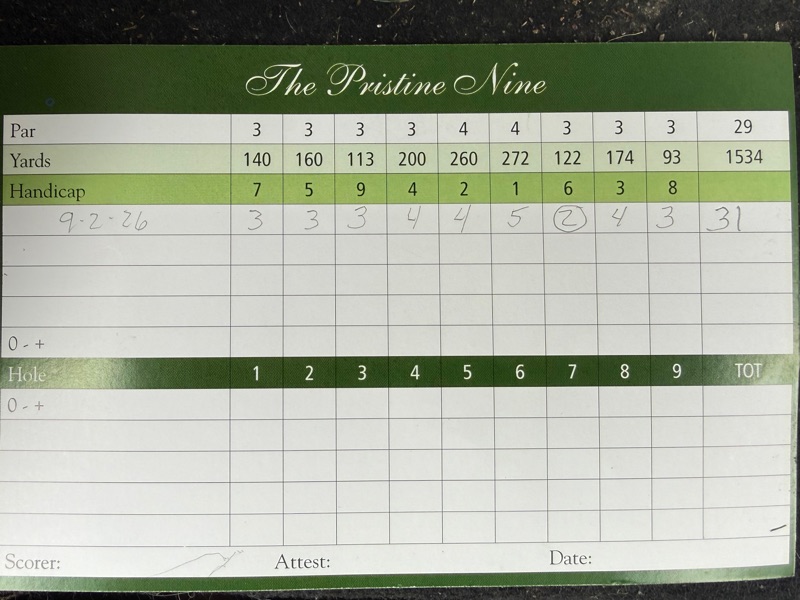
The Pristine 9 is a fun par three course with great mountain views all around. It was designed in 1910 by Alex Findlay the same year he was doing the Mountain course. Technically, it’s executive length since five and six are par fours in the 270 range (the big dog can eat a couple times!) but the other seven holes play between 93-200 yards.

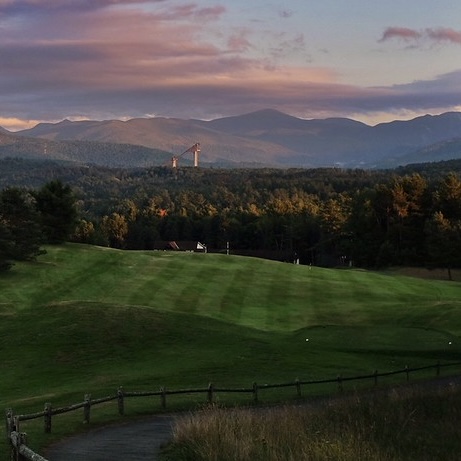
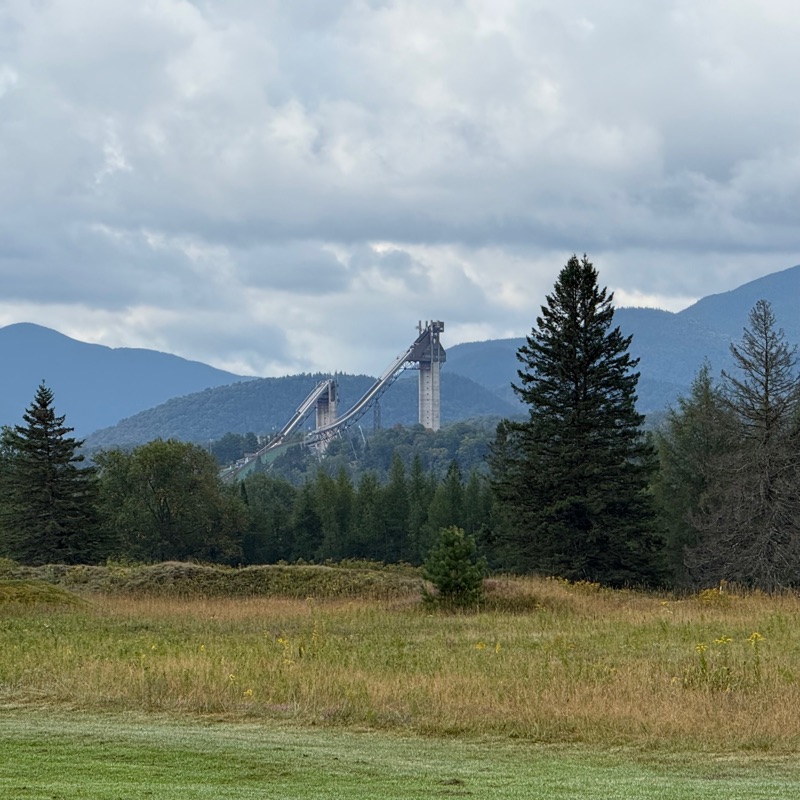
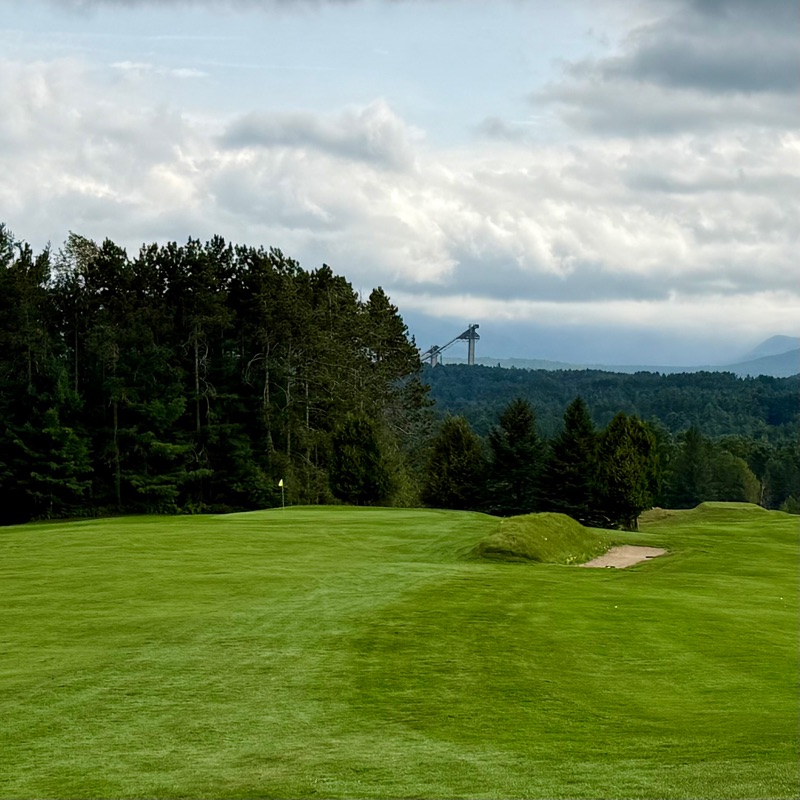
(The 140 yard first hole shares a fairway and sand trap with the finishing hole on the Mountain course. The giant ski jumps in the distance give it a distinct sense of place as Lake Placid was the home of the Winter Olympics in 1932 and 1980.)

(The 113 yard third features a green between two ridges. From the tee, all one sees is the top of the flagstick. Gauging distance is bit nuanced as the ball can take some hard bounces off the front and back slopes.)

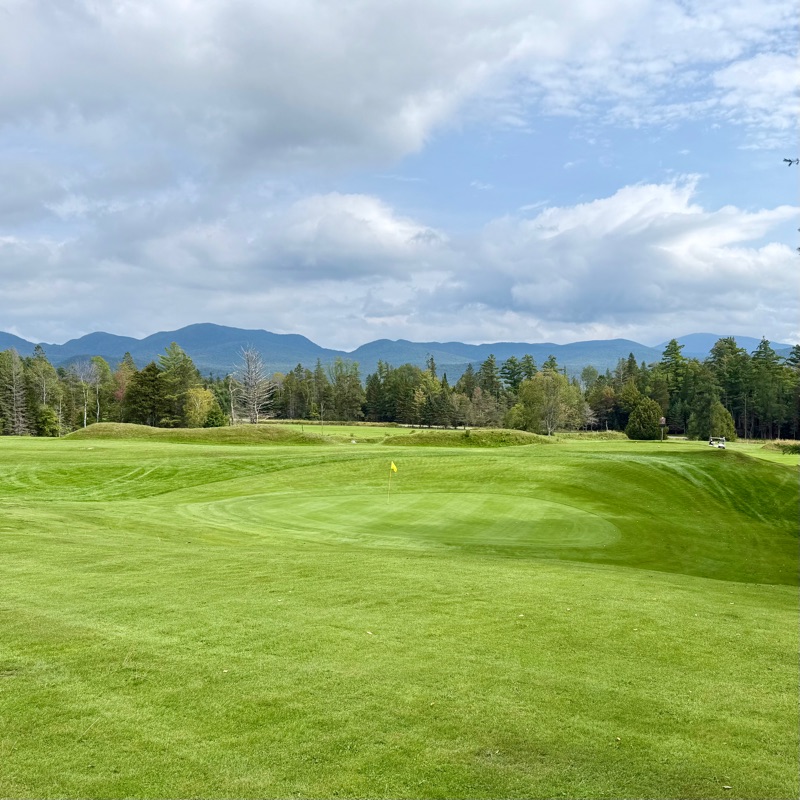
(The 262 yard par four fifth is wide open off the tee. The green lies against the slope, pitching to the back left. Judging the bounce and spin separates a three from a four. The green in background is from Mountain course.)

(The 270 yard sixth plays over a diagonal wetland with trees on the right pinching the driving line. Obviously it’s fun giving it a whack, but serious players might cheat down the previous fairway, or layup just over the hazard. Interesting hole.)

The Pristine 9 only has one tee marker on every hole so everyone regardless of gender or age plays from the same spot. Findlay placed the greens in variety of locations. A few highlights are the dell green on number three; the up n over green on the long fourth; the punchbowl green on eight; and the benched green on nine. The entire round can be played under 90 minutes. This means it’s accessible before work, during lunch, or after work.

(The 122 yard eighth has a small pond well short of the green. There’s no awkward ridges so good chance to get close. I hit it within 4’ for birdie.)

It seems like every big name upscale destination is adding a short course to their repertoire, but many of them are the pitch n putt variety. Pristine 9 has some real bangers that require long irons or hybrids. It’s definitely worth enjoying if you’re visiting Lake Placid.

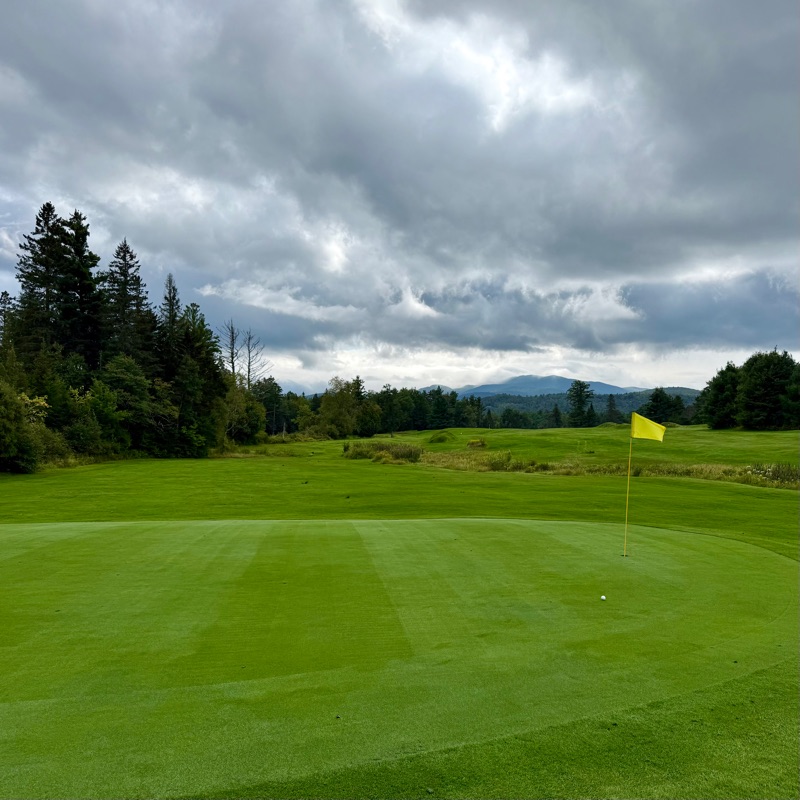
(The 93 yard finishing hole is uphill below the clubhouse and eighteen green on the Mountain. It’s the shortest hole on Pristine. I tried to spin it off the back slope but my ball didn’t come back as much as I wanted. My comebacker was 10’!)

(I bogeyed three holes, two of them being the long par threes, and I hit the wrong line on the par four with the wetlands. 4 GIRs, 1 birdie.)

Blog 523

Monday, August 31, 2026

Brookledge Golf Club (Cuyahoga Falls, OH)

Brookledge proves taking out trees is not just a private club trend. It took out hundreds of them between 2-3, behind and alongside 7 green, and between 13-14. To say everybody loves the changes would be an understatement. It has opened up views, increased playability, and stimulated better conditions. As a result, its popularity has exploded, making it one of the busiest courses in the area.

(The 366/331 yard par four second doglegs left with trees on the inside and two traps on the outside guarding the turn. It’s imperative one does not take a too aggressive line and get blocked out. A pushed up green with a hard right to left slope makes this a very difficult approach shot. Par is a good score.)

(This is an interesting view from three tee of the par five seventh. It’s a 493/471 yard hole that doglegs slightly right before climbing the hill to perched green. Note the pie shaped upper tier in the rear of the putting surface. It influences almost every putt, and is very difficult to access when the pin is on it.)

Over the past ten to twelve years, Brookledge has changed the most out of the three courses I’m updating. My old pics show several tight corridors that are now very forgiving. I’d love to see them continue the good work and trim out the trees between five and seven, and open up the par three twelth. Both would really enhance the golf experience.

(The 197/170 yard par three fourteenth has a couple different looks depending on which tee box is used The green slopes to the back left. A draw aimed at the tree can funnel to the rear half of the putting surface. A creek guards the left side of the green awaiting a pull or too aggressive shot.)

(The 433/398 yard par four fifteenth is the longest two shotter on the back and demands a long second shot that carries to the putting surface. There is a flat spot short that will help the ball from going long.)

Since I started the blog, my writing style has changed, and so has my views on golf architecture. Art Hills designed Brookledge in 1992, and I initially loved how he brought strategy and execution into the municipal world. I feel his low profile work rises above what people are expecting, and Brookledge is a prime example of this. My original rating was a bit overzealous, but the work they’ve done, makes it warranted. Call me a homer, my 70 here is still my lowest score ever, but I’m going to keep my 6 (very good)(worth driving two hours to play).

(A couple poor swings cost me in my match against Missy. Hooks on five and ten led to triple bogeys. She chipped in twice and made a couple 8-12 foot putts. Usually I’m the one with the short game heroics. Besides those two holes, my overall game was solid. I’m slowly getting back to my old self.)

(The 386/356 yard par four eighteenth is a dogleg right. One must hit it far enough to get by the trees or favor the left side…

…the approach is hit to a slightly elevated green on a right to left axis. The bunker guards the left and rear pin positions. Surprisingly, par is tougher than one expects. The branches on the last tree always seems to be in the way.)

[This is the third in a series of three updated blogs from 2013-14.]

Blog 522

Monday, August 24, 2026

Elsworth Meadows Golf Club (Hudson, OH)

Hudson has done a remarkable job with Ellsworth. In my original write up, I noted a handful of holes that needed specific changes, and doggone it, they went out and did it. On both 3 and 8, they widened the playing corridors and took out trees that strangled the drives from being anything other than perfect. Forward thinking led to the par three ninth being shortened (for safety reasons) and the old green is now used as a short game pitching area. It has a great driving range with an abundance of targets, two putting and chipping greens, all sorts of landscaping, and an absolutely wonderful new clubhouse. There’s so many good things to comment on. It has become a stalwart of every traveling league and association in the surrounding counties.

The 469/443 yard par four third is a very strong hole. The best drive favors the right to obtain an angle past the trees…

…no sand is needed for the approach. Most play short and let the ball run onto the green. The water behind comes into play quickly. Par is a very good score.)

The course was originally known as Big Springs and was designed by R. Obert. When Hudson took it over, they changed the name and had Brian Huntley renovate some holes and design new ones. The par five seventeenth is probably his best addition featuring a classic do or die second shot over water. He also did ten and eighteen, two tough par fours that bookend the back nine.

(The 176/146 yard par three seventh is a picturesque hole over water. The green is pitched forward with a slope guarding the front right. Hitting it does not guarantee a two putt par.)

(The 209/183 yard par three ninth closes things out on the front. The hole rarely plays this distance as the forward tee box is generally used at 157 yards. Check out the old green in the background. The hole was originally a short par four in its Big Springs day.)

We’re blessed here in northeast Ohio with really good municipal courses and Hudson possesses one of the strongest ones. Ellsworth is not for the feint of heart with a lot of strong par fours and a quintet of tough par threes. I was lukewarm about it ten years ago but it is now one that I look forward to playing twice a year in the CNCGA. I give it a 5 (good)(worth driving an hour to play).

(The 521/493 yard par five seventeenth plays straightaway before carving around Lake Komar. The tiger player will relish taking on the second shot over water. The new stonewall outlining the hazard is a lovely touch.)

(The 414/397 yard eighteenth is a slight dogleg right par four. The back left and right quadrants of the green are separated by a mound. Two water hazards well short of the putting surface inexplicably come into play for those who miss the fairway.)

(This is the second in a series of three updated blogs from 2013-2014. I bumped it up one notch from my write up from twelve years ago. Hudson has Lake Forest and and Country Club of Hudson, both private courses, within the city limits, and this place compares very well. I would expect no less from this affluent suburb.)

Blog 521

Friday, August 21, 2026

Chippewa Golf Club (Doylestown, OH)

There’s an old adage that says a prophet is never recognized in his own town. That’s an apropos assessment of Chippewa. Us locals probably take it for granted but Golfpass has ranked it the #1 public course in Ohio the past three years. It’s in fantastic condition and has greens that rival Firestone for speed and consistency. New carts with gps, a brand new stone patio with fire pits, and the introduction of the Barndominium, a 12 man structure off nine fairway complete with a putting green, are just a few of the amenities that have elevated the experience here.

(The 333/315 yard par four seventh wiggles a tad left while climbing a slight incline. Many are tempted into hitting driver, but the trees punish any mishit not in the fairway. Laying back and hitting a full shot is the prudent, and probably the best way to attack the hole.)

Chippewa is broken down into two stretches, 1-11 and 12-18. The first eleven holes is where you make your score. There’s a couple tough holes in this sequence like the uphill par three second and the long par four fifth, but overall, there are plenty of birdie opportunities. The last seven holes is where all that hard work is put to the test. There are some really good holes to play including the 14th-15th-16th known as the “Bermuda Triangle”.

(The 188/132 yard par three twelth has a great green complex that’s long and narrow with deep grass bunkers on the sides. Sand short guards the front pin positions. It’s such a precise shot and missing wide to the sides is instant bogey.)

(The 441/372 yard par four fourteenth is a slight dogleg right with the right half of the fairway sloping hard into the rough. The garden spot off the tee is a flat spot down the left side. Long hitters must take care not to find the water. The approach is uphill to an heavily sloped green with a flat area in the rear. Almost every pin is in this section. Putts coming across the green are difficult to gage. Par is a good score. Note this is the easiest hole in the triangle.)

(The 438/371 yard par four fifteenth is a classic down and up hole. The view from the tee is both beautiful and intimidating. Favor the right side off the tee to obtain an angle. The green is very difficult with a false front extending through the middle and a flat area in the rear. It’s uphill one to two clubs. Three and four putting is not uncommon. I’d take a five and not think twice.)

(The 447/371 yard par four sixteenth doglegs left while dropping downhill with a lake at the bottom. The approach is uphill to yet another green with a sloping middle and a back tier. A backstop behind can be used but prepare for an incredibly fast putt down to the hole. Even par through these holes will gain multiple strokes on the field.)

Chippewa has become one of the more popular courses in the region, and this is in spite of the power lines that transverse the property. It was designed by James Harrison and Fred Garbin. They put together a well thought out routing and paced it beautifully so the ending created a crescendo. I never hear anyone say a negative word about the place. It draws players as far away as Pittsburgh and Columbus, and that is my definition of a 6 (very good)(worth driving two hours to play).

(The 441/419 yard par four thirteenth has progressively gotten more difficult with the addition of multiple tee boxes…

…the greens at Chippewa alternate between large and small and the one here errs on the diminutive side.)

(This is easily my best round of the year so far (2026) and was a huge confidence boost. I was playing the #2 seed in the CNCGA matchplay tournament and my excellent play along with the five strokes I was getting (2hdc vs 7hdc) helped me win convincingly.)

(This is the first in a series of three updated blogs from my 2013-2014 years. I bumped it up one from my original post and if I need any validation, then I’ll add this. Top100golfcourses.com just added Chippewa into the Ohio section of their website. Many aficionados consider this one of the elite sources of golf architecture.)

Blog 520

Saturday, August 15, 2026

Pine Valley Golf Club (Wadsworth, OH)

There are two types of golfers, dew sweepers and sun chasers, and I was the first one the morning I stopped by Pine Valley. This is a mom and pop course out in the beautiful countryside of Medina county. It was established in 1962 by Chris Deming.

(The 353/341 yard par four eleventh plays along the boundary line to a green fronted by sand. A crease extends through the putting surface, separating the front from the back.)

(The 121/105 yard par three twelth is a fun little hole. It’s just a short pitch with a gaping front bunker.)

This is a course I never knew existed until my friend Al showed it to me after our round at The Pines in Orville. I guess I shouldn’t have been surprised because this area off Rt 21 used to have multiple courses that are NLE. (Barberton Brookside and Western Reserve are the first two that come to mind) Pine Valley is a fine mom n pop course. It is in nice shape and the greens are way better than what you’d expect. The land by the clubhouse is relatively open, but the further the holes venture into the property, the denser and tighter the trees get. Some people like this, and I’m not totally opposed, but it can get old quickly if you’re having a bad day. I only played the back, but 14-17 were really tight, and these were the holes I lost all of my strokes.

(The 388/376 yard par four fourteenth is the beginning of four tight holes in a row. This green is elevated on a slight plateau.)

(The 223/212 yard par three seventeenth is shockingly long for a course of this stock. The tees are back in a chute of trees and a low running fairway metal can scamper onto the putting surface. A par here is like a birdie.)

I’m trying to see every course in northeast Ohio, the public ones at least, and in the process, learn if any are worth a visit from the CNCGA. Pine Valley is an interesting candidate. Its central location makes it optimal for us and its price point would help alleviate the higher priced rounds at other venues. Its architectural quality is the only thing in question. I have a feeling it might have too much mom n pop to it. I give it a 3 (average)(worth driving 30 minutes to play).

(Pine Valley’s claim to fame is its connection to American Blind Golf. They’ve been supporting disabled golfers, particularly those with vision frailties, and this summer will host the 32 Phoenix Cup, an international matchplay competition.)

(The 498/471 yard par five eighteenth doglegs left around the driving range. Aggressive players can try to cut across the OB stakes. If one is content playing as a three shot hole, then it should take away the pressure of driving it past the corner. The fairway drops the last fifty yards and reveals a green benched into the upslope. The backdrop of the clubhouse makes it a fitting finish.)

Blog 519

Tuesday, August 11, 2026

Madison Country Club (Madison, OH)

I’m a big fan of a Madison Country Club. If it was in a little bit better shape, it’d get more recognition statewide. It was designed in 1923 by Ross construction foreman, Sandy Alves. His vision to take a singular feature, a valley that cuts through the northern portion of the property, generated ten holes (1,2,3,6,7,8, 11,12,13,14,18). The valley is grassed in at spots, has a crick that meanders through, and holds a couple ponds. To par these holes, one needs a cache of shots.

(The 408/363 yard par four first hole drops into the valley before gently climbing out and finishing at a well bunkered green. One will find misery driving it left, so favor the right side. Par is a fine start.)

(Many will find the 509/480 yard par five sixth to be a good birdie opportunity. While conservative players are laying back to a good yardage, aggressive players can utilize the fairway right of the green to access all the pin positions. The back to front sloping putting surface will hold a long shot for the courageous golfer.)

(The 422/397 yard par four seventh requires a long accurate drive from the tee. The forward tee ahead is slightly elevated and frames the driving lines from the back. It’s a strong hole.)

Keeping the focus on the valley, Alves routed the course to interact with it in multiple ways. I love that you drive through it, sometimes over it, that tees are placed behind it, greens are backdropped by it, or second shots have to clear it. It such a plethora of looks that one doesn’t even realize it’s the same feature cutting across the land. That’s good architecture!

(The 512/497 yard par five eighth has the valley and crick cutting across with cool landforms demanding one can clear this with their second shot. The longer hitter can get to this area with their drive but risk being out of position if they miss the fairway. The green is saddled so balls typically funnel to the middle. This is a really fun golf hole.)

(One of my favorites and possibly the best hole on the course is the 353/345 yard par four twelfth. A drive down the right side opens up the angle to a green that sits on a ridge. Long grass left, sand right, and a deep fall off long makes this an interesting approach.)

(The 267/244 yard par four thirteenth plays over the valley before turning left behind large hardwoods. Long hitters can take the challenge and try to drive it. Besides trees, bunkers also guard the tiger line. It’s another cool hole.)

Madison’s location in the far eastern side of the state by Lake Erie keeps it off most people’s radar. Even from Cleveland it’s a solid hour away, and it’s more if you’re coming from the west side suburbs. Public golf greatly benefited when it decided not to be private. I think $64 with a cart is a fair price for a Saturday morning, and I believe it should be an annual stop on the CNCGA schedule. It’s a solid 5 (good)(worth driving an hour to play).

(I first blogged Madison in 2014. This is an update with better pictures. The above diagram illustrates the routing well. Note the course rating from the blue tees, a full stroke over par. A good score at Madison is well earned.)

(I have to comment on the seventeenth and what I think is one of the coolest greens. It’s the old pushed up style with a large lion’s mouth bunker guarding the front. Notice how high the lip is compared to the green. The pitch from that shoulder will shoot balls long off the back. The rear third is tipped towards the fairway so long is an instant bogey. The hole is only 325/309 yards so demanding a precise wedge is completely within reason.)

Blog 518