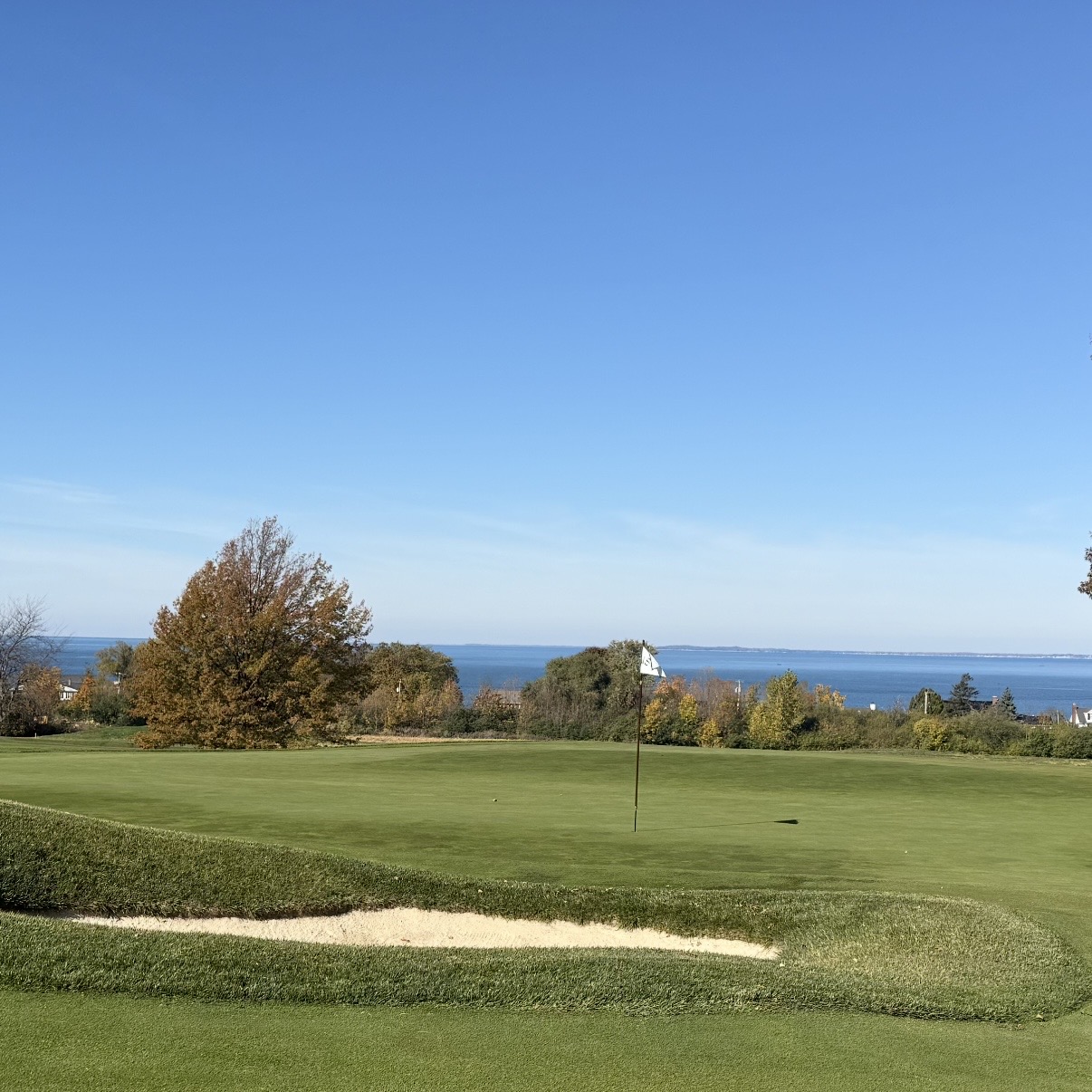
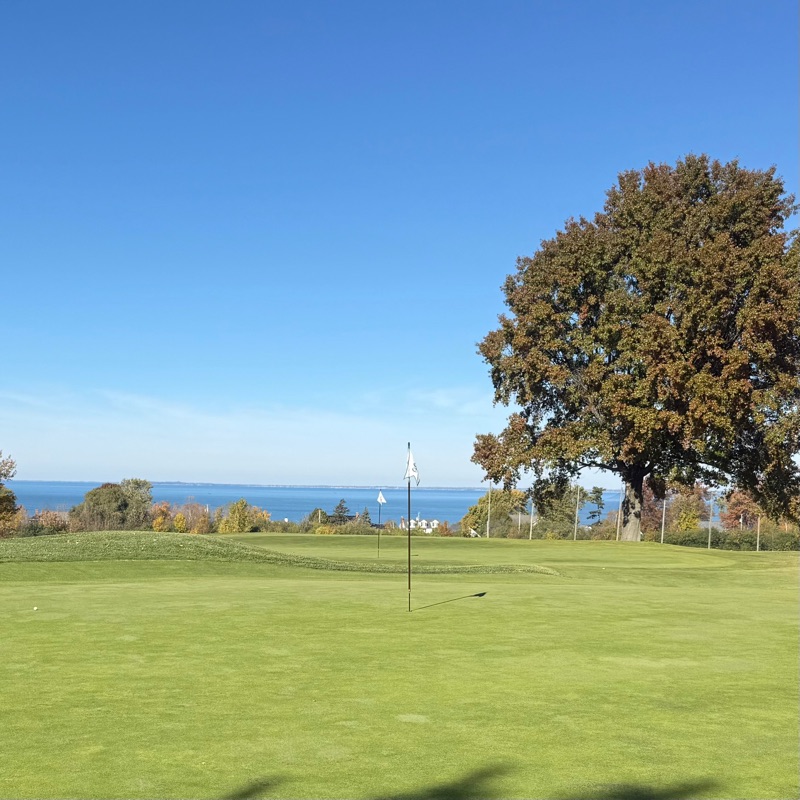
A brilliant tree removal plan brought vitality back to this club in the southern Buffalo suburbs. Yes the renovation focused mainly on improving drainage, but removing all the silver maples that chocked the ridgeline of the dramatic views members enjoy today was the change that captured the true ethos of the property. Lake Erie, the Buffalo skyline, and even Canada can be seen from its perch.
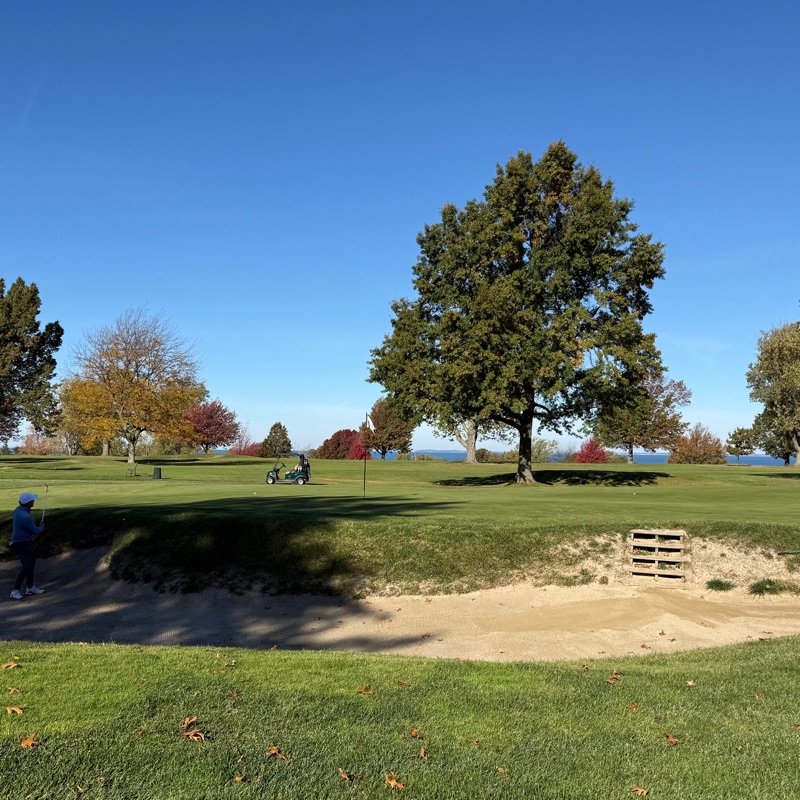
(The 180/163/148 yard par three fourth has a terrific green bisected by a swale with a ridge or two forming specific cup locations. The front right bunker eats into the angle from the tee and forces a high shot to get it close. Short grass left is the bailout but the chip will need to be clipped perfectly off the slope.)
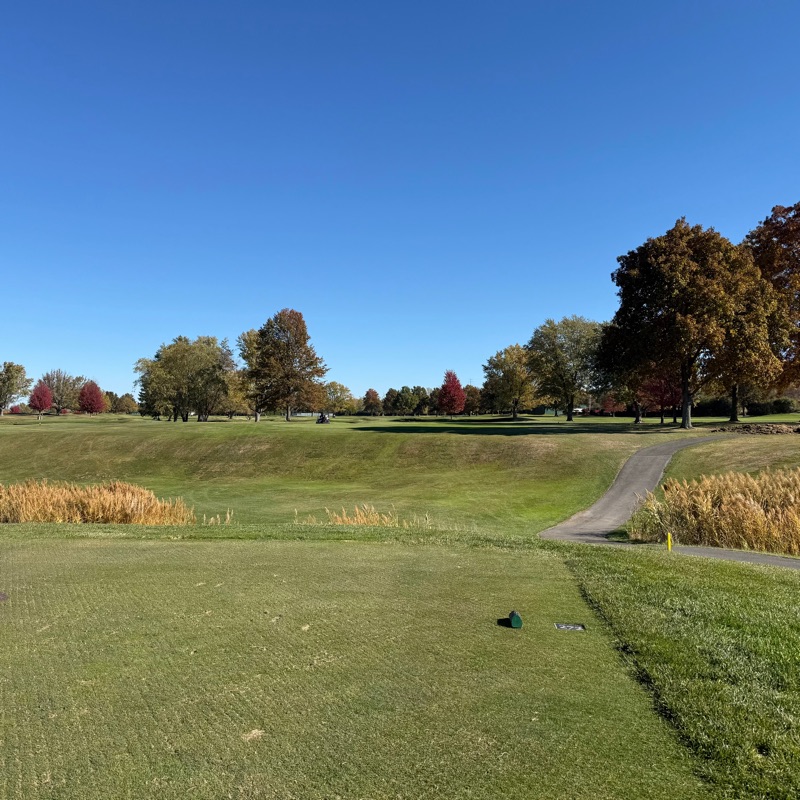
(The 377/361/329 yard par four eighth has a shallow valley short of the tee with bunkers positioned further up…
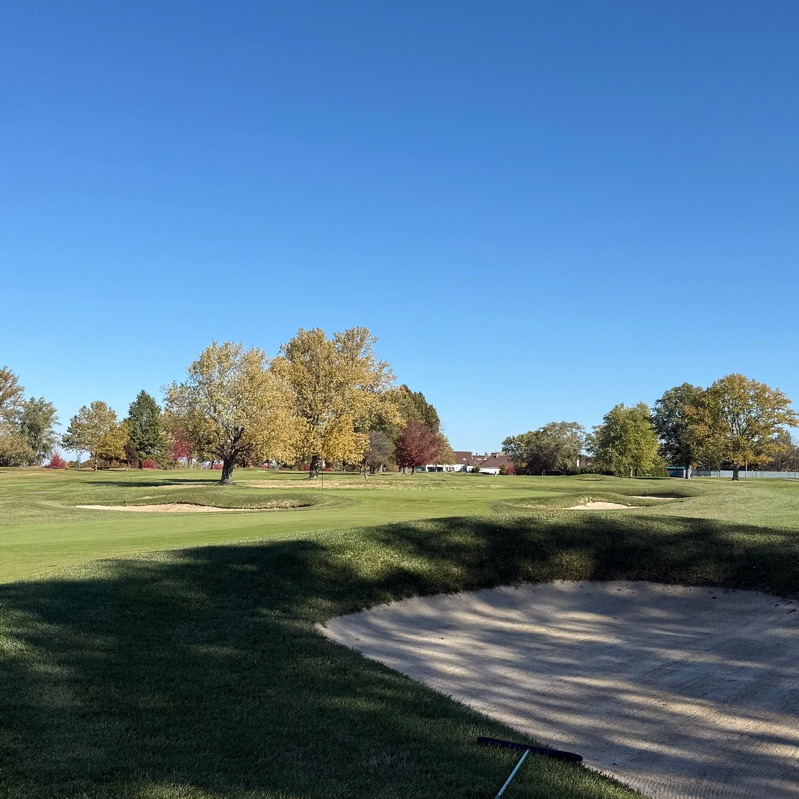
…whether you try to get it close or lay back is a personal preference. The green is well defended with a small opening in front. Better players will be thinking birdie.)
Wanakah was established in 1899 by local businessman Warren Phelps King. It opened as a nine hole course and stayed that way until William (Willie) Watson expanded it to eighteen holes in 1925. The club underwent a renovation project in 2016 (-2018) which focused on improving drainage and eliminating trees. Chris Wilczynski was the lead architect. 90% of the property sat on a 1% grade so he created highs and lows in the fairways to get the water to collection points. He also took out a lot of trees and this part of the project instantly had an effect. Wanakah is on a bluff a few hundred feet from Lake Erie, and with the breathtaking views revealed came an increase in membership, more guests, and a strong interest from tournament officials looking to host the state’s premier events. In 2024, the club held the New York State Amateur Championship. (Aiden Spampinato 67-72-71 -6)
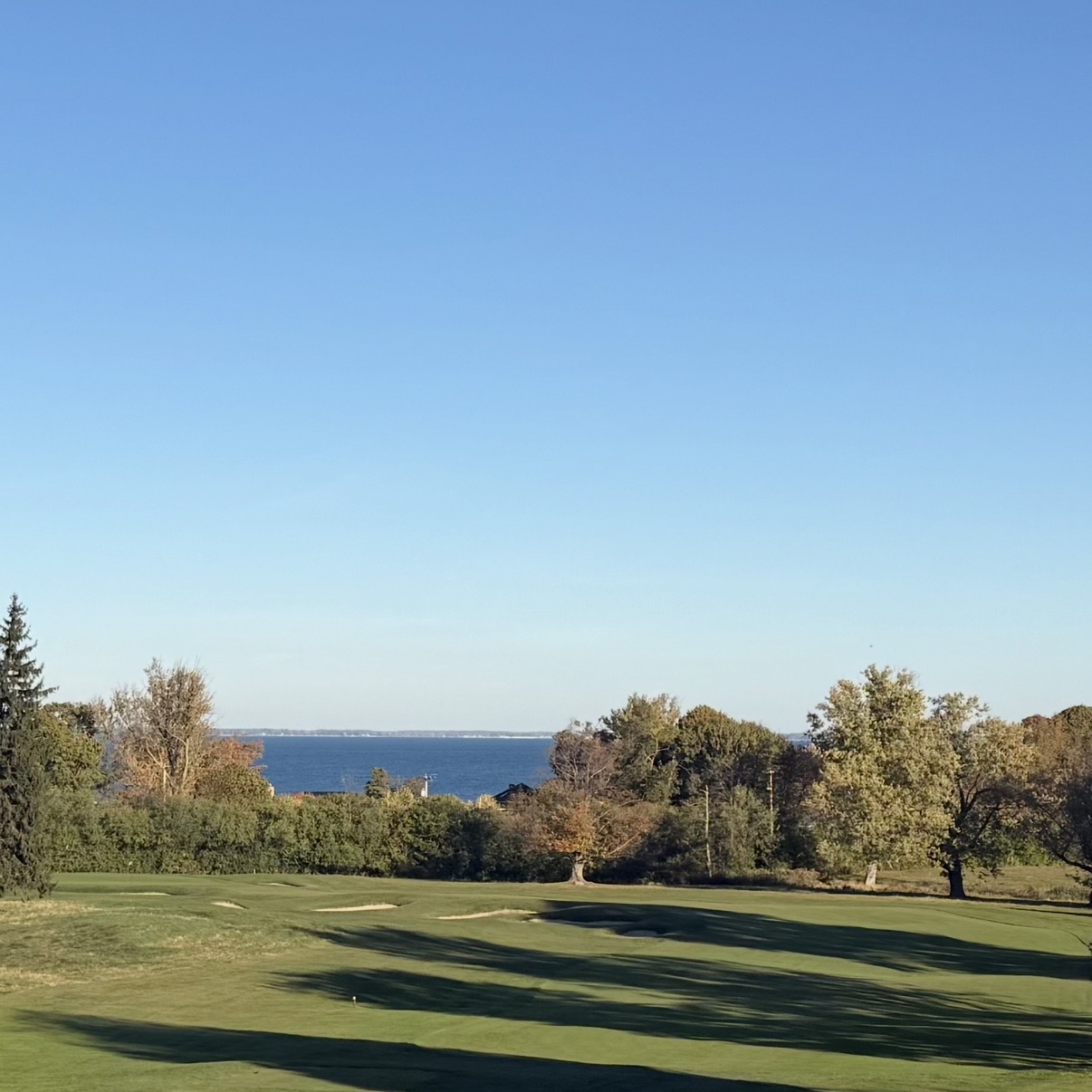
(The 342/336/318 yard par four tenth is one of my favorite holes. It drops downhill to a doglegging fairway with bunkers guarding various carry points. The green opens from the right so one must decide whether to lay back or take on the bunkers. Long hitters trying to drive it or players who accidentally pull it will have challenging approach shots to a green that slopes away from that angle.)
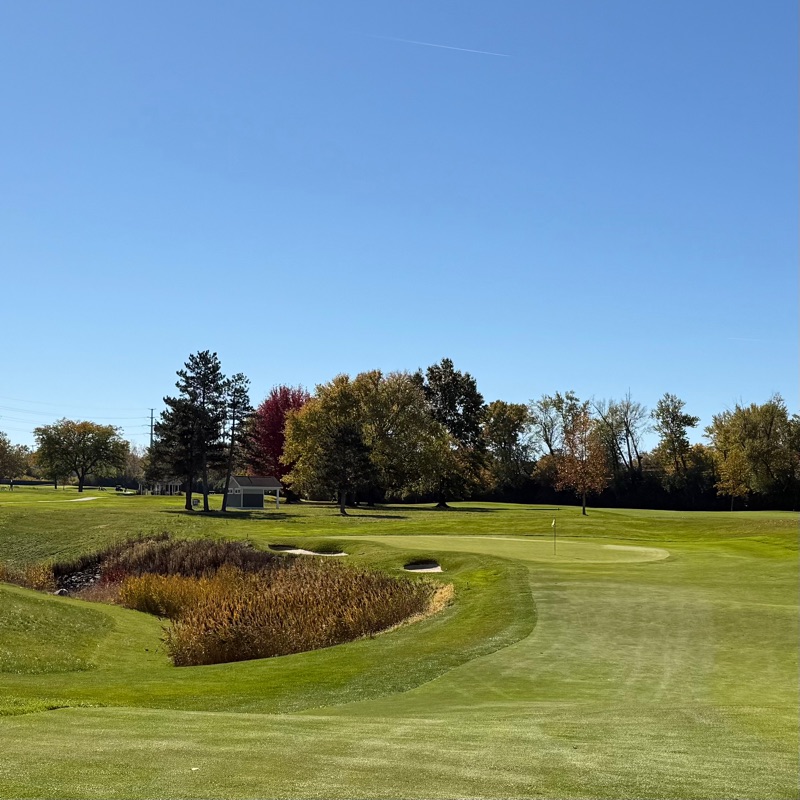
(The 571/528/492 yard fourteenth is a tricky par five that demands a well placed second shot. Players can use the downslope to funnel balls to the valley short but a slight pull will find the water. The green is beautifully pressed against the hazard with short grass right being the bailout. The best shot I saw happened here when my host hit his mini driver 230 yards to the back of the green setting up an easy two putt birdie.)
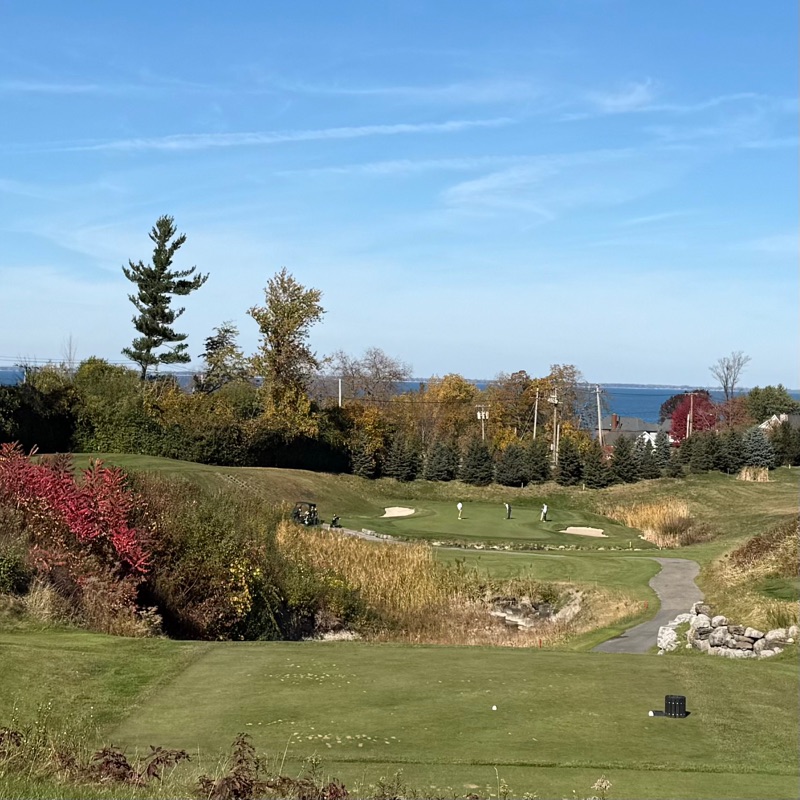
(The 197/171/154 yard par three fifteenth is Wanakah’s signature hole. It plays downhill to an hourglass green that slopes front left to back right. The creek crosses short of the putting surface and along the right…
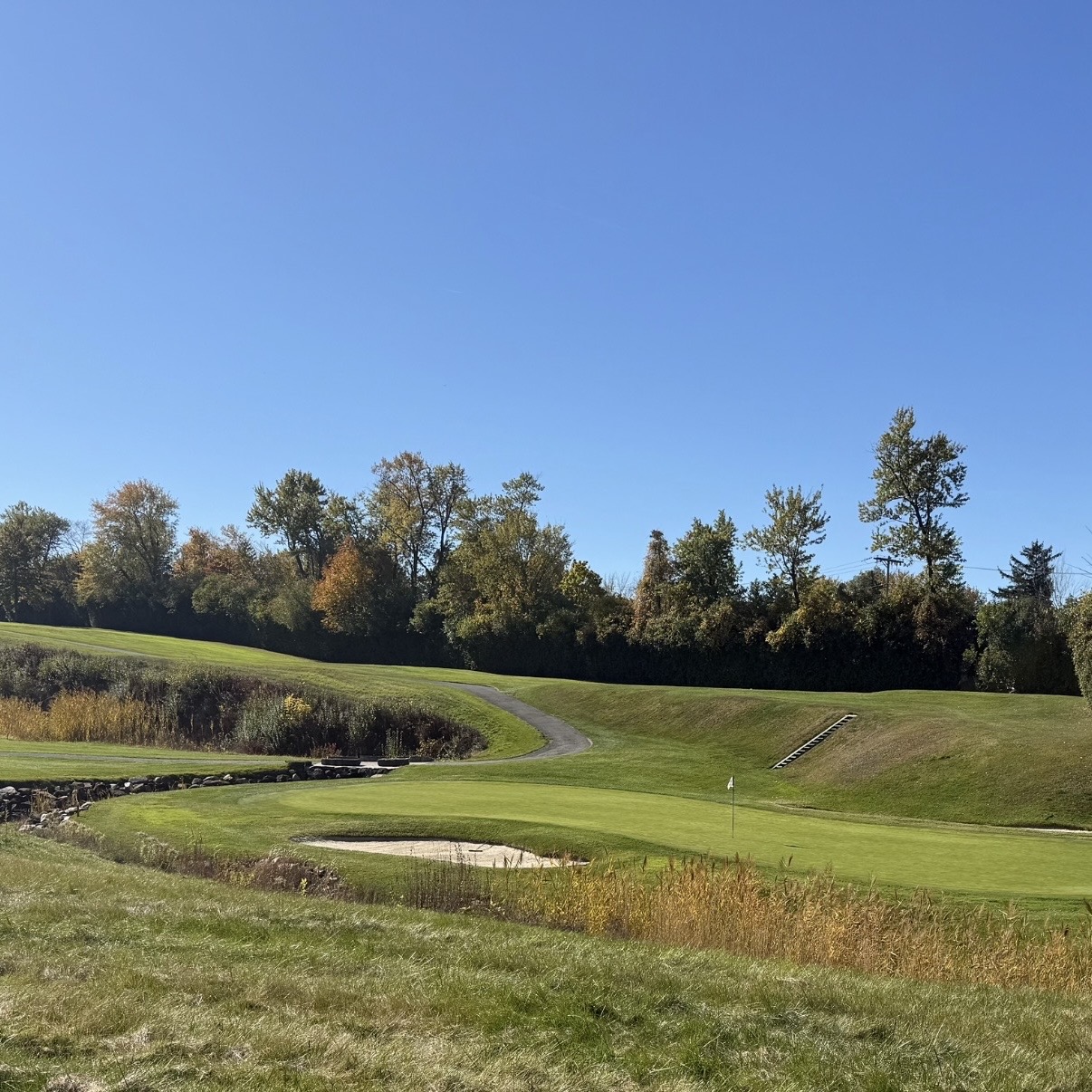
…the green is set between two ridges and has a very cool look to it. With all the cool textures and colors emanating from the creek, it stands out as best on the course.)
The main feature of the property is a shallow valley on the western end that widens as it extends north towards the lake. Here we find the most memorable holes with fourteen and fifteen directly taking advantage of it. It is this corner of the property where you see Watson’s routing ability on full display. The twelth, thirteenth tee, fifteenth, and sixteenth tee are just a wedge from each other. It’s these type of “gathering” spots that allow players to interact with one another even though they’re on different holes.
The other feature is the drop downhill off the plateau but only one and ten are able to use it. Both are very fine holes and I would argue the tenth is a standout. With limited landforms, Wanakah relies mostly on Watson’s green complexes to provide the challenges. At Belvedere and Charlevoix, Watson had large greens that spread out to false edges so the ball would tumble away. Here, the greens are benched into the slope, engaging the golfer to use the sideboards to direct the ball to the middle. A number of greens pitch from one side but flattened out past the middle or begin sloping uphill to the opposing side. This creates many interesting pin positions and varies the strategy for attacking specific hole locations.
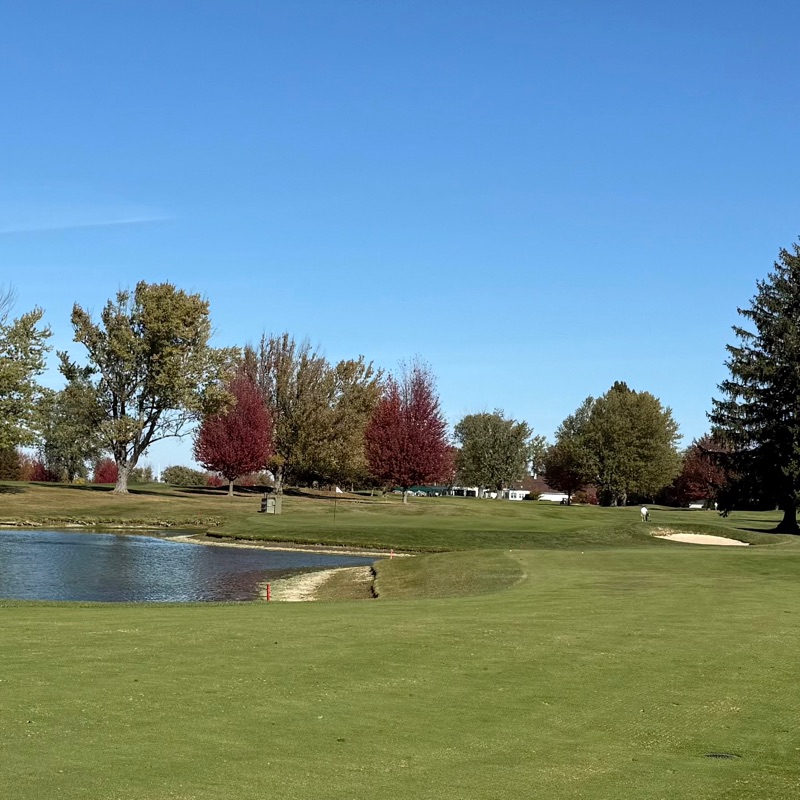
(The 357/333/300 yard seventeenth is another very good short par four. One must carry the shallow valley while avoiding the water on the left side. The tiered green will force you to hit a very precise shot if you’re looking to make birdie. Note the water extends across the front so anything short will be wet. Today’s pin is brutally set on the lowest tier and putts from the middle will need excellent pace to finish close.)
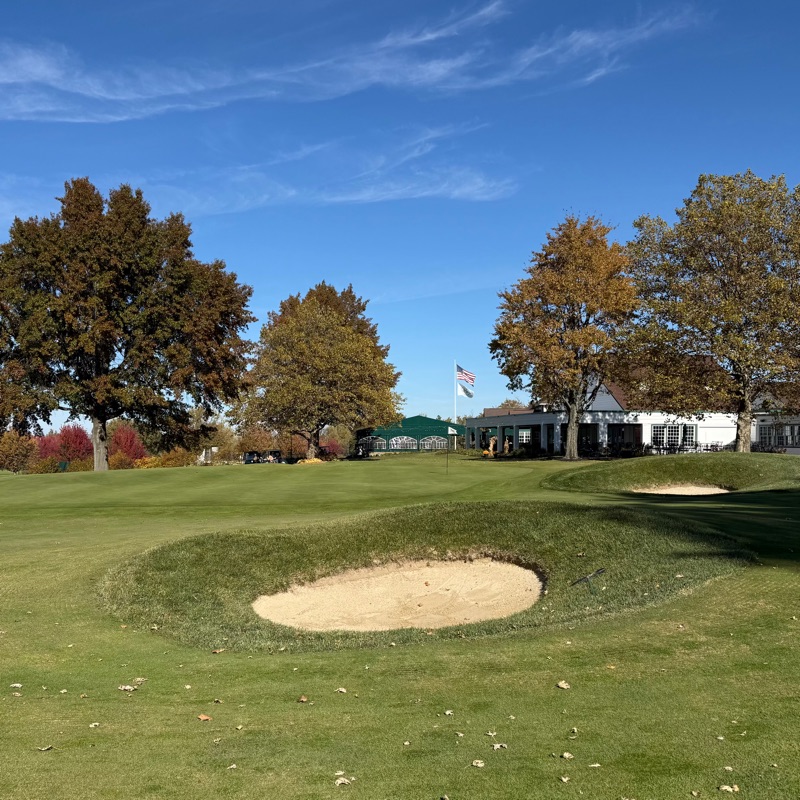
(The 473/432/407 yard eighteenth is a long difficult finishing hole. Treelined on both sides, the drive needs to favor the left side for the best angle. The green sits behind a trap with trees to the left. A par is a fine score.)
Wanakah is delightful. It can stretch out to 7,057 yards or constrict to 4,919 yards. It’s not overly penal and can be enjoyed even when your swing is betraying you. The flip side is true also. If you’re swinging it well, a good score is there for the taking. Regardless of what you write on the scorecard, glancing to the north will always be a beautiful view. And that perk is what makes Wanakah one of Buffalo’s best. I give it a 5 (good)(worth driving an hour to play.)
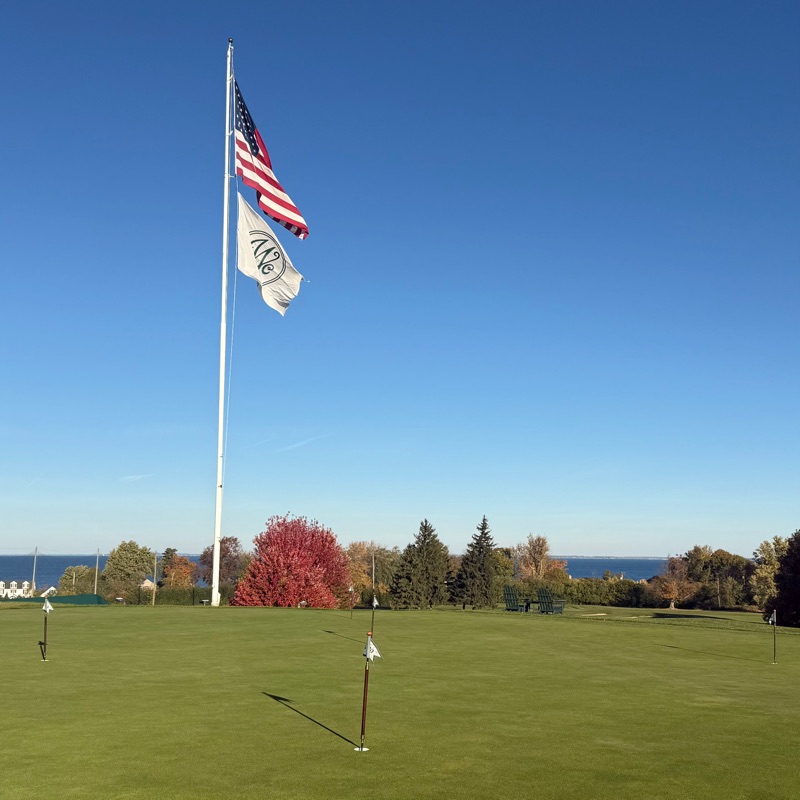
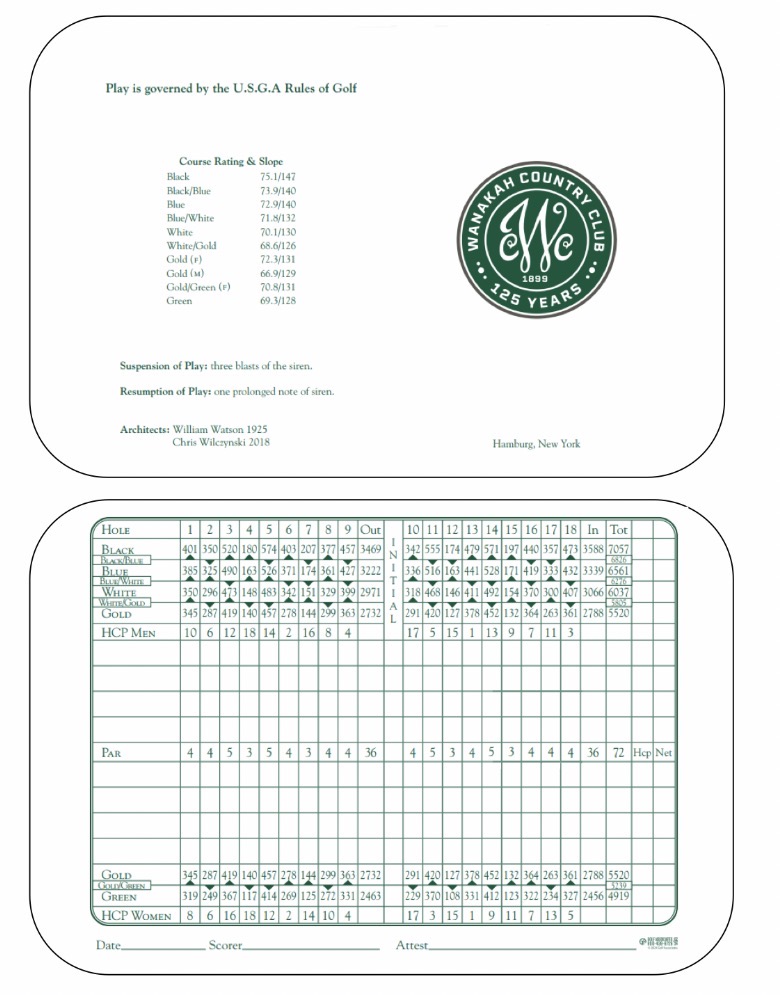
(We had a perfect fall day to play golf. It was my host Jason, his two cousins Brent and Blake, and myself. Jason hosted me at Moon Brook several years ago and is a multi year club champion there. We played the blue/white combo at 6,276 yards and he shot an effortless 74. Blake played well with an 84 while Brent avoided the century mark with a 99. I struggled off the tee, finishing with a 90. C’est la vie! Note the course and slope rating from the back tees 75.1/147)
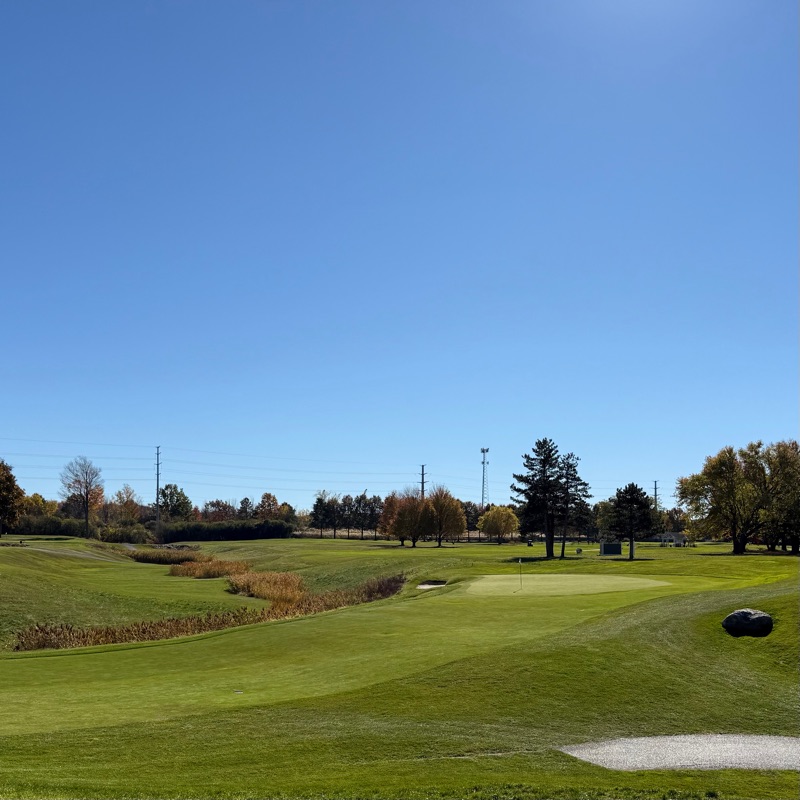
(This view of the par five fourteenth looking south shows the valley that works its way to the lake. I love the brown and golden hues of the cattails as the creek meanders along.)
(Nine and eighteen green play right next to each other with a central mound with bunkers separating them. All the inside trees except the closest will be felled, making an extra wide fairway that will allow cross play. At first I thought “only at a private club would this concept work” but then remembered that Dayton’s 36 hole municipal Community Golf Course Dale and Hills does this exact thing.)
Blog 531

No comments:
Post a Comment